
Died at 79
male
Sir Nigel John Dermot "Sam" Neill (14 September 1947 - 13 July 2026) was a Northern Irish-born New Zealand actor. His career has included leading roles in both dramas and blockbusters. Considered an "international leading man", he is regarded as one of the most versatile actors of his generation. Born in Northern Ireland to an English mother and New Zealand father, Neill moved to Christchurch with his family in 1954. He first achieved recognition with his appearance in the film Sleeping Dogs (1977), which he followed with leading roles in My Brilliant Career (1979), Omen III: The Final Conflict, Possession (both 1981), Evil Angels (also known as A Cry in the Dark) (1988), Dead Calm (1989), The Hunt For Red October (1990), The Piano (1993), and In the Mouth of Madness (1994). He came to international prominence as Dr. Alan Grant in Jurassic Park (1993), reprising the role in Jurassic Park III (2001) and Jurassic World Dominion (2022). Outside of film, Neill has appeared in numerous television series in guest and recurring roles, including Reilly, Ace of Spies (1983), The Simpsons (1994), The Tudors (2007), Crusoe (2008–2010), Happy Town (2010), Alcatraz (2012), and Rick and Morty (2019). He also starred as the titular character Merlin in Merlin (1998) and Merlin's Apprentice (2006) and as Major Chester Campbell in the first two series of Peaky Blinders (2013–2014). He has presented and narrated several documentaries. Neill receives the AACTA Award for Best Actor in a Leading Role, the Longford Lyell Award, the New Zealand Film Award, and the Logie Award for Most Outstanding Actor. He also has three Golden Globe and two Primetime Emmy Award nominations. He won the Silver Logie for Most Popular Actor at the 2023 Logies. Description above from the Wikipedia article Sam Neill, licensed under CC-BY-SA, full list of contributors on Wikipedia.
Sam Neill

Martin Andreesen
for Martin Andreesen in Peace Like a River
Suggested by billyswifty
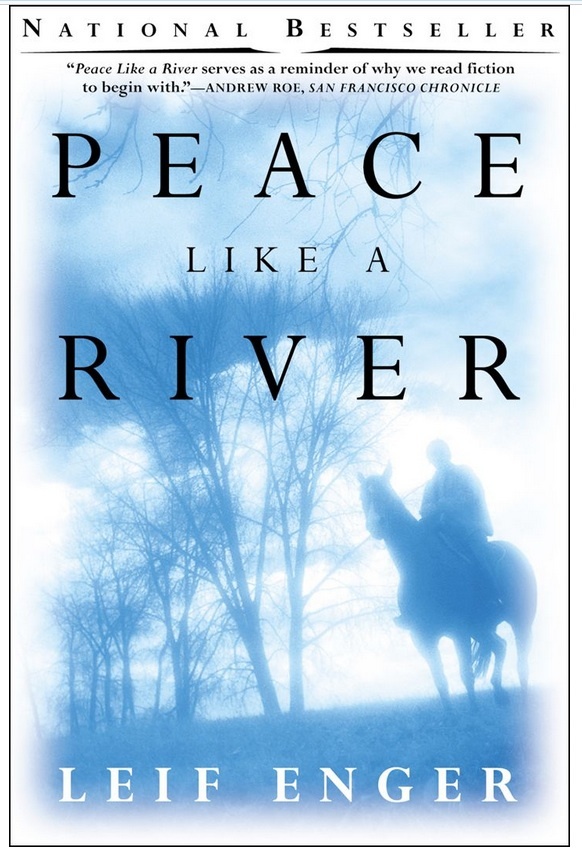
Dead for 10 minutes before his father orders him to breathe in the name of the living God, Reuben Land is living proof that the world is full of miracles. But it's the impassioned honesty of his quiet, measured narrative voice that gives weight and truth to the fantastic elements of this engrossing tale. From the vantage point of adulthood, Reuben tells how his father rescued his brother Davy's girlfriend from two attackers, how that led to Davy being jailed for murder and how, once Davy escapes and heads south for the Badlands of North Dakota, 12-year-old Reuben, his younger sister Swede and their janitor father light out after him. But the FBI is following Davy as well, and Reuben has a part to play in the finale of that chase, just as he had a part to play in his brother's trial. It's the kind of story that used to be material for ballads, and Enger twines in numerous references to the Old West, chiefly through the rhymed poetry Swede writes about a hero called Sunny Sundown. That the story is set in the early '60s in Minnesota gives it an archetypal feel, evoking a time when the possibility of getting lost in the country still existed. Enger has created a world of signs, where dead crows fall in a snowstorm and vagrants lie curled up in fields, in which everything is significant, everything has weight and comprehension is always fleeting. This is a stunning debut novel, one that sneaks up on you like a whisper and warms you like a quilt in a North Dakota winter, a novel about faith, miracles and family that is, ultimately, miraculous.

