Age: 75
female
Jean Elizabeth Smart (born September 13, 1951) is an American actress. She has received numerous accolades including five Primetime Emmy Awards, a Golden Globe Award, four Critics' Choice Awards, and two Screen Actors Guild Awards as well as nominations for a Tony Award and a Grammy Award. Smart first gained prominence for her leading role as Charlene Frazier Stillfield on the CBS sitcom Designing Women, in which she starred from 1986 to 1991. She went on to win five Primetime Emmy Awards for her roles as Lana Gardner in the NBC series Frasier (2000–01), Regina Newley in the ABC sitcom Samantha Who? (2007–09), and Deborah Vance in the HBO Max comedy series Hacks (2021–present). She was Emmy-nominated for her roles in The District (2000–04), 24 (2006–07), Harry's Law (2011), Fargo (2015), Watchmen (2019) and Mare of Easttown (2021). She also acted in FX's Legion (2017–2019) and voiced Ann Possible in the Disney Channel animated series Kim Possible (2002–2007). On stage, she made her Broadway debut portraying Marlene Dietrich in the biographical play Piaf (1981). She returned to Broadway in the revival of The Man Who Came to Dinner (2000) for which she was nominated for the Tony Award for Best Actress in a Play. Smart's film credits include The Brady Bunch Movie (1995), Sweet Home Alabama (2002), Garden State (2004), I Heart Huckabees (2004), Youth in Revolt (2009), The Accountant (2016), A Simple Favor (2018), and Babylon (2022). She received an Independent Spirit Award nomination for Guinevere (1999). Description above from the Wikipedia article Jean Smart, licensed under CC-BY-SA, full list of contributors on Wikipedia.
Jean Smart

Viola Spolin (70s-80s)
for Viola Spolin (70s-80s) in Part Of A Whole
Suggested by Jeshisthename
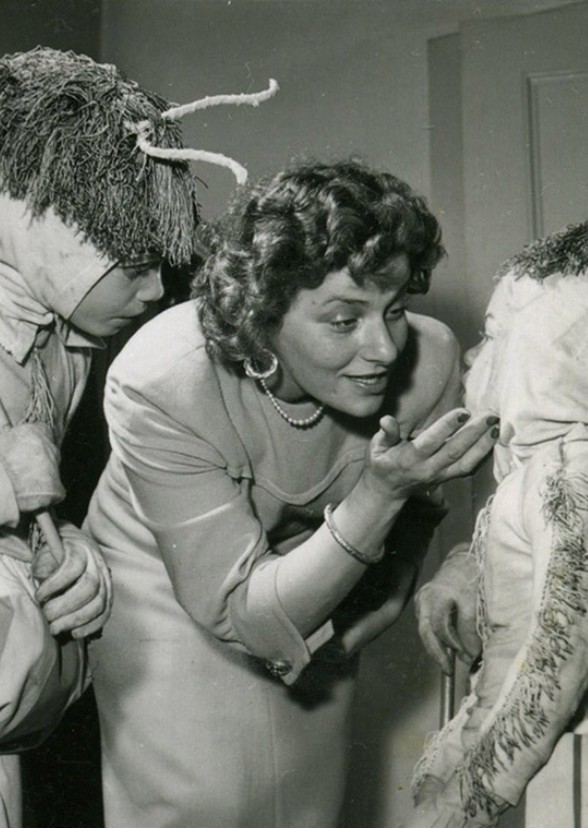
Viola Spolin was an American theatre academic, educator and acting coach. She is considered an important innovator in 20th century American theater for creating directorial techniques to help actors to be focused in the present moment and to find choices improvisationally, as if in real life. These acting exercises she later called Theater Games and formed the first body of work that enabled other directors and actors to create improvisational theater. Her book Improvisation for the Theater, which published these techniques, includes her philosophy and her teaching and coaching methods, and is considered the "bible of improvisational theater". Spolin's contributions were seminal to the improvisational theater movement in the U.S. She is considered to be the mother of Improvisational theater. Her work has influenced American theater, television and film by providing new tools and techniques that are now used by actors, directors and writers.