
Age: 65
male
Woodrow Tracy "Woody" Harrelson (born July 23, 1961) is an American actor. He first became known for his role as bartender Woody Boyd on the NBC sitcom Cheers (1985–1993), for which he won a Primetime Emmy Award for Outstanding Supporting Actor in a Comedy Series from five nominations. Harrelson received three Academy Award nominations: Best Actor for The People vs. Larry Flynt (1996), Best Supporting Actor for The Messenger (2009) and Three Billboards Outside Ebbing, Missouri (2017). Other notable films include White Men Can't Jump(1992), Natural Born Killers (1994), The Thin Red Line (1998), No Country for Old Men (2007), Seven Pounds (2008), Zombieland (2009), Seven Psychopaths (2012), Now You See Me (2013), The Edge of Seventeen (2016), War for the Planet of the Apes (2017), Venom: Let There Be Carnage (2021), and Triangle of Sadness (2022). He also played Haymitch Abernathy in The Hunger Games film series (2012–2015). Harrelson received further Primetime Emmy Award nominations for his portrayal of Steve Schmidt in the HBO film Game Change (2012) and a detective in the HBO crime anthology series True Detective (2014). He also portrayed E. Howard Hunt in the HBO political limited series White House Plumbers (2023).
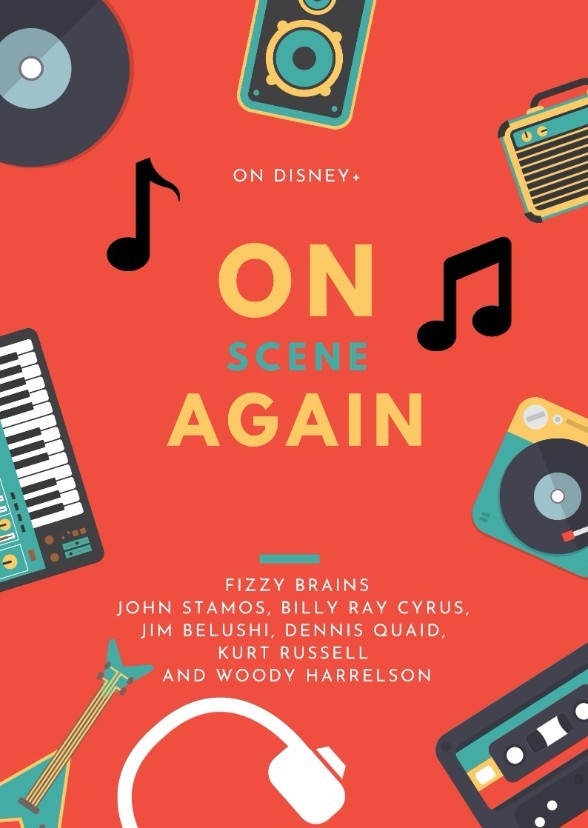
Fizzy Brains were not just a band — they were a phenomenon. At their peak, they sold out arenas, toured the world, and defined a generation. Music wasn’t a job; it was everything. Fame, freedom, chaos, love. Until real life caught up. As the years passed: relationships grew fragile marriages demanded stability children changed priorities egos clashed behind closed doors What the public never saw was the slow collapse: arguments in hotel rooms, missed birthdays, creative control fights, silence between rehearsals. One night, after a disastrous final concert, Fizzy Brains break up — suddenly, publicly, painfully. Years later, each member lives a different, quieter life. The music still echoes in their heads, but the band feels like a closed chapter. Until a chance encounter, an unfinished song, and a realization: They didn’t break up because the music died — they broke up because they stopped listening to each other. Against everyone’s expectations, they decide to reunite. Not for fame. Not for money. But to see if what they had was ever real. They step on scene again — older, scarred, unsure — facing the question: Can something legendary survive real life?


