
Age: 66
male
James Todd Spader (/ˈspeɪdər/ SPAY-dər; born February 7, 1960) is an American actor. He is known for often portraying eccentric and morally ambiguous characters. He began his career in critically acclaimed independent films before transitioning into television, where he has received acclaim and many awards, including three Primetime Emmy Awards and nominations for three Golden Globe Awards, and ten Screen Actors Guild Awards. Spader began acting in youth-oriented films such as Tuff Turf, The New Kids (both 1985), Pretty in Pink (1986), and Mannequin (1987). His breakthrough role came with the Steven Soderbergh drama Sex, Lies, and Videotape (1989), for which he received the Cannes Film Festival Award for Best Actor. He then starred in films such as White Palace (1990), True Colors (1991), Stargate (1994), 2 Days in the Valley (1996), and Secretary (2002). Spader took supporting roles in Bob Roberts (1992), Wolf (1994), Lincoln (2012), and The Homesman (2014). He also played the role of Ultron in the Marvel Cinematic Universe film Avengers: Age of Ultron (2015). His television roles include the attorney Alan Shore in the last season of The Practice (2003–2004) and its spin-off Boston Legal (2004–2008), which earned him three Primetime Emmy Awards for Outstanding Lead Actor in a Drama Series. He portrayed Robert California in the sitcom The Office (2011–2012). He then starred as Raymond Reddington in the NBC crime thriller series The Blacklist (2013–2023), for which he received two Golden Globe Award nominations for Best Actor – Television Series Drama. Description above from the Wikipedia article James Spader, licensed under CC-BY-SA, full list of contributors on Wikipedia.
James Spader

Reuben Tishkoff
for Reuben Tishkoff in Ocean's Trilogy (2021-27)
Suggested by abandonedby
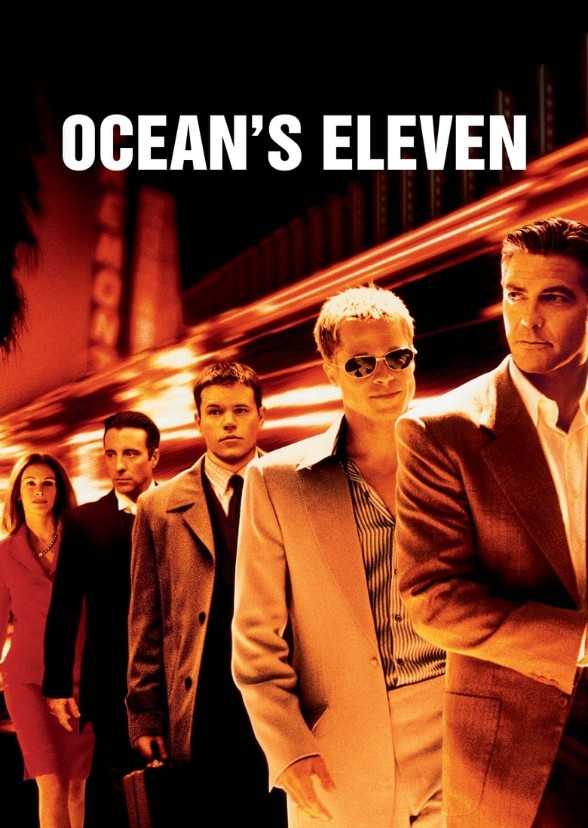
The Ocean's series is a collection of American heist films anchored by a trilogy edited, directed or produced by Steven Soderbergh. The original three films were written by George C. Johnson, George Nolfi, along with Brian Koppelman and David Levien, for each respective film. Released from 2001 to 2007, the trilogy is often cited as defining its genre and leading to a proliferation and commercialization of heist films throughout the world.[1][2]

