
Died at 111
female
Ingrid Bergman (August 29, 1915 – August 29, 1982) was a Swedish actress who starred in a variety of European and American films, television movies, and plays. With a career spanning five decades, she is often regarded as one of the most influential screen figures in cinematic history. According to the St. James Encyclopedia of Popular Culture, upon her arrival in the U.S. Bergman quickly became "the ideal of American womanhood" and a contender for Hollywood's greatest leading actress. David O. Selznick once called her "the most completely conscientious actress" he had ever worked with. In 1999, the American Film Institute recognised Bergman as the fourth greatest female screen legend of Classic Hollywood Cinema. She won numerous accolades, including three Academy Awards, two Primetime Emmy Awards, a Tony Award, four Golden Globe Awards, BAFTA Award and a Volpi Cup. She is one of only four actresses to have received at least three acting Academy Awards (only Katharine Hepburn has four). Born in Stockholm to a Swedish father and a German mother, Bergman began her acting career in Swedish and German films. Her introduction to the U.S. audience came in the English-language remake of Intermezzo (1939). Known for her naturally luminous beauty, she starred in Casablanca (1942) as Ilsa Lund, her most famous role, opposite Humphrey Bogart. Bergman's notable performances in the 1940s include the dramas For Whom the Bell Tolls (1943), Gaslight (1944), The Bells of St. Mary's (1945), and Joan of Arc (1948), all of which earned her nominations for the Academy Award for Best Actress; she won for Gaslight. She made three films with Alfred Hitchcock: Spellbound (1945), with Gregory Peck, Notorious (1946), opposite Cary Grant and Under Capricorn (1949), alongside Joseph Cotten. In 1950, she starred in Roberto Rossellini's Stromboli, released after the revelation she was having an affair with Rossellini; that and her pregnancy prior to their marriage created a scandal in the U.S. that prompted her to remain in Europe for several years. During this time she starred in Rossellini's Europa '51 and Journey to Italy (1954), now critically acclaimed, the former of which won her the Volpi Cup for Best Actress. She had a successful return to working for a Hollywood studio in Anastasia (1956), winning her second Academy Award for Best Actress. Soon after, she co-starred with Grant in the romance Indiscreet (1958). In 1969, she starred in the acclaimed and highly successful film Cactus Flower. In later years, Bergman won her third Academy Award, this one for Best Supporting Actress, for her role in Murder on the Orient Express (1974). In 1978, she starred in Ingmar Bergman's (no relation) Swedish Autumn Sonata receiving her sixth Best Actress nomination. Bergman spoke five languages – Swedish, English, German, Italian and French – and acted in each. In her final role, she portrayed the late Israeli Prime Minister Golda Meir in the television miniseries A Woman Called Golda (1982) for which she posthumously won her second Emmy Award for Best Actress. In 1974, Bergman discovered she was suffering from breast cancer but continued to work until shortly before her death on her sixty-seventh birthday.
Ingrid Bergman

Beatrice Ocean
for Beatrice Ocean in Ocean's 11 (1955)
Suggested by jakubduda
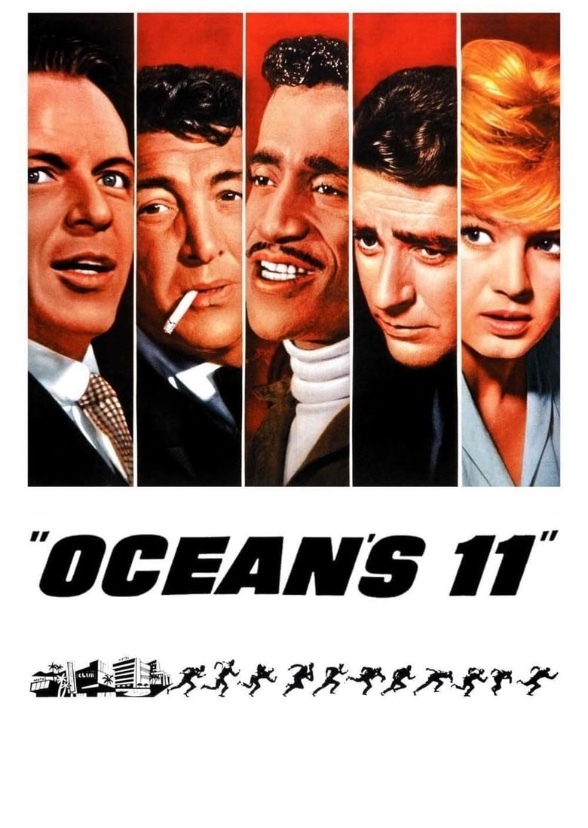
"Christmas in Beverly Hills, California. A time when everyone is nice, tolerant and generous." Thus begins this crime comedy about the biggest robbery in the history of Las Vegas. Danny Ocean decided with his friends, World War II veterans of the 82nd Airborne Division, to choose the five largest casinos in Las Vegas, Nevada (Sahara, Riviera, Desert Inn, The Sands, The Flamingo). Everyone is a man in their place and with great preparation and a plan they should have nothing to worry about. But ... As Murphy says, the expected doesn't happen and the unexpected does. So when the stepfather of one of them finds out who the mysterious robber is, he has to figure out how to get out of the city with a loot. And before the police find them.




