Age: 72
male
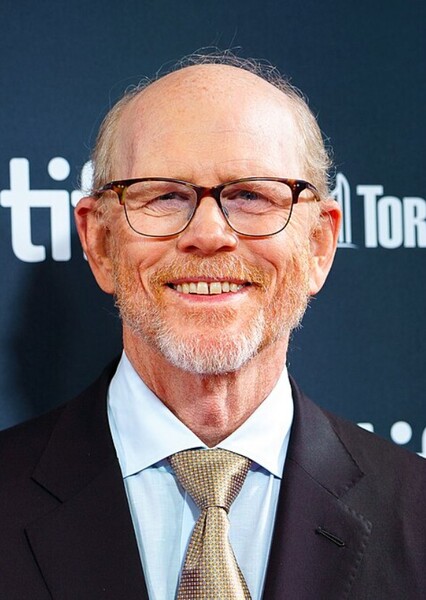
Ronald William Howard (born March 1, 1954) is an American filmmaker and actor. Howard first came to prominence as a child actor, guest-starring in several television series, including an episode of The Twilight Zone. He gained national attention for playing young Opie Taylor, the son of Sheriff Andy Taylor (played by Andy Griffith) in the sitcom The Andy Griffith Show from 1960 through 1968. During this time, he also appeared in the musical film The Music Man (1962), a critical and commercial success. He was credited as Ronny Howard in his film and television appearances from 1959 to 1973. Howard was cast in one of the lead roles in the coming-of-age film American Graffiti (1973), which received widespread acclaim and became one of the most profitable films in history. The following year, Howard became a household name for playing Richie Cunningham in the sitcom Happy Days, a role he would play from 1974 through 1984. Howard continued appearing in films during this time, such as the western film The Shootist (1976) and the comedy film Grand Theft Auto (1977), which also marked his directorial debut. In 1984, Howard left Happy Days to focus on directing, producing and occasionally writing variety films and television series. His films include the science-fiction/fantasy Cocoon (1985), the fantasy Willow (1988), the thriller Backdraft (1991), the historical docudrama Apollo 13 (1995), the Christmas comedy How the Grinch Stole Christmas (2000), the biographical drama A Beautiful Mind (2001), the biographical sports drama Cinderella Man (2005), the thriller The Da Vinci Code (2006), the historical drama Frost/Nixon (2008), Solo: A Star Wars Story (2018), and the documentary Pavarotti (2019). For A Beautiful Mind, Howard won the Academy Award for Best Director and Academy Award for Best Picture. He was nominated again for the same awards for Frost/Nixon. In 2003, Howard was awarded the National Medal of Arts. He was inducted into the Television Hall of Fame in 2013. Howard has two stars on the Hollywood Walk of Fame for his contributions in the television and motion pictures industries.
Ron Howard

Producer
for Producer in No Woman, No Cry: The Rita Marley Story
Suggested by zeldalover603

The biopic opens in the vibrant streets of Trench Town, Jamaica, where Rita Anderson (later Marley) navigates the challenges of her youth, finding solace and inspiration in the burgeoning reggae music scene. The narrative unfolds against the backdrop of Jamaica's socio-political landscape, capturing the essence of the country's struggle for independence. As Rita's life becomes intertwined with Bob Marley, the film delves into their passionate and complex love story. From the early days of The Wailers to the international success of "No Woman, No Cry," the audience witnesses the evolution of a musical and cultural revolution that would leave an indelible mark on the world. The heart of the story lies in Rita's journey as a woman, mother, and wife. As she faces the hardships of Bob's rise to fame, the pressure of being the backbone of the family, and the profound impact of Bob's commitment to Rastafarianism, Rita's strength, and determination become the driving force behind the Marley legacy. The film explores Rita's pivotal role in preserving and promoting Bob's legacy after his untimely death, highlighting her efforts in continuing his mission for social justice and cultural unity. As a woman who stood at the forefront of reggae's global rise, Rita Marley's story is a testament to the enduring power of love, music, and the pursuit of a higher purpose.