Age: 42
female
Rebecca Louisa Ferguson Sundström (born 19 October 1983) is a Swedish actress. She is bilingual and has worked extensively in Sweden, Great Britain, and mainly in the United States. Ferguson began her television acting career in 1999 with the Swedish soap opera Nya Tider, and she made her motion picture debut in 2004 with the Swedish slasher film Drowning Ghost. She came to international prominence with her portrayal of Elizabeth Woodville in the British BBC drama The White Queen (2013), for which she was nominated for a Golden Globe for Best Actress in a Miniseries or Television Film. Ferguson starred as MI6 agent Ilsa Faust, opposite Tom Cruise, in three of the Mission: Impossible films: Rogue Nation (2015), Fallout (2018), and Dead Reckoning Part One (2023). She played Jenny Lind in the musical film The Greatest Showman (2017), starred in the horror films Life (2017) and Doctor Sleep(2019), and had supporting parts in the comedy-drama Florence Foster Jenkins (2016), the thriller The Girl on the Train (2016), and the science fiction films Dune(2021) and Dune: Part Two (2024). In 2023, she began starring in the Apple TV+science fiction series Silo. Description above from the Wikipedia article Rebecca Ferguson, licensed under CC-BY-SA, full list of contributors on Wikipedia.
Rebecca Ferguson

Elizébet
for Elizébet in Ninja Gaiden Series
Suggested by ezioauditore2002
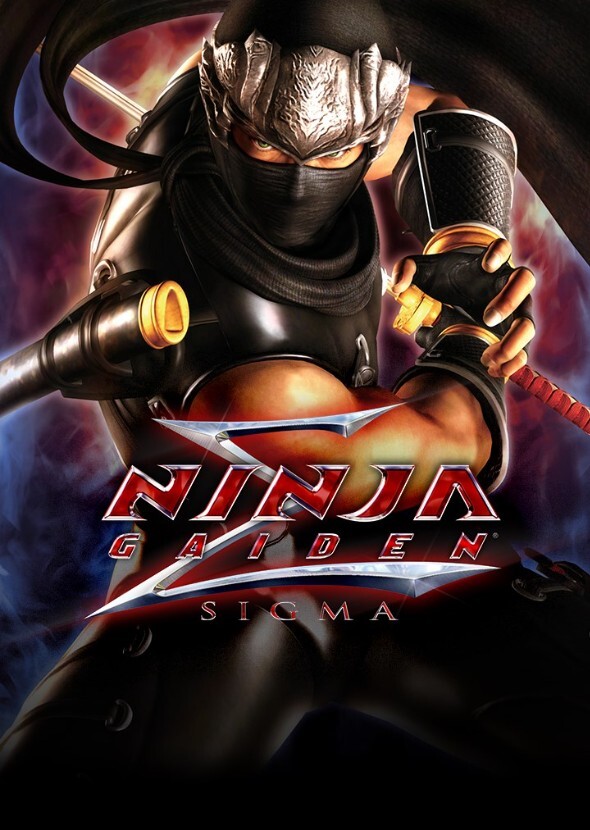
Inspired by the 1980s Ninja Gaiden series for the Nintendo Entertainment System (NES), the 2004 version was originally set in a re-imagined game world based on another Team Ninja creation, the Dead or Alive (DOA) series of fighting games. However, interviews with Tomonobu Itagaki indicate that the Xbox games are standalone prequels to the NES series and that both possibly share a single continuity.[18][19][20] Ninja Gaiden is set in the game world of the Dead or Alive series.[21] Located mainly in Japan and the fictional Western Asian nation of the Vigoor Empire, the game draws on Heian period structures for its Japanese locales—a ninja fortress and village set in the mountains. In contrast the Vigoor Empire, with its capital city of Tairon, is a blend of architectural types from around the world.[14] European-style buildings and the monastery in Tairon exhibits Gothic influences with a vaulted hall, pointed arches, and large stained glass windows. A hidden underground level features statues with the heads of cats, walls covered with carvings, hieroglyphics, Aztec pyramid and a labyrinth.[22] This mix of styles was the result of Itagaki's refusal to constrain the game's creative process.[21]Ninja Gaiden's story spans 16 chapters, each beginning and ending with a cutscene.