
Age: 36
male
Joel Basman (born 23 January 1990) is a Swiss actor. Basman was born in Zurich, Switzerland, to a Swiss Christian mother and an Israeli-Jewish father, both of whom were tailors in the Swiss fashion industry. He grew up in the neighborhood of Aussersihl and was raised bilingual, speaking Swiss-German and Hebrew. He has one older sister who resides in Israel. In 2004 he started his career and played a bold teenager named Zizou for the weekly soap opera Lüthi und Blanc. In 2007 director Tobias Ineichen gave the main part to Joel for his film Jimmie. There he played an autistic boy. In February 2008 he got the prize Shooting Star for his part as a Russian teenager on the film Luftibus, written by director Dominque de Rivaz. In September 2008 Joel received the Schweizer Fernsehpreis (Swiss TV-Prize) in the category film. In October 2008 he got the prize for the best main part from Cinema Tous Ecrans. At the Schauspielhaus Zürich Joel Basman acted 2003 for a youth-theatre project. In 2004 and 2005 he played with students, who were at their final project. He finished his studies at the"European Film Actor School" in October 2008. In 2012 Basman got a part as Bertel in the three-piece TV film Unsere Mütter, unsere Väter (Our mothers, our fathers). He also played Pascal in the Swiss TV-film Ziellos (Aimless). Joel Basman played as Sebastien Leclercq in a game called ‘Late Shift’ in 2016. In 2018, Basman played the lead role in Wolkenbruch's Wondrous Journey Into the Arms of a Shiksa, picked up by Netflix. Source: Article "Joel Basman" from Wikipedia in English, licensed under CC-BY-SA 3.0.
Joel Basman

Girard Keller
for Girard Keller in Night One, Night Two
Suggested by sepanta_kazemi
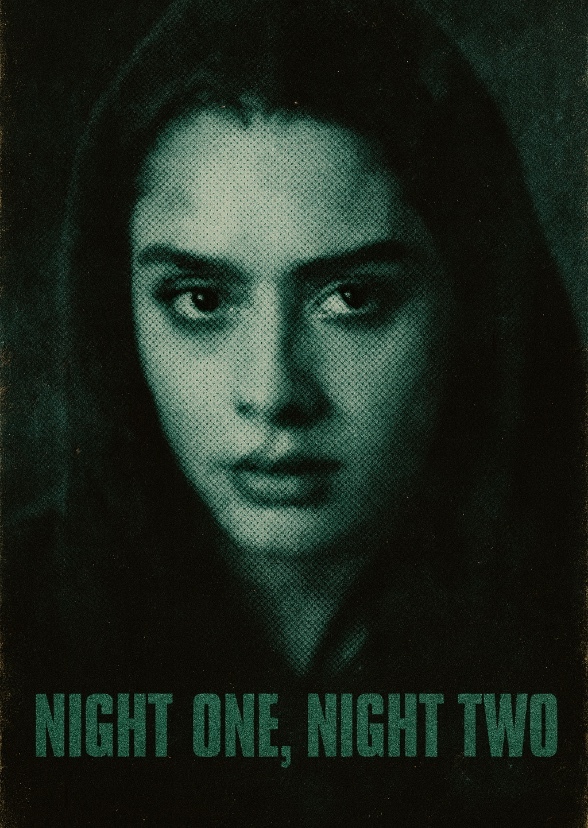
After the collapse of a love he cannot escape, Zavosh Izadan, a writer drifting between bitterness and longing, sits alone with the only pieces of his past that still breathe—the letters of Bibi. Bibi, born into privilege and raised in Europe, has always lived at the edge of rebellion. Trained in fashion and makeup design, she becomes infamous for a daring line of clothing created for workers, titled “Night One, Night Two.” Her return to Iran brings her into the bohemian circles of artists and intellectuals, where she meets Zavosh. Their connection is immediate, turbulent, and intoxicating—two restless souls clinging to each other in a world that refuses to hold them still. But Bibi is a woman in motion. She leaves Iran once more, drifting to Zurich, where she marries and tries to build a stable life. Yet her marriage cannot quiet the ache she carries for Zavosh. Through her letters—sometimes tender, sometimes cruel—Bibi pulls him back into a love that refuses to die, even as distance, time, and choices sharpen its pain. Every time she returns to Iran, her refuge is the warmth of Zavosh’s arms… and every time she leaves, she leaves him emptier than before. As Zavosh rereads the letters, the film intercuts between memory and present—revealing a fractured love story marked by freedom, desire, betrayal, and the quiet devastation of two people who can neither fully be together nor fully let go. A raw, intimate portrait of longing, Night One, Night Two is a story about the wounds we choose, the loves we return to, and the memories that refuse to fade.