
Age: 78
male
The Riddler (Edward Nigma, later Edward Nygma or Edward Nashton) is a supervillain appearing in American comic books published by DC Comics. The character was created by Bill Finger and Dick Sprang, and debuted in Detective Comics #140 in October 1948. He has become one of the most enduring enemies of the superhero Batman and belongs to the collective of adversaries that make up his rogues gallery. In his comic book appearances, the Riddler is depicted as a criminal mastermind in Gotham City. He has an obsessive compulsion to incorporate riddles, puzzles, and death traps in his schemes to prove his intellectual superiority over Batman and the police. His real name—Edward Nigma—is a pun itself; an "enigma" is a person or thing that is difficult to understand. With this self-conscious use of an elaborate gimmick, the Riddler's crimes are often theatrical and ostentatious. The character commonly wears a domino mask and either a green unitard decorated with question mark prints or a green suit and bowler hat. A black, green, or purple question mark serves as his visual motif. He commonly says "Riddle me this", before stating his iconic riddles. The Riddler has been adapted into numerous forms of media, having been portrayed in live action by Frank Gorshin and John Astin on the 1960s television series Batman, Jim Carrey in the 1995 film Batman Forever, Cory Michael Smith on the 2014 Fox series Gotham, and Paul Dano in the 2022 film The Batman. John Glover, Robert Englund, Wally Wingert, and others have provided the character's voice ranging from animation to video games.
The Riddler (Edward Nigma)

The Riddler
for The Riddler in Night Gallery
Suggested by jesselee
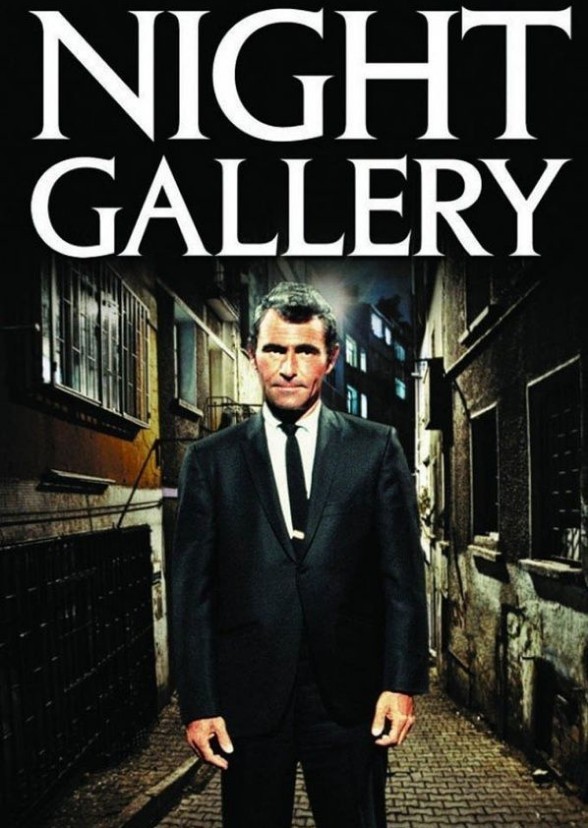
Night Gallery is an American anthology series that aired on NBC from 1969 to 1973, featuring stories of horror and the macabre. Rod Serling, who had gained fame from an earlier series, The Twilight Zone, served both as the on-air host of Night Gallery and as a major contributor of scripts, although he did not have the same control of content and tone as he had on The Twilight Zone. Serling viewed Night Gallery as a logical extension of The Twilight Zone, but while both series shared an interest in thought-provoking dark fantasy, more of Zone's offerings were science fiction while Night Gallery focused on horrors of the supernatural

