Age: 32
female
Letitia Michelle Wright (born 31 October 1993) is a British actress. She began her career with guest roles in the television series Top Boy, Coming Up, Chasing Shadows, Humans, Doctor Who, and Black Mirror. For the latter, she received a Primetime Emmy Award nomination. She then had her breakthrough in the 2015 film Urban Hymn, for which the British Academy of Film and Television Arts (BAFTA) named Wright among the 2015 group of BAFTA Breakthrough Brits. In 2018, she attained global recognition for her portrayal of Shuri in the Marvel Cinematic Universe film Black Panther, for which she won an NAACP Image Award and a SAG Award. She reprised the role in Avengers: Infinity War (2018), Avengers: Endgame (2019), and Black Panther: Wakanda Forever (2022). In 2019, she received the BAFTA Rising Star Award. She also appeared in Steve McQueen's 2020 anthology series Small Axe, which earned her a Satellite Award nomination. Description above from the Wikipedia article Letitia Wright, licensed under CC-BY-SA, full list of contributors on Wikipedia.
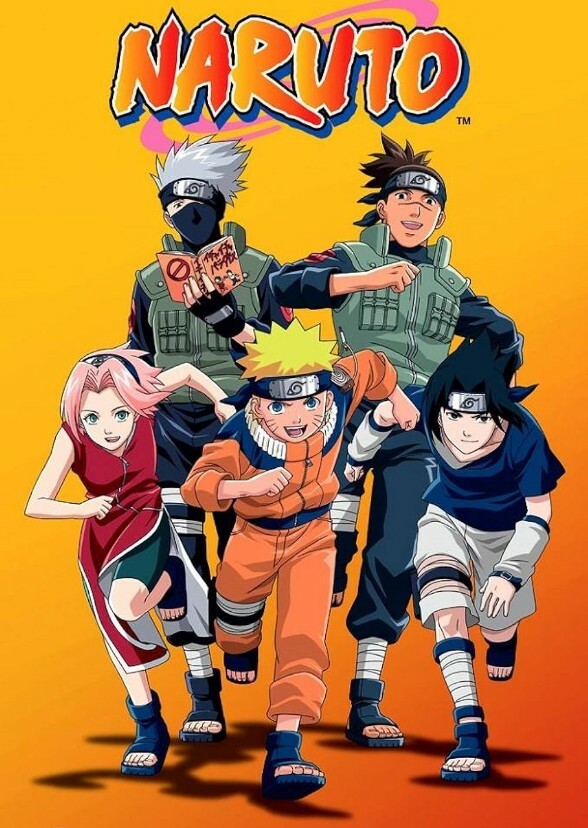
Naruto[a] is a Japanese manga series written and illustrated by Masashi Kishimoto. It tells the story of Naruto Uzumaki, a young ninja who seeks recognition from his peers and dreams of becoming the Hokage, the leader of his village. The story is told in two parts: the first is set in Naruto's pre-teen years (volumes 1–27), and the second in his teens (volumes 28–72). The series is based on two one-shot manga by Kishimoto: Karakuri (1995), which earned Kishimoto an honorable mention in Shueisha's monthly Hop Step Award the following year, and Naruto (1997). Naruto is one of the best-selling manga series of all time, having 250 million copies in circulation worldwide in 47 countries and regions, with 153 million copies in Japan alone and remaining 97 million copies elsewhere. It has become one of Viz Media's best-selling manga series; their English translations of the volumes have appeared on USA Today and The New York Times bestseller list several times, and the seventh volume won a Quill Award in 2006. Reviewers praised the manga's character development, storylines, and action sequences, though some felt the latter slowed the story down. Critics noted that the manga, which has a coming-of-age theme, makes use of cultural references from Japanese mythology and Confucianism.
Loading comments when this section is visible...