Died at 93
male
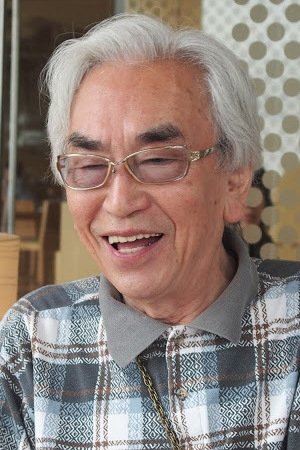
Tatsuya Nakadai (仲代 達矢, Nakadai Tatsuya; born Motohisa Nakadai; December 13, 1932 – November 8, 2025) was a Japanese actor. Widely regarded as one of the greatest actors in the history of Japanese cinema, he collaborated extensively with many of Japan's best-known and acclaimed directors. In his over seven decade career, he appeared in more than 160 films, and received numerous accolades. He was honored with a Medal with Purple Ribbon in 1996 and Japan's Order of Culture in 2015. Discovered on the streets of Tokyo by director Masaki Kobayashi, Nakadai rose to prominence starring in Kobayashi's films, with his breakthrough being the protagonist of the epic anti-war trilogy The Human Condition (1959–1961). He won the Blue Ribbon Award for Best Actor for his performance as the vengeful ronin in Harakiri (1962), a role he considered his finest. Nakadai collaborated on eleven films with Kobayashi—including Kwaidan (1964) and Samurai Rebellion (1967)—and five with Akira Kurosawa, most notably as the tragic warlord in Ran (1985), a performance that earned global acclaim. His other notable credits included Seven Samurai (1954), Yojimbo (1961), The Sword of Doom (1966), The Face of Another (1966), Goyokin (1969), Kagemusha (1980), and The Tale of the Princess Kaguya (2013). A lifelong stage actor, he founded the Gendai Nohgaku-kai troupe in 1975 and continued performing on stage into his nineties. Description above from the Wikipedia article Tatsuya Nakadai, licensed under CC-BY-SA, full list of contributors on Wikipedia.
Tatsuya Nakadai

Gento Tōhōin
for Gento Tōhōin in Nagasarete Airantō (Live Action Series)
Suggested by amangirma
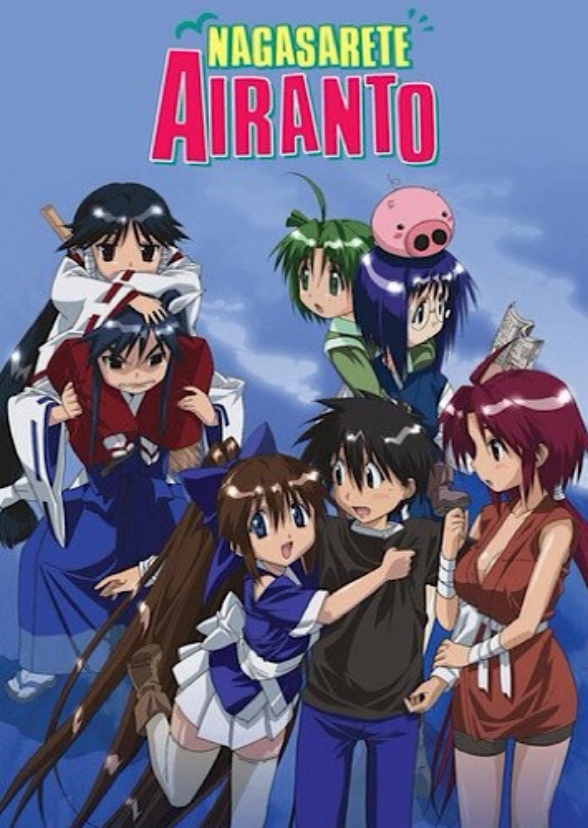
After an argument with his father, 14-year-old Ikuto Tōhōin runs away from home and out to sea, only for a massive storm to send him adrift and eventually strand him on an uncharted tropical island named Airantou. Half-drowned, he is found by a kindhearted but naive girl named Suzu, who (clumsily) resuscitates him and takes him into her care. Soon after, Ikuto learns that Airantou was settled 130 years ago by a group of Japanese that had been shipwrecked during a voyage to Europe. Though their Meiji-era village survived and prospered to modern day, its entire male population was claimed by a rogue wave during a fishing tournament some twelve years before. As a result, nearly every girl of Suzu's generation is desperate for a husband, and immediately latches onto Ikuto as a prime candidate; to his dismay, their attentions quickly erupt into violent competition, forcing Suzu to protect him. At first eager to escape the island (and stymied only by the quasi-magical whirlpools surrounding the entire coast), Ikuto eventually settles into his new life with Suzu, befriending her as well as many of the other girls pursuing his hand. Together, they engage in countless mishaps and adventures, heartily encouraged by not only the village matriarch - Suzu's grandmother - but the increasingly large cast of anthropomorphic animals and Youkai that also call Airantou home.