Anime (Japanese: アニメ) is hand-drawn and computer animation originating from Japan. In Japan and in Japanese, anime (a term derived from the English word animation) describes all animated works, regardless of style or origin. However, outside of Japan and in English, anime is colloquial for Japanese animation and refers specifically to animation produced in Japan. Animation produced outside of Japan with a similar style to Japanese animation is referred to as anime-influenced animation. The earliest commercial Japanese animations date to 1917. A characteristic art style emerged in the 1960s with the works of cartoonist Osamu Tezuka and spread in the following decades, developing a large domestic audience. Anime is distributed theatrically, through television broadcasts, directly to home media, and over the Internet. In addition to original works, anime are often adaptations of Japanese comics (manga), light novels, or video games. It is classified into numerous genres targeting various broad and niche audiences. Anime is a diverse medium with distinctive production methods that have adapted in response to emergent technologies. It combines graphic art, characterization, cinematography, and other forms of imaginative and individualistic techniques. Compared to Western animation, anime production generally focuses less on movement, and more on the detail of settings and use of "camera effects", such as panning, zooming, and angle shots. Diverse art styles are used, and character proportions and features can be quite varied, with a common characteristic feature being large and emotive eyes. The anime industry consists of over 430 production companies, including major studios like Studio Ghibli, Sunrise, Bones, Ufotable, MAPPA, CoMix Wave Films, and Toei Animation. Since the 1980s, the medium has also seen international success with the rise of foreign dubbed, subtitled programming and its increasing distribution through streaming services. As of 2016, Japanese anime accounted for 60% of the world's animated television shows. In 2019, the annual overseas exports of Japanese animation exceeded $10 billion for the first time in history.
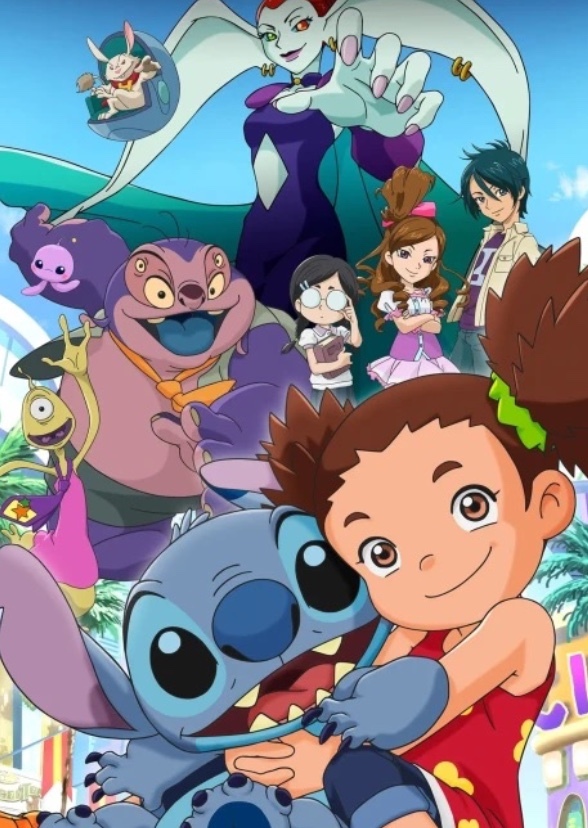
6 months have passed since Stitch defeated his evil cousin Zero after finally restoring 43 good deeds and saving the world from an doomsday device. He and Yuna moves with Yuna’s parents, her cousin Tigerlily Sakai, her boyfriend Bobby, Jumba, Pleakley, Yuna’s best friend and transfer student Sasha and BooGoo to Okinawa New Town for going through life where Yuna and Sasha are making some new friends while Stitch joined the Disney Heroes as a new member including other members like Mickey Mouse and his friends, reunited with his cousins including his girlfriend Angel and discovered new more but different experiments and his new cousins. But, new challenges await Stitch and friends. Dr. Hämsterviel is still out once again for revenge with Gantu, Reuben and Evile a.k.a. Experiment 627 by his side and also serving an alien woman named Delia who desires a power cell within Stitch called the Neo-PowerChip. And someone may be brought back and returning, it revealed to be Leroy, who was in jail after previously getting defeated by Stitch and now escaping from prison for revenge to work with Hämsterviel and Delia. Suddenly, Stitch emotionally reunites with old friends of his former family….


