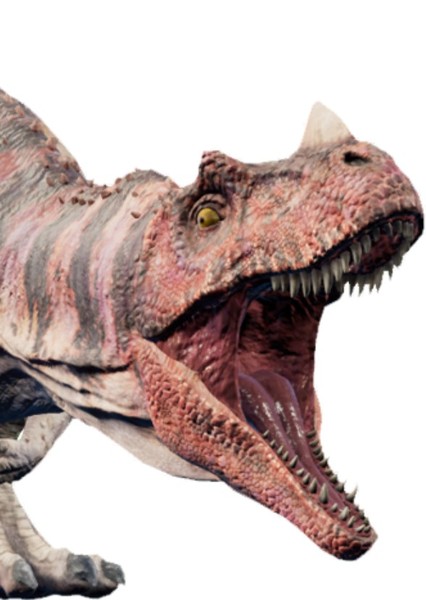
Giganotosaurus (/ˌdʒaɪɡəˌnoʊtəˈsɔːrəs/ JY-gə-NOH-tə-SOR-əs[2]) is a genus of theropod dinosaur that lived in what is now Argentina, during the early Cenomanian age of the Late Cretaceous period, approximately 98 to 97 million years ago. The holotype specimen was discovered in the Candeleros Formation of Patagonia in 1993, and is almost 70% complete. The animal was named Giganotosaurus carolinii in 1995; the genus name translates as "giant southern lizard" and the specific name honors the discoverer, Rubén D. Carolini. A dentary bone, a tooth and some tracks, discovered before the holotype, were later assigned to this animal. The genus attracted much interest and became part of a scientific debate about the maximum sizes of theropod dinosaurs. Giganotosaurus was one of the largest known terrestrial carnivores, but the exact size has been hard to determine due to the incompleteness of the remains found so far. Estimates for the most complete specimen range from a length of 12 to 13 m (39 to 43 ft), a skull 1.53 to 1.80 m (5.0 to 5.9 ft) in length, and a weight of 4.2 to 13.8 t (4.6 to 15.2 short tons). The dentary bone that belonged to a supposedly larger individual has been used to extrapolate a length of 13.2 m (43 ft). Some researchers have found the animal to be larger than Tyrannosaurus, which has historically been considered the largest theropod, while others have found them to be roughly equal in size, and the largest size estimates for Giganotosaurus exaggerated. The skull was low, with rugose (rough and wrinkled) nasal bones and a ridge-like crest on the lacrimal bone in front of the eye. The front of the lower jaw was flattened, and had a downwards projecting process (or "chin") at the tip. The teeth were compressed sideways and had serrations. The neck was strong and the pectoral girdle proportionally small. Part of the family Carcharodontosauridae, Giganotosaurus is one of the most completely known members of the group, which includes other very large theropods, such as the closely related Mapusaurus and Carcharodontosaurus. Giganotosaurus is thought to have been homeothermic (a type of "warm-bloodedness"), with a metabolism between that of a mammal and a reptile, which would have enabled fast growth. It may have been relatively fast moving, with a calculated maximal running speed of 14 m/s (50 km/h; 31 mph). It would have been capable of closing its jaws quickly, capturing and bringing down prey by delivering powerful bites. The "chin" may have helped in resisting stress when a bite was delivered against prey. Giganotosaurus is thought to have been the apex predator of its ecosystem, and it may have fed on juvenile sauropod dinosaurs.
Giganotosaurus

Blood Samples Of Dinosaurs
for Blood Samples Of Dinosaurs in My Adventures With Sonic The Hedgehog 2: The Movie
Suggested by modothegreatest
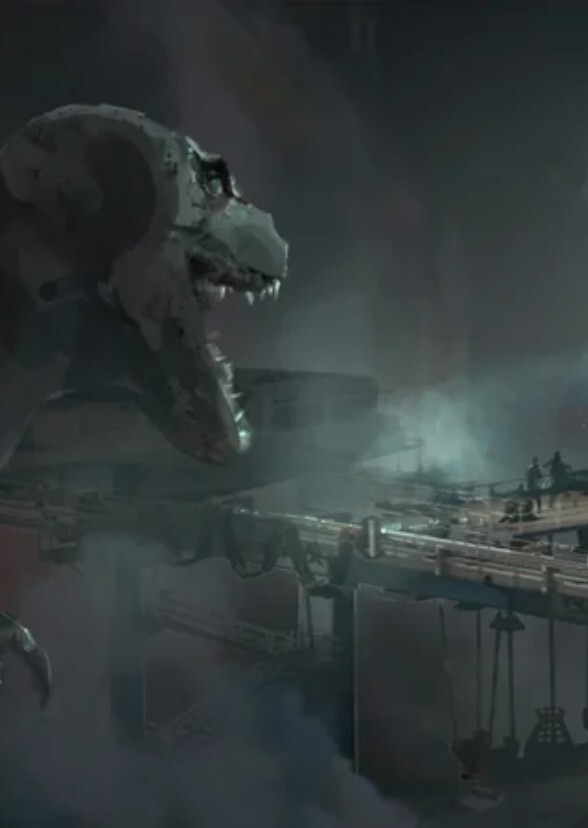
After the successful creation of the dinosaur, the scientists left the laboratory to break the news to Dr. Ernest. When no one was there, Eggman broke into the lab and injected the dinosaur with the power of cyber corruption. Soon, the dinosaur lost control, and broke free, where he began to destroy everything. Sonic and other friends will have to embark on a difficult journey, with the help of a portal (Created by Tails), they must go to the big dinosaur world, where they must find seven blood samples of predatory dinosaurs to create a cure, As for Ed's family, they travels across different islands in search of the dinosaur from escaped laboratory