
Age: 63
male
Ralph Nathaniel Twisleton-Wykeham-Fiennes (born 22 December 1962) is an British-American actor, film producer, and director. He has received various accolades, including a British Academy Film Award and a Tony Award, as well as nominations for three Academy Awards, seven Golden Globe Awards, and a Primetime Emmy Award. Born in Ipswich, Suffolk, Fiennes was trained at and graduated from the Royal Academy of Dramatic Art in 1985. A Shakespeare interpreter, he excelled onstage at the Royal National Theatre before succeeding at the Royal Shakespeare Company. In 1995, Fiennes made his Broadway debut playing Prince Hamlet in the revival of the William Shakespeare play Hamlet, for which he won the Tony Award for Best Actor in a Play. He was later Tony-nominated for his role as a travelling faith healer in the Brian Friel play Faith Healer (2006). Fiennes made his film debut playing Heathcliff in Emily Brontë's Wuthering Heights (1992). He has earned three Academy Award nominations for his performances in the films Schindler's List (1993), The English Patient (1996), and Conclave (2024). He has also acted in Quiz Show (1994), Maid in Manhattan (2002), The Constant Gardener (2005), In Bruges (2008), The Reader (2008), The Duchess (2008), The Hurt Locker (2009), The Grand Budapest Hotel (2014), A Bigger Splash (2015), Hail, Caesar! (2016), and The Menu (2022). Fiennes gained wider recognition for playing Lord Voldemort in the Harry Potter film series (2005–2011) and Gareth Mallory / M in the James Bond films (2012–2021); and has voiced roles in the animated films The Prince of Egypt (1998), Wallace & Gromit: The Curse of the Were-Rabbit (2005), Kubo and the Two Strings (2016), and The Lego Batman Movie (2017). He directed and starred in the films Coriolanus (2011) and The Invisible Woman (2013). Aside from acting, Fiennes has been an ambassador for UNICEF UK since 1999.
Ralph Fiennes

Professor X
for Professor X in Marvel Prime Universe
Suggested by user_368626
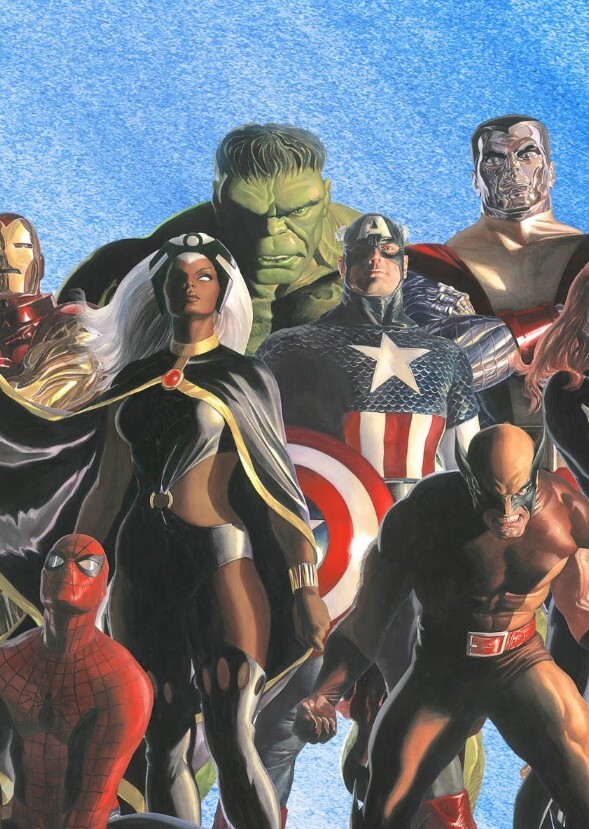
What was once Earth-616 is reborn as one singular Earth — streamlined, stabilized, and subtly rewritten. The public remembers the age of heroes, but the details are cleaner, less chaotic. The Blip happened. The Battle of New York happened. Legends like Iron Man and Captain America still shaped history. Yet beneath the surface, the timeline has shifted. Certain crises occurred differently, some alliances never formed, and some heroes rose earlier — or later — than before. history has been gently corrected rather than erased. Mutants have always existed. Singular Earth represents Marvel Studios’ “Prime Universe” — cohesive, character-focused, and forward-looking. Legacy remains intact, but contradictions have been smoothed away. Relationships are deeper, origins are refined, and power levels are recalibrated. Some actors remain, their portrayals now cemented as definitive pillars of the universe. Legacy performances that define the modern era — such as Tom Holland as Spider-Man, Benedict Cumberbatch as Doctor Strange, and Chris Hemsworth as Thor — continue forward. Certain iconic roles return in refreshed forms, reflecting the subtle timeline alterations. The goal isn’t to erase what came before, but to reinterpret legacy characters within the refined singular Earth — honoring past portrayals while allowing creative evolution.

