
Age: 60
male
Benjamin Edward Meara Stiller (born November 30, 1965) is an American actor, comedian, and filmmaker. Known for his blend of slapstick humor and sharp wit, Stiller rose to fame through comedies such as There's Something About Mary (1998), Zoolander (2001), and Sarmoti (Father of the Pride) And Tropic Thunder (2008). Stiller is also known for his work in franchises such as the Meet the Parents films (2000–2010), the Madagascar franchise (2005–2012), and the Night at the Museum films (2006–2014). His films have grossed over $2.6 billion in Canada and the United States, with an average of $79 million per film. His awards and honors include an Emmy Award, a Directors Guild of America Award, a Britannia Award and a Teen Choice Award. Stiller is the son of the comedians and actors Jerry Stiller and Anne Meara. He began his career writing mockumentaries and was offered a variety sketch series, The Ben Stiller Show, which he produced and hosted for its 13-episode run. The series ran on MTV in 1990 and Fox in 1992 and 1993, earning him a Primetime Emmy Award for Outstanding Writing for a Variety Program. Stiller was a member of a group of comedic actors colloquially known as the Frat Pack. Transitioning to acting in films, Stiller made his directorial debut with Reality Bites (1994) and went on to direct and star in films such as The Cable Guy (1996) and The Secret Life of Walter Mitty (2013). He also starred in a string of successful studio comedies, including Along Came Polly (2004), Dodgeball: A True Underdog Story (2004), Starsky & Hutch (2004), and Tower Heist (2011). His performances in independent films include Flirting with Disaster (1996), The Royal Tenenbaums (2001), and the Noah Baumbach films Greenberg (2010), While We're Young (2014), and The Meyerowitz Stories (2017). Since the mid-2010s, Stiller has primarily worked as a television director and showrunner. In 2018, he directed the Showtime limited series Escape at Dannemora, earning a Directors Guild of America Award and two Primetime Emmy Award nominations for Outstanding Limited Series and Outstanding Directing for a Limited Series. In 2022, he was a director and executive producer on the Apple TV+ series Severance, earning two Primetime Emmy Award nominations for Outstanding Drama Series and Outstanding Directing in a Drama Series.
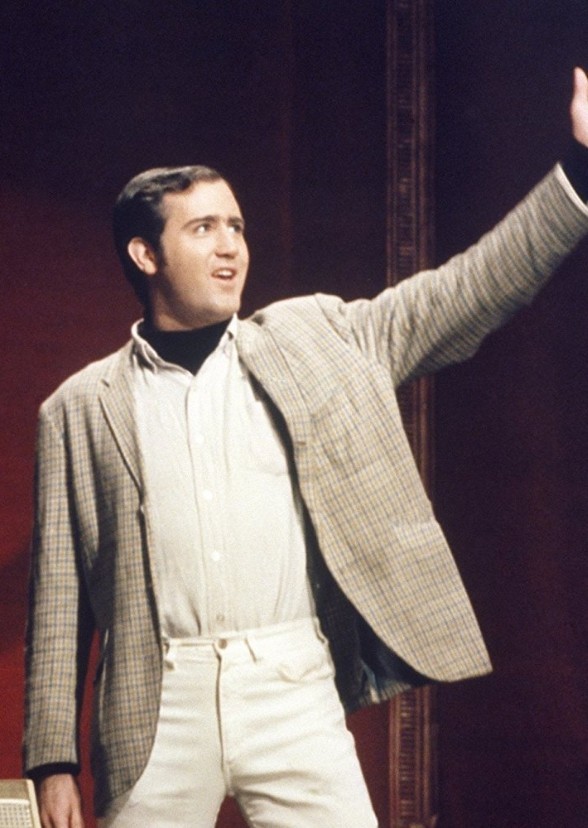
Andrew Geoffrey Kaufman (January 17, 1949 – May 16, 1984) was an American entertainer, actor, writer, performance artist and comedian. While often called a comedian, Kaufman described himself instead as a "song and dance man". He disdained telling jokes and engaging in comedy as it was traditionally understood, once saying in a rare introspective interview, "I am not a comic, I have never told a joke. ... The comedian's promise is that he will go out there and make you laugh with him... My only promise is that I will try to entertain you as best I can." After working in small comedy clubs in the early 1970s, Kaufman came to the attention of a wider audience in 1975, when he was invited to perform portions of his act on the first season of Saturday Night Live. His Foreign Man character was the basis of his performance as Latka Gravas on the hit television show Taxi from 1978 until 1983. During this time, he continued to tour comedy clubs and theaters in a series of unique performance art / comedy shows, sometimes appearing as himself and sometimes as obnoxiously rude lounge singer Tony Clifton. He was also a frequent guest on sketch comedy and late-night talk shows, particularly Late Night with David Letterman. In 1982, Kaufman brought his professional wrestling villain act to Letterman's show by way of a staged encounter with Jerry "The King" Lawler of the Continental Wrestling Association (although the fact that the altercation was planned in advance was not publicly disclosed for over a decade). Kaufman died of lung cancer in 1984, at the age of 35. Because pranks and elaborate ruses were major elements of his career, persistent rumors have circulated that Kaufman faked his own death as a grand hoax. He continues to be respected for the variety of his characters, his uniquely counterintuitive approach to comedy, and his willingness to provoke negative and confused reactions from audiences.


