
Age: 69
male
Philip Bradley Bird (born September 24, 1957) is an American filmmaker, animator, and voice actor. He has had a career spanning over four decades in both live-action and animation. Bird was born in Montana and grew up in Oregon. He developed an interest in the art of animation early on, and completed his first short subject by age 14. Bird sent the film to Walt Disney Productions, leading to an apprenticeship from the studio's Nine Old Men. He attended the California Institute of the Arts in the late 1970s, and worked for Disney shortly thereafter. In the 1980s, Bird worked in film development with various studios. He co-wrote Batteries Not Included (1987), and developed two episodes of Amazing Stories for Steven Spielberg, including its spin-off (based on a segment written by Bird for the show), the widely panned animated sitcom Family Dog. Afterwards, Bird joined the animated sitcom The Simpsons as creative consultant for eight seasons. He directed the animated film The Iron Giant (1999); though acclaimed, it was a box-office bomb. Bird moved to Pixar where he wrote and directed two successful animated films, The Incredibles (2004) and Ratatouille (2007). They earned Bird two Academy Awards for Best Animated Feature wins and Best Original Screenplay nominations. He transitioned to live-action filmmaking with similarly successful Mission: Impossible – Ghost Protocol (2011), he then directed Disney's Tomorrowland (2015). He returned to Pixar to develop Incredibles 2 (2018), which became the second-highest-grossing animated film of all time during its theatrical run, and earned him another nomination for the Academy Award. Bird has a reputation for supervising his projects to a high degree of detail. He advocates for creative freedom and the possibilities of animation, and has criticized its stereotype as children's entertainment, or classification as a genre, rather than an art. Description above from the Wikipedia article Brad Bird, licensed under CC-BY-SA, full list of contributors on Wikipedia
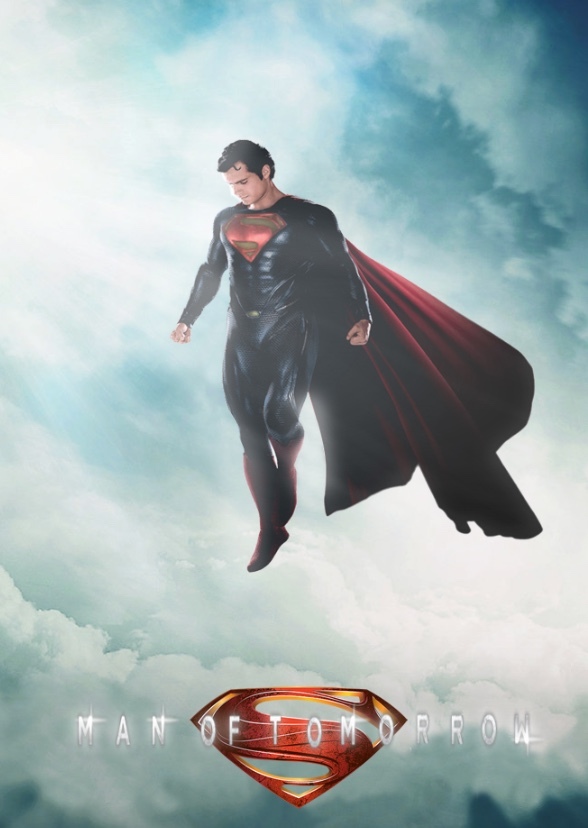
After an alien invasion, Superman emerges as a symbol of hope for a world grappling with fear and uncertainty. As he saves Metropolis from Brainiac, a powerful AI bent on domination, he finds himself revered by many but distrusted by others, particularly due to the machinations of Lex Luthor. Luthor, a cunning businessman, exploits this distrust, manipulating media narratives to craft a negative public image of Superman. In a calculated move, Luthor conducts secret experiments to create a formidable foe: Metallo, an android powered by Kryptonite. This robotic adversary is unleashed in a series of destructive attacks, leading to a catastrophic showdown with Superman. As Superman battles Metallo, Luthor cunningly frames him for the chaos, deepening public animosity against the Man of Steel. Amidst this turmoil, Lois Lane investigates Luthor’s underhanded tactics, uncovering his role in fueling anti-Superman sentiment. In a climactic confrontation, Superman must stand firm in his ideals of hope and justice, ultimately triumphing over Metallo without succumbing to anger or vengeance. As the dust settles, Superman clears his name and regains public support, but Luthor manages to escape, vowing to intensify his war against Superman. Post Credits: Superman surveys Metropolis from the Daily Planet rooftop, contemplating his responsibilities. A shadowy figure watches him from a nearby rooftop—it’s Batman, signaling the beginning of their complex relationship.


