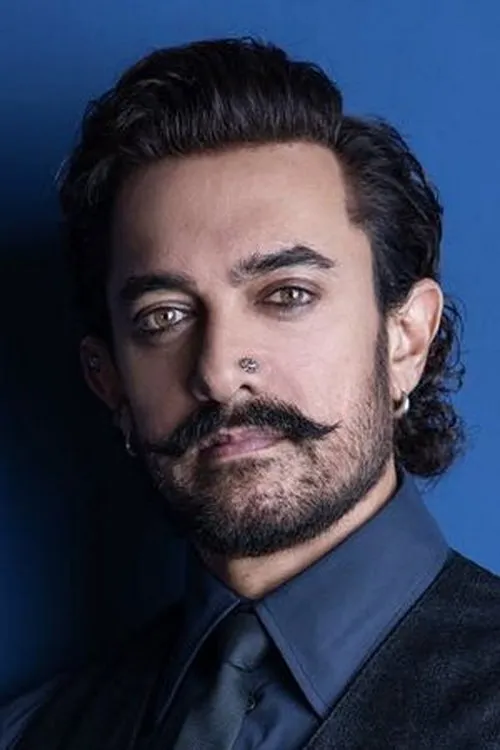
Age: 61
male
Aamir Khan (born 14 March 1965) is an Indian actor, director, producer, filmmaker and television talk-show host who has established himself as one of the most popular and influential actors of Indian cinema. Starting his career as a child actor in his uncle Nasir Hussain's film Yaadon Ki Baaraat (1973), Khan began his professional career eleven years later with Holi (1984) and had his first commercial success with Qayamat Se Qayamat Tak (1988). He received his first National Film Award (Special Jury Award) for his role in the film Raakh (1989). After seven previous nominations during the 1980s and 1990s, Khan received his first Filmfare Award for Best Actor for his performance in the major grosser Raja Hindustani (1996) and later earned his second Best Actor award for his performance in the Academy Award-nominated Lagaan, which also marked the debut of his own production company. Following a four-year break from acting, Khan made his comeback playing the title role in the historical Mangal Pandey: The Rising (2005), and later won a Critics Award for Best Performance for his role in Rang De Basanti (2006). The following year, he made his directorial debut with Taare Zameen Par, for which he received a Filmfare Award for Best Director. This was followed by Ghajini (2008), which became the highest grossing film of that year, and 3 Idiots (2009), which became the highest-grossing Bollywood film of all-time, unadjusted for inflation. The Government of India honoured him with the Padma Shri in 2003 and the Padma Bhushan in 2010 for his contributions towards Indian cinema.
The core story of the work is that of a dynastic struggle for the throne of Hastinapura, the kingdom ruled by the Kuru clan. The two collateral branches of the family that participate in the struggle are the Kaurava and the Pandava. Although the Kaurava is the senior branch of the family, Duryodhana, the eldest Kaurava, is younger than Yudhishthira, the eldest Pandava. Both Duryodhana and Yudhishthira claim to be first in line to inherit the throne. The struggle culminates in the great battle of Kurukshetra, in which the Pandavas are ultimately victorious. The battle produces complex conflicts of kinship and friendship, instances of family loyalty and duty taking precedence over what is right, as well as the converse.


