
Fort Worth is the fifth-largest city in the U.S. state of Texas and the 13th-largest city in the United States.[8] It is the county seat of Tarrant County, covering nearly 350 square miles (910 km2) into four other counties: Denton, Parker, Wise, and Johnson. According to a 2022 United States census estimate, Fort Worth's population was 958,692.[6] Fort Worth is the second-largest city in the Dallas–Fort Worth–Arlington metropolitan area, which is the fourth-most populous metropolitan area in the United States.[9] The city of Fort Worth was established in 1849 as an army outpost on a bluff overlooking the Trinity River.[10] Fort Worth has historically been a center of the Texas Longhorn cattle trade.[10] It still embraces its Western heritage and traditional architecture and design.[11][12] USS Fort Worth (LCS-3) is the first ship of the United States Navy named after the city.[13] Nearby Dallas has held a population majority as long as records have been kept, yet Fort Worth has become one of the fastest-growing cities in the United States in recent years, particularly in the 21st century, nearly doubling its population since 2000. Fort Worth is the location of the Van Cliburn International Piano Competition and several museums designed by contemporary architects. The Kimbell Art Museum was designed by Louis Kahn, with an addition designed by Renzo Piano.[14] The Modern Art Museum of Fort Worth was designed by Tadao Ando. The Amon Carter Museum of American Art, designed by Philip Johnson, houses American art. The Sid Richardson Museum, redesigned by David M. Schwarz, has a collection of Western art in the U.S., emphasizing Frederic Remington and Charles Russell. The Fort Worth Museum of Science and History was designed by Ricardo Legorreta of Mexico. Fort Worth is the location of several university communities: Texas Christian University, Texas Wesleyan, University of North Texas Health Science Center, and Texas A&M University School of Law. Several multinational corporations, including Bell Textron, American Airlines, BNSF Railway, and Chip 1 Exchange are headquartered in Fort Worth.
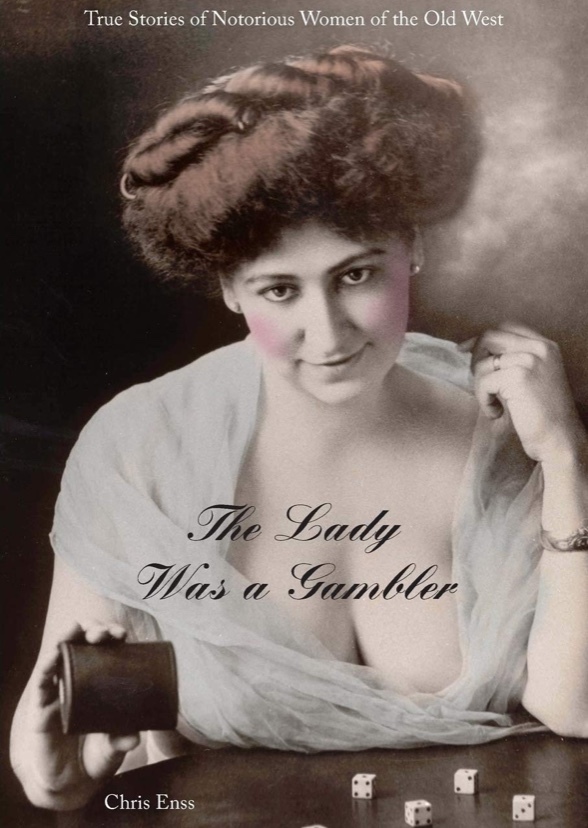
Her family was reportedly quite wealthy and her father, a racehorse breeder and prominent gambler, traveled extensively with Lottie, teaching her the secrets of winning at cards at some of the finest casinos. After her father's death in the Civil War, Lottie's mother sent her to Detroit to find a husband. She was accompanied by Mary Poindexter, her loyal slave and nanny. After running out of money in Detroit, she fell into a life of gambling, traveling the Mississippi River. Lottie arrived in San Antonio in 1865. She became a house gambler at the University Club working for the Thurmond family. She met and fell in love with Frank Thurmond, a fellow gambler. After being accused of murder, Frank fled San Antonio and Lottie followed. The pair traveled for many years throughout the frontier areas of Texas, like Fort Concho, Jacksboro, San Angelo, Denison, Fort Worth, and Fort Griffin. They moved to Kingston, New Mexico, in 1877, where they ran a gambling room in the Victorio Hotel. Lottie later became the owner of the Broadway Restaurant in Silver City. In 1880, Lottie and Frank were married in Silver City. In 1882 they moved to Deming, New Mexico, where they settled permanently and gave up their gambling life. They became upstanding citizens in the community, with Frank eventually becoming vice president of Deming National Bank and Lottie helping to found St. Luke's Episcopal Church. Lottie died on February 9, 1934 and was buried in Deming.




