Died at 125
male
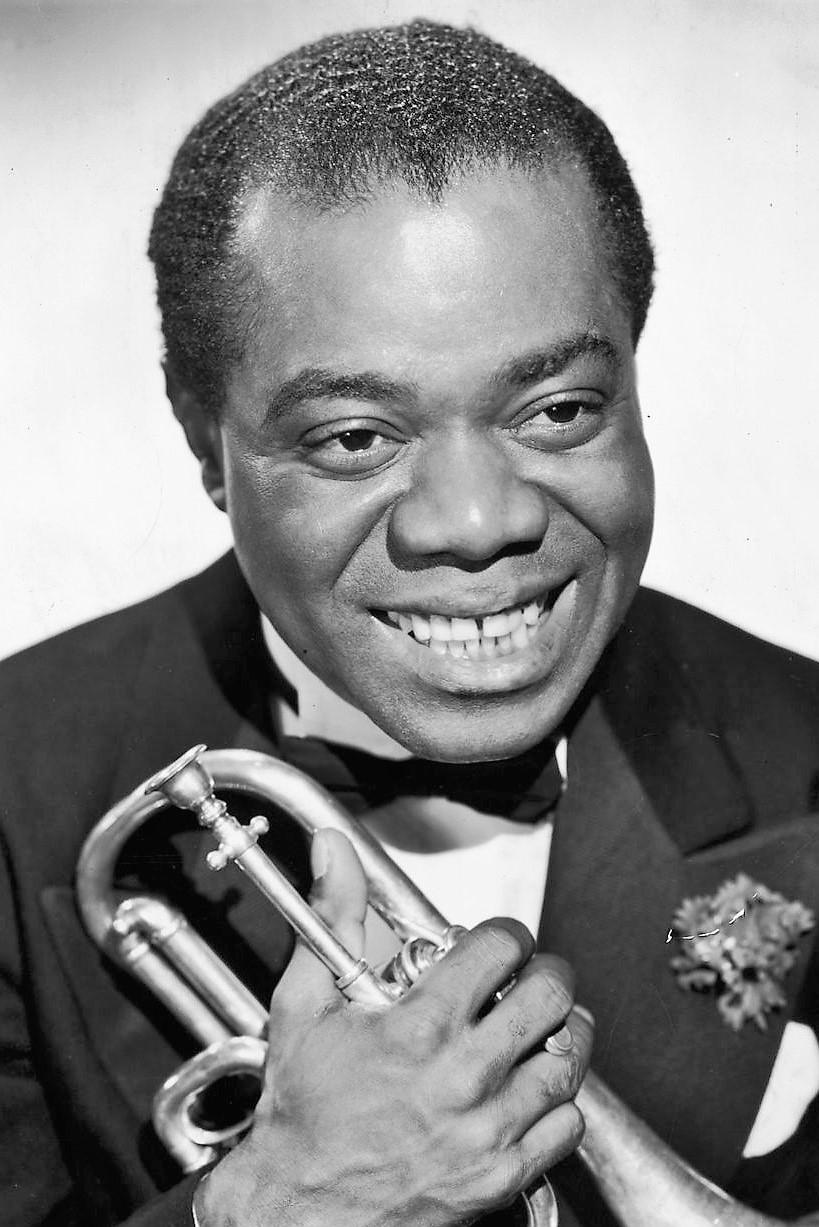
Louis Daniel Armstrong (August 4, 1901 – July 6, 1971), nicknamed Satchmo or Pops, was an American jazz trumpeter and singer from New Orleans, Louisiana. Coming to prominence in the 1920s as an "inventive" cornet and trumpet player, Armstrong was a foundational influence in jazz, shifting the music's focus from collective improvisation to solo performance. With his instantly recognizable deep and distinctive gravelly voice, Armstrong was also an influential singer, demonstrating great dexterity as an improviser, bending the lyrics and melody of a song for expressive purposes. He was also greatly skilled at scat singing, vocalizing using sounds and syllables instead of actual lyrics. Renowned for his charismatic stage presence and voice almost as much as for his trumpet-playing, Armstrong's influence extends well beyond jazz music, and by the end of his career in the 1960s, he was widely regarded as a profound influence on popular music in general. Armstrong was one of the first truly popular African-American entertainers to "cross over," whose skin-color was secondary to his amazing talent in an America that was severely racially divided. It allowed him socially acceptable access to the upper echelons of American society that were highly restricted for a person of color. While he rarely publicly politicized his race, often to the dismay of fellow African-Americans, he was privately a huge supporter of the Civil Rights movement in America.
Louis Armstrong

The Plant
for The Plant in Little Shop of Horrors: Broadway Musical (1966)
Suggested by user_380736

The Broadway musical "Little Shop of Horrors" was originally staged in 1982, but imagining a version set in 1966 brings some unique possibilities. In this alternate scenario, the story would remain focused on the quirky characters of Seymour, Audrey, and the mysterious, carnivorous plant, Audrey II. However, the musical's aesthetic, costumes, and set design would reflect the mid-1960s era, with vibrant mod fashion, psychedelic colours, and a soundtrack perhaps influenced more directly by the pop and Motown sounds of the time. The show's themes of ambition, romance, and dark comedy would still resonate, but the cultural backdrop of 1966—marked by social change, optimism, and a touch of counterculture—might amplify the sense of rebellion and satire within the narrative. Audrey II's rise could parallel contemporary anxieties about rapid technological and societal advancements. Ultimately, "Little Shop of Horrors" (1966) would blend the original's charm with a fresh, swinging sixties flair, offering audiences a nostalgic yet twisted take on the classic tale.

