Age: 45
female
Eliza Dushku (born December 30, 1980) is an American actress and producer, known for her versatile talent and captivating performances across film and television. Dushku's acting career began at a young age when she landed her first major role as the troubled teenage daughter, Faith, on the hit television series "Buffy the Vampire Slayer" (1998-2003). Her portrayal of the complex and rebellious character garnered critical acclaim and a strong fan following. Following her success on "Buffy," Dushku went on to star in the spin-off series "Angel" (2000-2003), where she continued to develop her character, Faith, in a more prominent role. Her ability to bring depth and vulnerability to her performances earned her further recognition in the industry. Dushku's talent extended beyond television, as she made a successful transition to the big screen. She appeared in several notable films, including "Bring It On" (2000), "The New Guy" (2002), and "Wrong Turn" (2003), where she showcased her range as an actress and solidified her presence in the film industry. In addition to her acting career, Dushku has also been involved in producing projects. She co-produced and starred in the short-lived series "Tru Calling" (2003-2005), further demonstrating her passion for storytelling and her desire to contribute to the creative process behind the camera. Throughout her career, Dushku has consistently taken on challenging and complex roles, showcasing her versatility as an actress. She has also been praised for her commitment to portraying strong female characters who defy stereotypes and challenge societal norms. Beyond her acting pursuits, Dushku is also known for her philanthropic efforts. She has been involved in various charitable organizations, particularly focusing on empowering young women and combating sexual violence. Eliza Dushku continues to be a respected and admired figure in the entertainment industry, captivating audiences with her talent, authenticity, and dedication to her craft. Her contributions to both television and film have left a lasting impact, and she remains an influential presence in the industry.
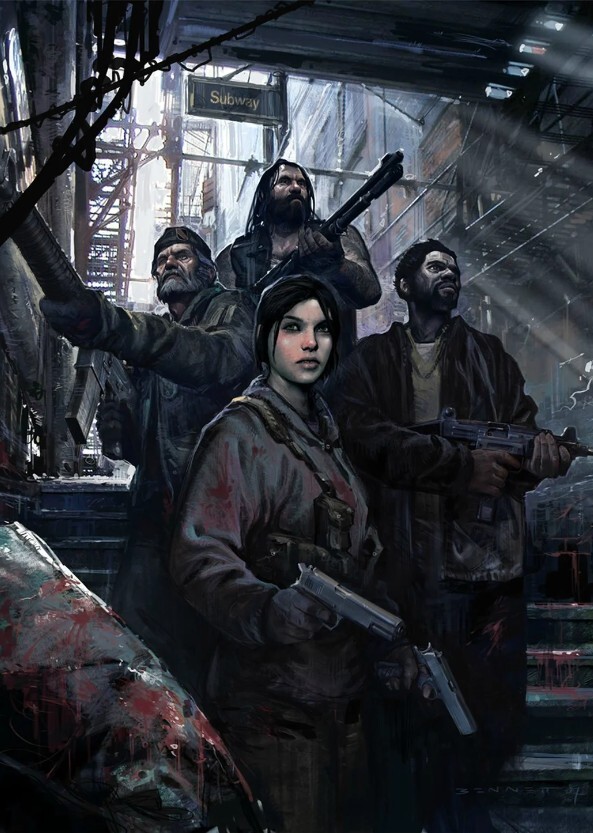
A virulent pathogen tears through major cities in a matter of weeks, collapsing infrastructure faster than governments can respond. The infected do not simply decay — they mutate under neurological overload, driven by hyper-aggression and distorted sensory processing. Streets empty. Power grids fail. Emergency broadcasts loop into silence. What remains is a fractured landscape of quarantined zones, mass graves, and abandoned highways where survival hinges on movement, trust, and timing. A small group of strangers attempts to cross this dead corridor toward a rumoured evacuation point as military containment measures escalate in the background. The infected are not uniform; some exhibit extreme physiological adaptations — explosive bile dispersal, predatory ambush behaviour, brute-force trauma resistance — forcing constant tactical adaptation. Supplies are scarce, ammunition scarcer. Every safe room is temporary. The true threat isn’t just the horde outside, but the mounting psychological strain within: exhaustion, paranoia, and the slow erosion of hope in a world where rescue may already be a myth.