
Age: 78
male
David Alan Mamet (/ˈmæmɪt/; born November 30, 1947) is an American playwright, author, and filmmaker. He won a Pulitzer Prize and received Tony nominations for his plays Glengarry Glen Ross(1984) and Speed-the-Plow (1988). He first gained critical acclaim for a trio of 1970s off-Broadway plays: The Duck Variations, Sexual Perversity in Chicago, and American Buffalo. His plays, Race and The Penitent, respectively, opened on Broadway in 2009 and premiered off-Broadway in 2017. Feature films that Mamet both wrote and directed include House of Games (1987), Homicide (1991), The Spanish Prisoner (1997), and his biggest commercial success, Heist (2001). His screenwriting credits include The Postman Always Rings Twice (1981), The Verdict (1982), The Untouchables (1987), Hoffa (1992), Wag the Dog (1997), and Hannibal (2001). Mamet himself wrote the screenplay for the 1992 adaptation of Glengarry Glen Ross and wrote and directed the 1994 adaptation of his play Oleanna (1992). He created and produced the CBS series The Unit (2006–2009). Mamet's books include: On Directing Film (1991), a commentary and dialogue about film-making; The Old Religion (1997), a novel about the lynching of Leo Frank; Five Cities of Refuge: Weekly Reflections on Genesis, Exodus, Leviticus, Numbers and Deuteronomy (2004), a Torah commentary with Rabbi Lawrence Kushner; The Wicked Son (2006), a study of Jewish self-hatred and antisemitism; Bambi vs. Godzilla, a commentary on the movie business; The Secret Knowledge: On the Dismantling of American Culture (2011), a commentary on cultural and political issues; Three War Stories (2013), a trio of novellas about the physical and psychological effects of war; and Everywhere an Oink Oink: An Embittered, Dyspeptic, and Accurate Report of Forty Years in Hollywood (2023), an autobiographical account of his experiences in Hollywood. Description above from the Wikipedia article David Mamet, licensed under CC-BY-SA, full list of contributors on Wikipedia.
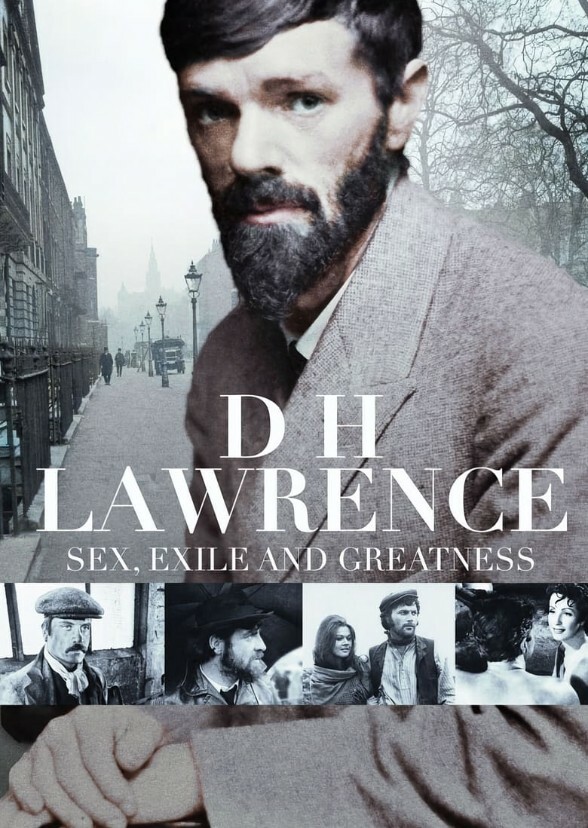
Lawrence: Flames of Desire follows the extraordinary life of David Herbert Lawrence, from his early struggles in an impoverished mining town in England to becoming a literary giant whose works would ignite fierce debates on sex, morality, and social norms. Each episode delves into the core moments that shaped Lawrence as a man and writer- his deep connection with his overbearing mother, his scandalous love affair and marriage with Frieda Weekley, and his ceaseless fight against the censorship that nearly destroyed his career. The miniseries highlights the dramatic backdrops of Edwardian and post-WWI Europe, from the romantic Italian countryside to the wilds of New Mexico, where Lawrence sought refuge from the oppressive forces of British society. Characters such as literary contemporaries Aldous Huxley and E.M. Forster add richness to the narrative, showcasing the intellectual circles in which he moved, while his fierce battles over Lady Chatterley's Lover take center stage as the pinnacle of his struggle against convention. With themes of personal liberty, sexual awakening, and artistic defiance, Lawrence: Flames of Desire portrays Lawrence as a man ahead of his time, whose radical ideas about human relationships and desire continue to resonate today. The series balances the personal and political, offering a portrait not only of a man but also of the societal upheavals that defined the early 20th century, making it both timely and timeless.


