
female
Paraceratherium is an extinct genus of hornless rhinoceros. It is one of the largest terrestrial mammals that has existed and lived from the early to late Oligocene epoch (34–23 million years ago). Its remains have been found across Eurasia between China and the Balkans. It is classified as a member of the hyracodont subfamily Indricotheriinae. Paraceratherium means "near the hornless beast", in reference to Aceratherium, the genus in which the type species A. bugtiense was originally placed. The exact size of Paraceratherium is unknown because of the incompleteness of the fossils. The shoulder height was about 4.8 metres (15.7 feet), and the length about 7.4 metres (24.3 feet). Its weight is estimated to have been about 15 to 20 tonnes (33,000 to 44,000 lb). The long neck supported a skull that was about 1.3 metres (4.3 ft) long. It had large, tusk-like incisors and a nasal incision that suggests it had a prehensile upper lip or proboscis (trunk). The legs were long and pillar-like. The lifestyle of Paraceratherium may have been similar to that of modern large mammals such as the elephants and extant rhinoceroses. Because of its size, it would have had few predators and a slow rate of reproduction. It was a browser, eating mainly leaves, soft plants, and shrubs. It lived in habitats ranging from arid deserts with a few scattered trees to subtropical forests. The reasons for the animal's extinction are unknown, but various factors have been proposed. The taxonomy of the genus and the species within has a long and complicated history. Other genera of Oligocene indricotheres, such as Baluchitherium, Indricotherium, and Pristinotherium, have been named, but no complete specimens exist, making comparison and classification difficult. Most modern scientists consider these genera to be junior synonyms of Paraceratherium, and it is thought to contain at least three discernible species; P. bugtiense, P. transouralicum, and P. huangheense. The most completely-known species is P. transouralicum, so most reconstructions of the genus are based on it. Differences between P. bugtiense and P. transouralicum may be due to dimorphism, which would make them the same species.
Paraceratherium

Cenozoic Animals
for Cenozoic Animals in Land of the Lost (Peacock TV Series)
Suggested by manassestobias
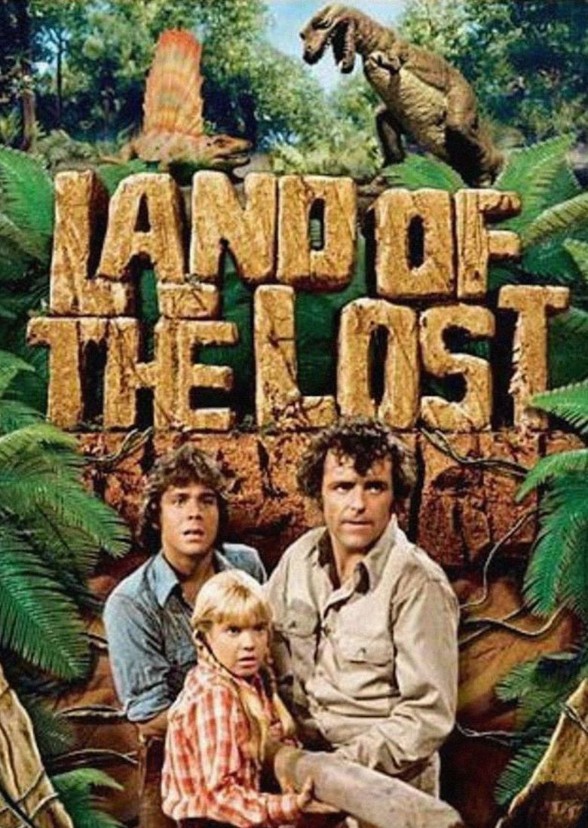
Land of the Lost (Peacock TV Series) is reboot tv show streaming on Peacock. And it was featuring five family members instead of three like on both versions from 70's and 90's Richard Marshall with his wife Jennifer, his two daughters Sally the oldest, and Molly the youngest, and his son Bill are the river canoe ride, when they'd head straight to the cave until then the rock closed behind the and then suddenly they've fall into the whirlpool 12,000 ft. below into the land of the lost, and encounter with dinosaurs, pakunis, sleestaks, and other prehistoric creatures, and befriended by the jungle girl Kayla Smith.




