
Age: 85
male
Clinton Richard Dawkins, FRS, FRSL (born 26 March 1941), known as Richard Dawkins, is a British ethologist, evolutionary biologist and author. He is an emeritus fellow of New College, Oxford, and was the University of Oxford's Professor for Public Understanding of Science from 1995 until 2008. Dawkins came to prominence with his 1976 book The Selfish Gene, which popularised the gene-centered view of evolution and introduced the term meme. In 1982, he introduced into evolutionary biology an influential concept, presented in his book The Extended Phenotype, that the phenotypic effects of a gene are not necessarily limited to an organism's body, but can stretch far into the environment, including the bodies of other organisms. Dawkins is an atheist and humanist, a Vice President of the British Humanist Association and supporter of the Brights movement. He is well known for his criticism of creationism and intelligent design. In his 1986 book The Blind Watchmaker, he argued against the watchmaker analogy, an argument for the existence of a supernatural creator based upon the complexity of living organisms. Instead, he described evolutionary processes as analogous to a blind watchmaker. He has since written several popular science books, and makes regular television and radio appearances, predominantly discussing these topics. He has been referred to in the media as "Darwin's Rottweiler," a reference to English biologist T. H. Huxley, who was known as "Darwin's Bulldog" for his advocacy of Charles Darwin's evolutionary ideas. In his 2006 book The God Delusion, Dawkins contends that a supernatural creator almost certainly does not exist and that religious faith is a delusion—a fixed false belief. As of January 2010, the English-language version had sold more than two million copies and had been translated into 31 languages, making it his most popular book to date.
Richard Dawkins

Squire Winter
for Squire Winter in Lady Chatterley's Lover
Suggested by devahutiraichaliha
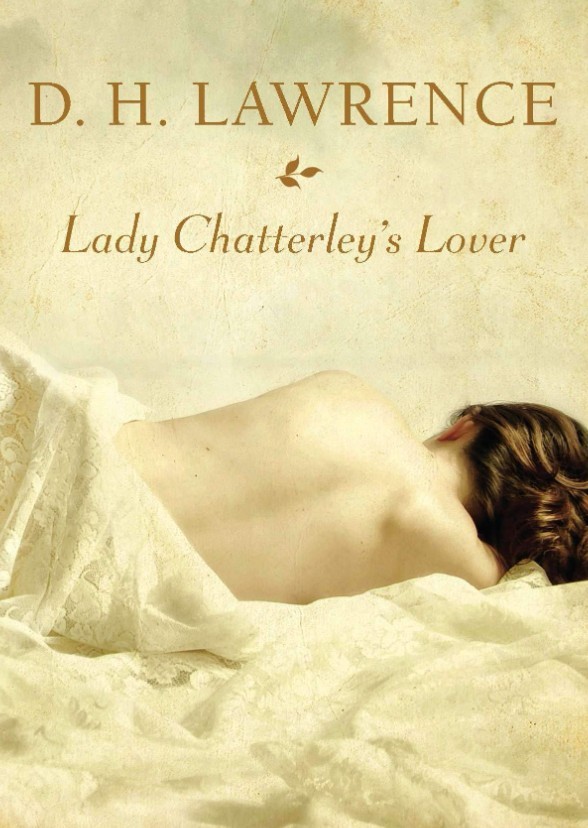
The story concerns a young married woman, the former Constance Reid (Lady Chatterley), whose upper-class husband, Sir Clifford Chatterley, described as a handsome, well-built man, is paralysed from the waist down due to a Great War injury. In addition to Clifford's physical limitations, his emotional neglect of Constance forces distance between the couple. Her emotional frustration leads her into an affair with the gamekeeper, Oliver Mellors. The class difference between the couple highlights a major motif of the novel, which is the unfair dominance of intellectuals over the working class. The novel is about Constance's realization that she cannot live with the mind alone; she must also be alive physically. This realization stems from a heightened sexual experience that Constance has only felt with Mellors, suggesting that love can only happen with the element of the body, not just the mind.


