Died at 74
male
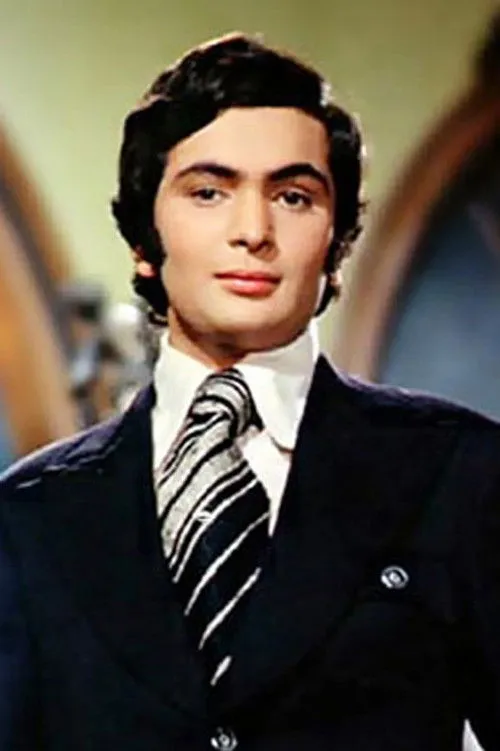
Rishi Raj Kapoor was an Indian actor, film director, and producer who worked in Hindi films. He was the recipient of several accolades, including a National Film Award in a career that spanned 50 years. Born into the Kapoor family,he made his debut as an adolescent, in his father Raj Kapoor's film Mera Naam Joker (1970), for which he won the National Film Award for Best Child Artist. As an adult, his first lead role was opposite Dimple Kapadia in the teen romance Bobby (1973), which won him the Filmfare Award for Best Actor. Between 1973 and 2000, Kapoor starred as the romantic lead in 92 films. Some of his notable films during this period include Khel Khel Mein (1975), Kabhi Kabhie (1976), Amar Akbar Anthony (1977), Sargam (1979), Karz (1980), Prem Rog (1982), Saagar (1985), Nagina (1986), Chandni (1989), Henna (1991) and Deewana (1992). For his performance in Do Dooni Chaar (2010), he won the Filmfare Award for Best Actor (Critics). He was honoured with the Filmfare Lifetime Achievement Award in 2008. His final film appearance was in Sharmaji Namkeen (2022), which was released posthumously. Kapoor met his wife, actress Neetu Singh while working in films on film set. They have 2 children. He died of leukemia on 30 April 2020, aged 67. Description above from the Wikipedia article Rishi Kapoor, licensed under CC-BY-SA, full list of contributors on Wikipedia.
Rishi Kapoor

Malcolm Reid
for Malcolm Reid in Lady Chatterley's Lover
Suggested by devahutiraichaliha
The story concerns a young married woman, the former Constance Reid (Lady Chatterley), whose upper-class husband, Sir Clifford Chatterley, described as a handsome, well-built man, is paralysed from the waist down due to a Great War injury. In addition to Clifford's physical limitations, his emotional neglect of Constance forces distance between the couple. Her emotional frustration leads her into an affair with the gamekeeper, Oliver Mellors. The class difference between the couple highlights a major motif of the novel, which is the unfair dominance of intellectuals over the working class. The novel is about Constance's realization that she cannot live with the mind alone; she must also be alive physically. This realization stems from a heightened sexual experience that Constance has only felt with Mellors, suggesting that love can only happen with the element of the body, not just the mind.

