
Badgers are short-legged omnivores in the family Mustelidae (which also includes the otters, wolverines, martens, minks, polecats, weasels, and ferrets). Badgers are a polyphyletic rather than a natural taxonomic grouping, being united by their squat bodies and adaptions for fossorial activity. All belong to the caniform suborder of carnivoran mammals. The fifteen species of mustelid badgers are grouped in four subfamilies: four species of Melinae (genera Meles and Arctonyx) including the European badger, five species of Helictidinae (genus Melogale) or ferret-badger, the honey badger or ratel Mellivorinae (genus Mellivora), and the American badger Taxideinae (genus Taxidae). Badgers include the most basal mustelids; the American badger is the most basal of all, followed successively by the ratel and the Melinae; the estimated split dates are about 17.8, 15.5 and 14.8 million years ago, respectively.[1] The two species of Asiatic stink badgers of the genus Mydaus were formerly included within Melinae (and thus Mustelidae), but more recent genetic evidence indicates these are actually members of the skunk family (Mephitidae).[2] Badger mandibular condyles connect to long cavities in their skulls, which gives resistance to jaw dislocation and increases their bite grip strength.[3] This in turn limits jaw movement to hinging open and shut, or sliding from side to side, but it does not hamper the twisting movement possible for the jaws of most mammals. Badgers have rather short, wide bodies, with short legs for digging. They have elongated, weasel-like heads with small ears. Their tails vary in length depending on species; the stink badger has a very short tail, while the ferret-badger's tail can be 46–51 cm (18–20 in) long, depending on age. They have black faces with distinctive white markings, grey bodies with a light-coloured stripe from head to tail, and dark legs with light-coloured underbellies. They grow to around 90 cm (35 in) in length including tail. The European badger is one of the largest; the American badger, the hog badger, and the honey badger are generally a little smaller and lighter. Stink badgers are smaller still, and ferret-badgers are the smallest of all. They weigh around 9–11 kg (20–24 lb), while some Eurasian badgers weigh around 18 kg (40 lb).[4]
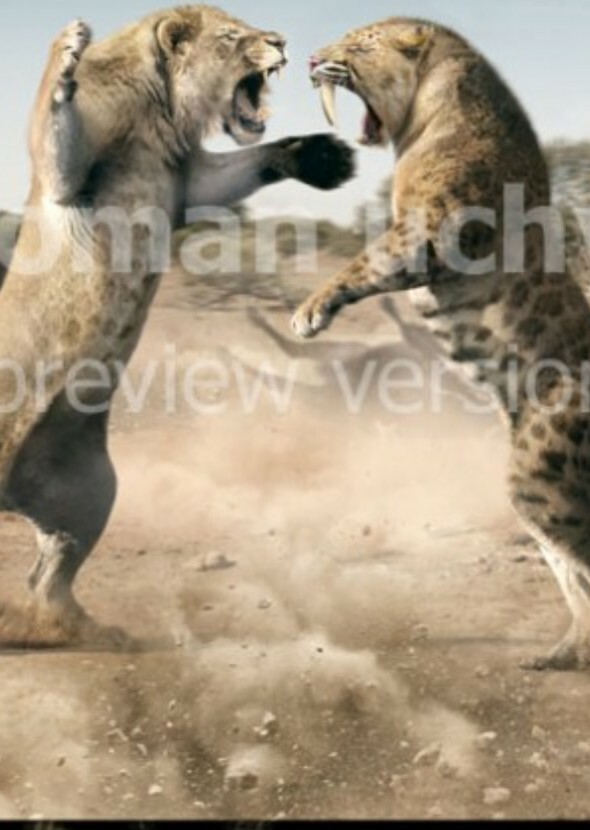
The Story is About The Young Sabertooth Cat, Bidzil who lost his parents to Takar, The Ruthless, Cruel & Formidable American Lion who Killed Them. The adult jaguars, Calian & his Mate, Eyota took Bidzil in after losing their cub who is their son to Takar who killed him in Cold-Blood. in his early adolescence, Bidzil has Been with Meeko the raccoon, Honani the Badger, & Siwili the Gray fox who are orphans, and they spent time together ever since. in The Ways of Life, Calian Trains Bidzil to hunt and fight for survival if he's to defeat takar. Bidzil was grown into a young adult when he met a Young & Beautiful Sabertooth cat, Winona, and her Protective Older Brother, Kitchi who lost their father to The Pack of Pleistocene Coyotes, and their widowed mother, sakari. with the Help of Bidzil's Three Friends, his jaguar Parents, Calian & Eyota, The Pack of Dire Wolves, and The Guidance of The Wise & Mystic Megalonyx Shaman (Jefferson's Ground Sloth), also, bidzil will become Strong & Wise so That he will protect the grand lands, defeat takar, & avenged his parents' death.




