
Age: 39
female
Cynthia Chinasaokwu Onyedinmanasu Amarachukwu Owezuke Echimino Erivo MBE(/əˈriːvoʊ/ ə-REE-voh; born 8 January 1987) is an British-American actress, singer, musician, and songwriter. Known for her work on both stage and screen, she is the recipient of several accolades and one of the few individuals nominated for an Emmy, a Grammy, an Oscar, and a Tony Award (EGOT), winning all but the Oscar. Erivo made her West End debut in the stage musical The Umbrellas of Cherbourg (2011), and her Broadway debut as Celie in the musical revival of The Color Purple (2015–2017). Erivo's work for The Color Purple won her the Tony Award for Best Actress in a Musical and Grammy Award for Best Musical Theater Album, as well as a Daytime Emmy Award. She expanded to films in 2018 with the crime thrillers Widows and Bad Times at the El Royale. Erivo earned nominations for the Academy Award for Best Actress for portraying Harriet Tubman in Harriet (2019) and Elphaba in Wicked (2024), as well as a nomination for Best Original Song for the song "Stand Up" from the former. For reprising her role as Elphaba in Wicked: For Good (2025), she became the first black actress to be nominated twice for Best Actress in a Motion Picture – Musical or Comedy at the Golden Globe Awards. On television, Erivo portrayed Holly Gibney in the HBO crime drama miniseries The Outsider (2020) and Aretha Franklin in National Geographic's anthology series Genius: Aretha (2021); the latter earned her a nomination for the Primetime Emmy Award for Outstanding Lead Actress in a Limited or Anthology Series or Movie. As a singer, she has released singles and two solo albums in 2021 and 2025. Description above from the Wikipedia article Cynthia Erivo, licensed under CC-BY-SA, full list of contributors on Wikipedia.
Cynthia Erivo

Jane Manning James
for Jane Manning James in Kingdom of Nauvoo
Suggested by jamesvalentine
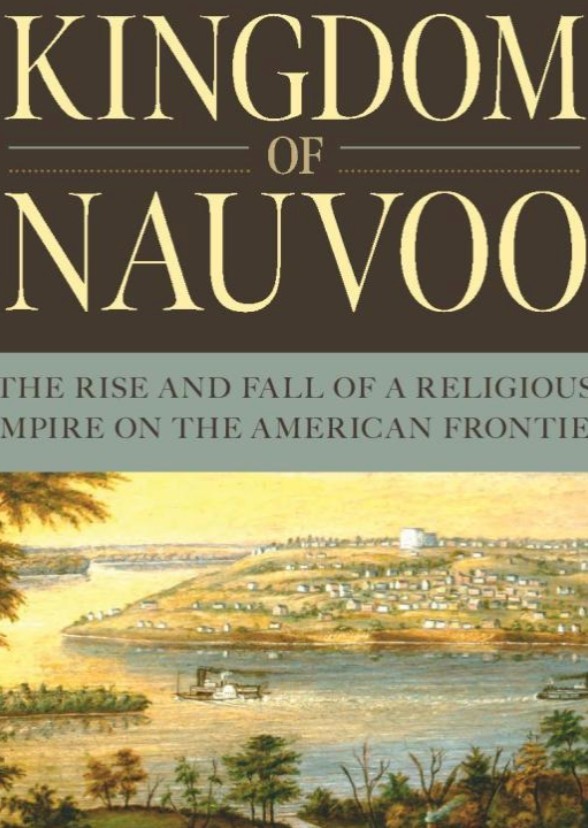
Founded in Western Illinois in 1839 by the Mormon prophet Joseph Smith and his followers... situated on a hill and protected on three sides by the Mississippi River, the industrious Mormons quickly built a religious empire; at its peak, the city surpassed Chicago in population, with more than 12,000 inhabitants. The Mormons founded their own army, with Smith as its general; established their own courts; and went so far as to write their own constitution, in which they declared that there could be no separation of church and state, and that the world was to be ruled by Mormon priests. A raucous, violent, character-driven story, Kingdom of Nauvoo raises many of the central questions of American history, and even serves as a parable for the American present. How far does religious freedom extend? Can religious and other minority groups survive in a democracy where the majority dictates the law of the land? The Mormons of Nauvoo, who initially believed in the promise of American democracy, would become its strongest critics. Throughout his absorbing chronicle, Park shows the many ways in which the Mormons were representative of their era, and in doing so elevates nineteenth century Mormon history into the American mainstream.




