
Age: 50
male
Corey Daniel Stoll (born March 14, 1976) is an American actor. He is best known for his roles as Congressman Peter Russo on the Netflix political thriller series House of Cards (2013–2016), for which he received a Golden Globe nomination in 2013, and Dr. Ephraim Goodweather on the FX horror drama series The Strain (2014–2017). From 2020 to 2023, he portrayed Michael Prince, a business rival to protagonist Bobby Axelrod, in the Showtime series Billions. He was also a regular cast member on the NBC drama series Law & Order: LA (2010–2011). Stoll played Darren Cross/Yellowjacket/M.O.D.O.K. in the Marvel Cinematic Universe film Ant-Man (2015) and its sequel Ant-Man and the Wasp: Quantumania (2023). For his portrayal of Ernest Hemingway in Woody Allen's Midnight in Paris (2011), he was nominated for the Independent Spirit Award for Best Supporting Male. His other notable films include Black Mass (2015), First Man (2018), The Seagull (2018), The Many Saints of Newark (2021), and West Side Story (2021). He acted off-Broadway in Intimate Apparel (2004) and on Broadway in Appropriate (2023). Description above from the Wikipedia article Corey Stoll, licensed under CC-BY-SA, full list of contributors on Wikipedia
Corey Stoll

Heber C. Kimball
for Heber C. Kimball in Kingdom of Nauvoo
Suggested by jamesvalentine
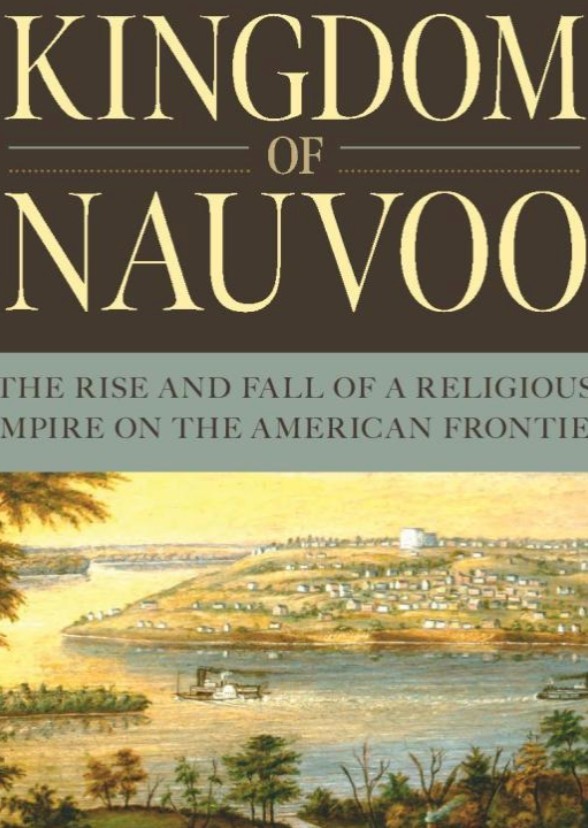
Founded in Western Illinois in 1839 by the Mormon prophet Joseph Smith and his followers... situated on a hill and protected on three sides by the Mississippi River, the industrious Mormons quickly built a religious empire; at its peak, the city surpassed Chicago in population, with more than 12,000 inhabitants. The Mormons founded their own army, with Smith as its general; established their own courts; and went so far as to write their own constitution, in which they declared that there could be no separation of church and state, and that the world was to be ruled by Mormon priests. A raucous, violent, character-driven story, Kingdom of Nauvoo raises many of the central questions of American history, and even serves as a parable for the American present. How far does religious freedom extend? Can religious and other minority groups survive in a democracy where the majority dictates the law of the land? The Mormons of Nauvoo, who initially believed in the promise of American democracy, would become its strongest critics. Throughout his absorbing chronicle, Park shows the many ways in which the Mormons were representative of their era, and in doing so elevates nineteenth century Mormon history into the American mainstream.

