
Age: 20
female
Mckenna Grace (born June 25, 2006) is an American actress and singer. Born in Grapevine, Texas, she began acting professionally at age five and relocated to Los Angeles, California, as a child. Her earliest roles included Jasmine Bernstein in the Disney XD sitcom Crash & Bernstein (2012–2014) and Faith Newman in the soap opera The Young and the Restless (2013–2015). After several small roles, she starred as a child prodigy in Gifted (2017), a breakthrough for which she received a nomination for the Critics' Choice Movie Award for Best Young Performer. Grace subsequently appeared in the films I, Tonya (2017), Troop Zero (2019), and Captain Marvel (2019). During this time, she appeared in several horror projects, including The Bad Seed (2018), The Haunting of Hill House (2018), and Annabelle Comes Home (2019). For playing the abused teenager Esther Keyes in The Handmaid's Tale (2021–2022), Grace was nominated for the Primetime Emmy Award for Outstanding Guest Actress in a Drama Series, making her the first child recognized for a guest acting Emmy. She appeared in the supernatural comedy films Ghostbusters: Afterlife (2021) and Ghostbusters: Frozen Empire (2024) as Phoebe Spengler, receiving critical praise and a Critics' Choice Super Award nomination. In 2022, Grace wrote, executive produced, and starred in The Bad Seed Returns, and portrayed Jan Broberg in A Friend of the Family. After signing with Photo Finish Records in 2020, Grace released her debut single, "Haunted House", in 2021, as part of the Ghostbusters: Afterlife soundtrack. She released two extended plays in 2023: Bittersweet 16 and Autumn Leaves, which explored pop rock and folk sounds, respectively. Description above from the Wikipedia article Mckenna Grace, licensed under CC-BY-SA, full list of contributors on Wikipedia.
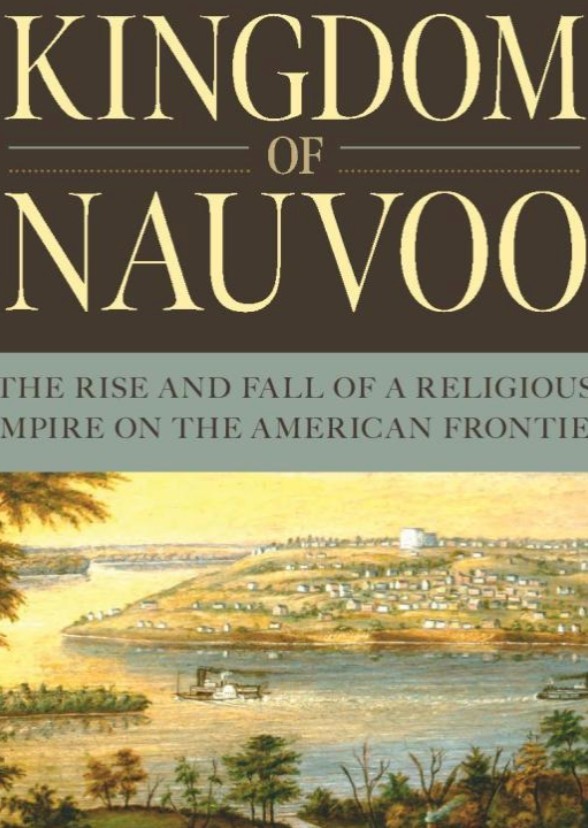
Founded in Western Illinois in 1839 by the Mormon prophet Joseph Smith and his followers... situated on a hill and protected on three sides by the Mississippi River, the industrious Mormons quickly built a religious empire; at its peak, the city surpassed Chicago in population, with more than 12,000 inhabitants. The Mormons founded their own army, with Smith as its general; established their own courts; and went so far as to write their own constitution, in which they declared that there could be no separation of church and state, and that the world was to be ruled by Mormon priests. A raucous, violent, character-driven story, Kingdom of Nauvoo raises many of the central questions of American history, and even serves as a parable for the American present. How far does religious freedom extend? Can religious and other minority groups survive in a democracy where the majority dictates the law of the land? The Mormons of Nauvoo, who initially believed in the promise of American democracy, would become its strongest critics. Throughout his absorbing chronicle, Park shows the many ways in which the Mormons were representative of their era, and in doing so elevates nineteenth century Mormon history into the American mainstream.



