Age: 62
male
Russell Ira Crowe (born April 7, 1964) is a New Zealand actor and film director. His work on screen has earned him various accolades, including an Academy Award, two Golden Globe Awards, and a British Academy Film Award. Crowe was born in New Zealand, spending ten years of his childhood in Australia and residing there permanently by age 21. He began acting in Australia and had his break-out role in Romper Stomper (1992). He gained international recognition in the late 1990s for his starring roles in L.A. Confidential (1997) and The Insider (1999). Crowe gained wider stardom for playing the title role of Gladiator (2000), which earned him the Academy Award for Best Actor. Further acclaim came for portraying real-life mathematician John Forbes Nash Jr. in A Beautiful Mind (2001). Crowe then starred in several films in the 2000s, including Master and Commander: The Far Side of the World (2003), Cinderella Man (2005), 3:10 to Yuma (2007), American Gangster (2007), State of Play (2009), and Robin Hood (2010). Crowe has since appeared in the films Les Misérables (2012), Man of Steel (2013), Noah (2014), and Thor: Love and Thunder (2022). In 2014, he made his directorial debut with the drama The Water Diviner, in which he also starred. Aside from acting, Crowe has co-own the National Rugby League (NRL) team South Sydney Rabbitohs since 2006.
Russell Crowe

Brigham Young
for Brigham Young in Kingdom of Nauvoo
Suggested by parkerjohnson
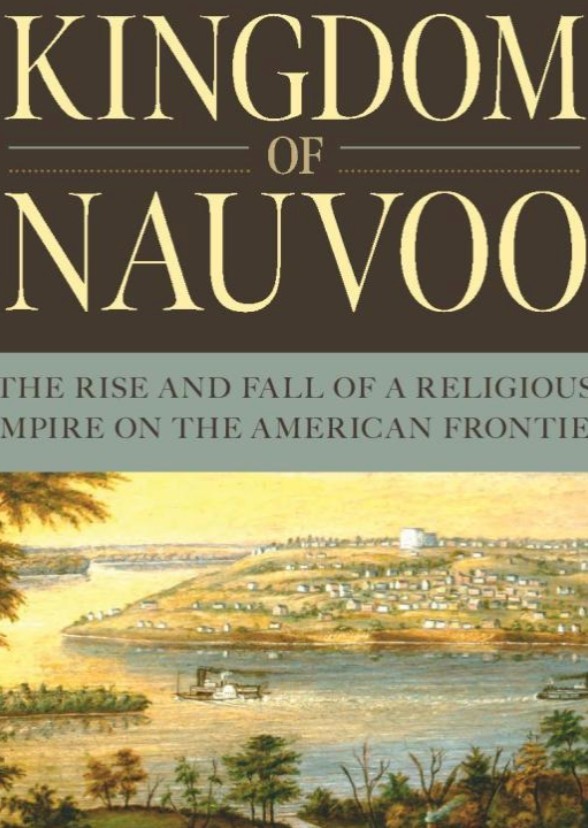
Founded in Western Illinois in 1839 by the Mormon prophet Joseph Smith and his followers... situated on a hill and protected on three sides by the Mississippi River, the industrious Mormons quickly built a religious empire; at its peak, the city surpassed Chicago in population, with more than 12,000 inhabitants. The Mormons founded their own army, with Smith as its general; established their own courts; and went so far as to write their own constitution, in which they declared that there could be no separation of church and state, and that the world was to be ruled by Mormon priests. A raucous, violent, character-driven story, Kingdom of Nauvoo raises many of the central questions of American history, and even serves as a parable for the American present. How far does religious freedom extend? Can religious and other minority groups survive in a democracy where the majority dictates the law of the land? The Mormons of Nauvoo, who initially believed in the promise of American democracy, would become its strongest critics. Throughout his absorbing chronicle, Park shows the many ways in which the Mormons were representative of their era, and in doing so elevates nineteenth century Mormon history into the American mainstream.