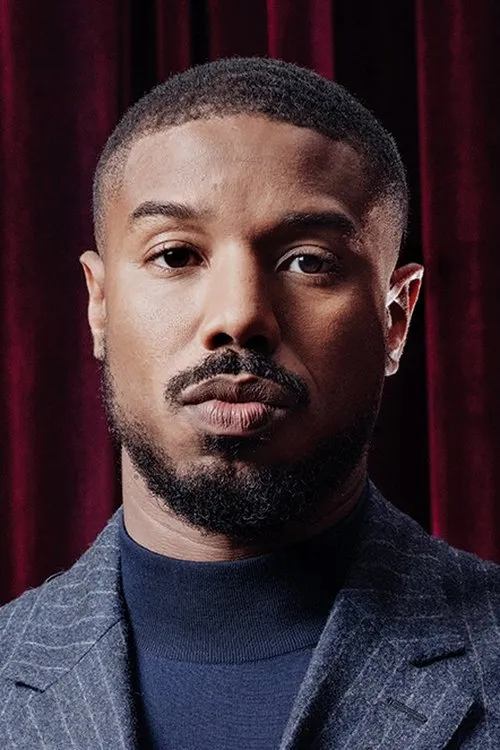
Age: 39
male
Michael Bakari Jordan (/bɑːˈkɑːri/ bah-KAR-ee; born February 9, 1987) is an American actor, producer, and director. His accolades include an Academy Award, three Actor Awards, and a Producers Guild Award, in addition to nominations for a British Academy Film Award, a Golden Globe Award and two Emmy Awards. Jordan was named one of the 100 most influential people in the world by Time in 2020 and 2023, People's Sexiest Man Alive in 2020, and The New York Times ranked him 15th on its list of the 25 greatest actors of the 21st century. Jordan initially broke out in television, playing Wallace in the first season of the HBO crime drama series The Wire (2002). He starred in the ABC soap opera All My Children (2003–2006) and the NBC sports drama series Friday Night Lights (2009–2011). He later starred in and produced the HBO television film Fahrenheit 451 (2018), for which he was nominated for the Primetime Emmy Award for Outstanding Television Movie. Jordan's film breakthrough came as Oscar Grant in Ryan Coogler's biopic Fruitvale Station (2013), for which his performance received critical praise. He earned further acclaim for his performances in Coogler's subsequent films, including Creed (2015), Black Panther (2018), and Sinners (2025); the latter earned him the Academy Award for Best Actor. Jordan reprised his role of Donnie Creed in Creed II (2018) and Creed III (2023), the latter of which also marked his directorial debut. His other films include Chronicle (2012), That Awkward Moment (2014), Fantastic Four (2015), and Just Mercy (2019). Aside from filmmaking, Jordan is also a co-owner of Premier League club AFC Bournemouth. Description above from the Wikipedia article Michael B. Jordan, licensed under CC-BY-SA, full list of contributors on Wikipedia.
Michael B. Jordan

Red Knight
for Red Knight in King Arthur and the Knights of the Round Table
Suggested by shadowthorne3

King Arthur was a legendary British leader who, according to medieval histories and romances, led the defence of Britain against Saxon invaders in the late 5th and early 6th centuries. The details of Arthur's story are mainly composed of folklore and literary invention, and modern historians generally agree that he is unhistorical. The sparse historical background of Arthur is gleaned from various sources, including the Annales Cambriae, the Historia Brittonum, and the writings of Gildas. Arthur's name also occurs in early poetic sources such as Y Gododdin. Arthur is a central figure in the legends making up the Matter of Britain. The legendary Arthur developed as a figure of international interest largely through the popularity of Geoffrey of Monmouth's fanciful and imaginative 12th-century Historia Regum Britanniae (History of the Kings of Britain). In some Welsh and Breton tales and poems that date from before this work, Arthur appears either as a great warrior defending Britain from human and supernatural enemies or as a magical figure of folklore, sometimes associated with the Welsh otherworld Annwn.[6] How much of Geoffrey's Historia (completed in 1138) was adapted from such earlier sources, rather than invented by Geoffrey himself, is unknown.



