
Age: 56
male
Colman Jason Domingo (born November 28, 1969) is an American actor, playwright, and director. Prominent on both screen and stage since the 2010s, Domingo has received various accolades, including a Primetime Emmy Award, and nominations for an Academy Award and two Tony Awards. Time magazine named him one of the 100 most influential people in the world in 2024. Domingo's early Broadway roles include the 2005 play Well and the 2008 musical Passing Strange. He gained acclaim for his role as Mr. Bones in the Broadway musical The Scottsboro Boys (2011), for which he was nominated for the Tony Award for Best Featured Actor in a Musical. He reprised the role in the 2014 West End production, receiving a nomination for the Laurence Olivier Award for Best Performance in a Supporting Role in a Musical. In 2018, he wrote the book for the Broadway musical Summer: The Donna Summer Musical. After early roles in various incarnations of the Law & Order series and as part of the main cast for The Big Gay Sketch Show, Domingo had his breakthrough playing Victor Strand in the AMC series Fear the Walking Dead (2015–2023). He gained wider acclaim for his recurring role as the recovering drug addict Ali on the HBO series Euphoria (2019–present), winning the Primetime Emmy Award for Outstanding Guest Actor in a Drama Series in 2022. Domingo received consecutive nominations in 2024 and 2025 for the Academy Award for Best Actor for his portrayals of civil rights activist Bayard Rustin in the biopic Rustin and a prison inmate in the drama Sing Sing. His other notable film appearances include roles in Lincoln (2012), The Butler (2013), Selma (2014), If Beale Street Could Talk (2018), Ma Rainey's Black Bottom (2020), Zola (2021), and The Color Purple (2023). Description above from the Wikipedia article Colman Domingo, licensed under CC-BY-SA, full list of contributors on Wikipedia.
Colman Domingo

John Henry Irons
for John Henry Irons in Justice League: Throne of Atlantis (Live Action)
Suggested by go77e
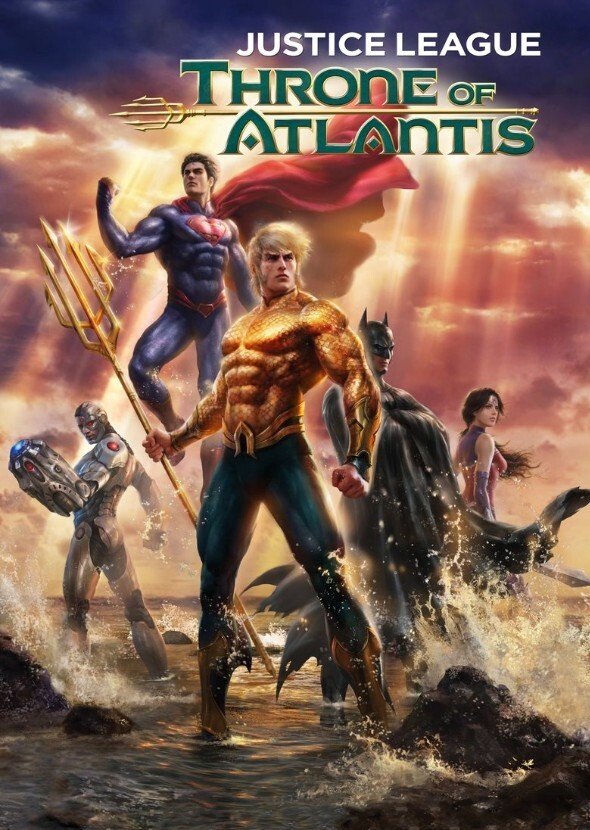
*rewritten for live action* Following the invasion of Earth in Justice League: War, the geopolitical landscape is fragile. While the Justice League remains a loose, informal alliance, tension brews beneath the ocean's surface — literally. When a U.S. submarine is mysteriously destroyed, blame quickly falls on unknown forces in the Atlantic. Military response is swift, and global fear rises about a new potential threat. Beneath the waves, the ancient kingdom of Atlantis, long hidden from the surface world, is in turmoil. With the aging Queen Atlanna attempting diplomacy, her son Orm seeks to capitalize on the chaos. Viewing surface dwellers as dangerous and unworthy of coexistence, he engineers a false-flag attack that leads to Atlanna’s assassination — a calculated move to seize the throne and justify open war against humanity. On land, a disillusioned and isolated man named Arthur Curry struggles with grief and a lifetime of not belonging. He drinks, fights, and avoids the ocean — even as something in his blood calls to it. When an Atlantean emissary reveals the truth of his lineage — that he is the half-human son of the murdered queen and rightful heir to Atlantis — Arthur is forced into a crisis of identity and responsibility. The Justice League investigates the rising oceanic attacks while trying to prevent a full-scale war. Internal divisions emerge, especially over how to handle a hidden nation that may have legitimate cause for retaliation. Meanwhile, Orm solidifies power and deploys Atlantean forces across multiple coastal cities, launching a brutal offensive with the help of Black Manta, a mercenary with his own motivations. Mera, an Atlantean warrior loyal to the queen’s original vision, confronts Arthur and tests his resolve. Though initially skeptical of his right to rule, she ultimately allies with him as he agrees to return to Atlantis — not to take power, but to stop a war. In the climactic battle, the League and Atlantean forces clash in the ruins of a submerged city and a coastal stronghold. Arthur confronts Orm in a duel for the fate of Atlantis. Though physically overmatched, Arthur triumphs not just through strength, but by embodying a new vision for Atlantean leadership: one that bridges both worlds. By the end, Arthur accepts his birthright — not out of desire for power, but duty. He is crowned King of Atlantis. The Justice League, now tested by internal disagreements and external threats, begins to realize it must become more than a reactive force: it must evolve into something permanent.

