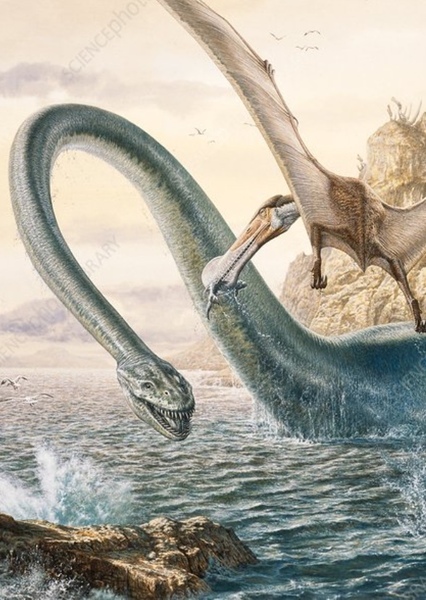
Elasmosaurus (/ɪˌlæzməˈsɔːrəs, -moʊ-/;) is a genus of plesiosaur that lived in North America during the Campanian stage of the Late Cretaceous period, about 80.5 million years ago. The first specimen was discovered in 1867 near Fort Wallace, Kansas, US, and was sent to the American paleontologist Edward Drinker Cope, who named it E. platyurus in 1868. The generic name means "thin-plate reptile", and the specific name means "flat-tailed". Cope originally reconstructed the skeleton of Elasmosaurus with the skull at the end of the tail, an error which was made light of by the paleontologist Othniel Charles Marsh, and became part of their "Bone Wars" rivalry. Only one incomplete Elasmosaurus skeleton is definitely known, consisting of a fragmentary skull, the spine, and the pectoral and pelvic girdles, and a single species is recognized today; other species are now considered invalid or have been moved to other genera. Measuring 10.3 meters (34 ft) long, Elasmosaurus would have had a streamlined body with paddle-like limbs, a short tail, a small head, and an extremely long neck. The neck alone was around 7.1 meters (23 ft) long. Along with its relative Albertonectes, it was one of the longest-necked animals to have lived, with the second largest number of neck vertebrae known, 72, 4 less than Albertonectes. The skull would have been slender and triangular, with large, fang-like teeth at the front, and smaller teeth towards the back. It had six teeth in each premaxilla of the upper jaw, and may have had 14 teeth in the maxilla and 19 in the dentary of the lower jaw. Most of the neck vertebrae were compressed sideways, and bore a longitudinal crest or keel along the sides. The family Elasmosauridae was based on the genus Elasmosaurus, the first recognized member of this group of long-necked plesiosaurs. Elasmosaurids were well adapted for aquatic life, and used their flippers for swimming. Contrary to earlier depictions, their necks were not very flexible, and could not be held high above the water surface. It is unknown what their long necks were used for, but they may have had a function in feeding. Elasmosaurids probably ate small fish and marine invertebrates, seizing them with their long teeth, and may have used gastroliths (stomach stones) to help digest their food. Elasmosaurus is known from the Pierre Shale formation, which represents marine deposits from the Western Interior Seaway.
Elasmosaurus
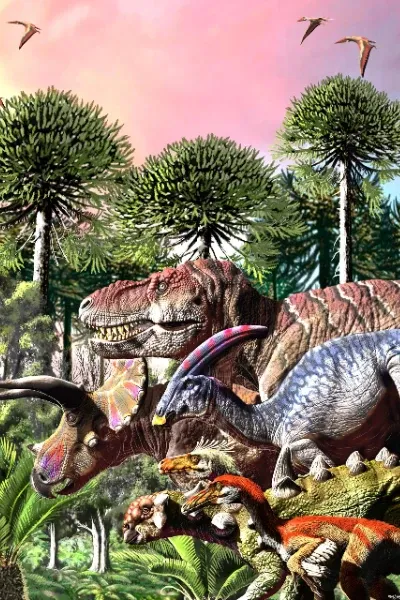
dinosaurs
for dinosaurs in Jurassic World: Extinction
Suggested by lllaryn34
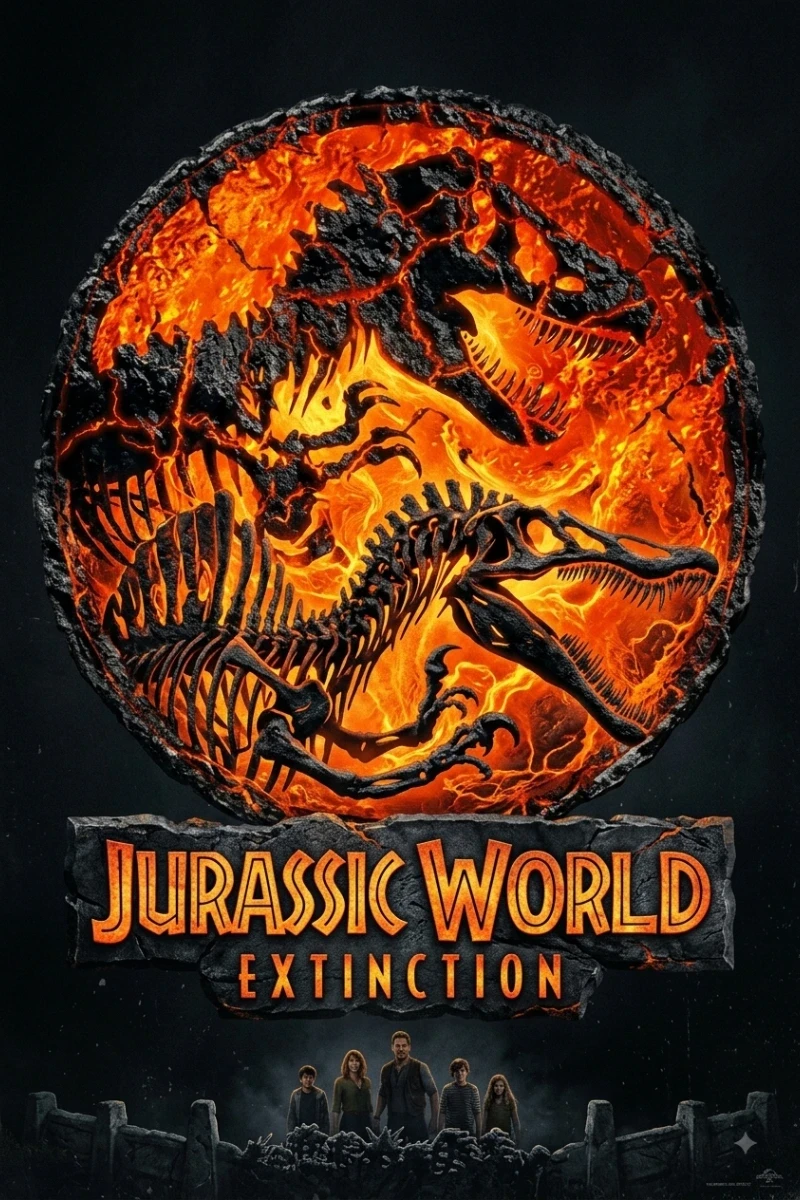
In a world where humanity's dominance is challenged by apex prehistoric predators, Jurassic World: Extinction follows the journey of Zach Mitchell and Lex Grady as they navigate the chaos that unfolds when a bio-engineered hybrid known as the Ultimasaurus breaks free. With the help of their family—Owen Grady, Claire Dearing, and Maisie Lockwood—they must unite to protect their sanctuary from this formidable threat. As they confront the hybrid's relentless power, Zach learns to face his past trauma with Lex by his side, forging a deep bond that transcends mere survival.Set against the backdrop of Isla Sorna, the film explores themes of family, resilience, and coexistence with nature. As the characters evolve from mere survivors to a cohesive unit, they discover that true strength lies not in controlling the dinosaurs but in learning to live alongside them. Ultimately, they must confront their fears and fight for a future where both humans and dinosaurs can coexist in harmony.




