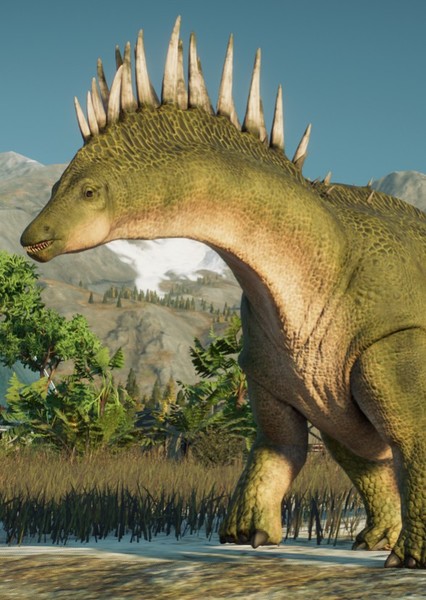
Amargasaurus (/əˌmɑːrɡəˈsɔːrəs/; "La Amarga lizard") is a genus of sauropod dinosaur from the Early Cretaceous epoch (129.4–122.46 mya) of what is now Argentina. The only known skeleton was discovered in 1984 and is virtually complete, including a fragmentary skull, making Amargasaurus one of the best-known sauropods of its epoch. Amargasaurus was first described in 1991 and contains a single known species, Amargasaurus cazaui. It was a large animal, but small for a sauropod, reaching 9 to 10 meters (30 to 33 feet) in length. Most distinctively, it sported two parallel rows of tall spines down its neck and back, taller than in any other known sauropod. In life, these spines most likely could have stuck out of the body as solitary structures that supported a keratinous sheath. An alternate hypothesis, now less favored, postulates that they could have formed a scaffold supporting a skin sail. They might have been used for display, combat, or defense. Amargasaurus was discovered in sedimentary rocks of the La Amarga Formation, which dates back to the Barremian and late Aptian stages of the Early Cretaceous. A herbivore, it shared its environment with at least three other sauropod genera, which might have exploited different food sources in order to reduce competition. Amargasaurus probably fed at mid-height, as shown by the orientation of its inner ear and the articulation of its neck vertebrae, which suggest a habitual position of the snout 80 centimeters (31 inches) above the ground and a maximum height of 2.7 meters (8.9 feet). Within the Sauropoda, Amargasaurus is classified as a member of the family Dicraeosauridae, which differs from other sauropods in showing shorter necks and smaller body sizes.
Amargasaurus
dinosaurs
for dinosaurs in Jurassic World: Extinction
Suggested by lllaryn34
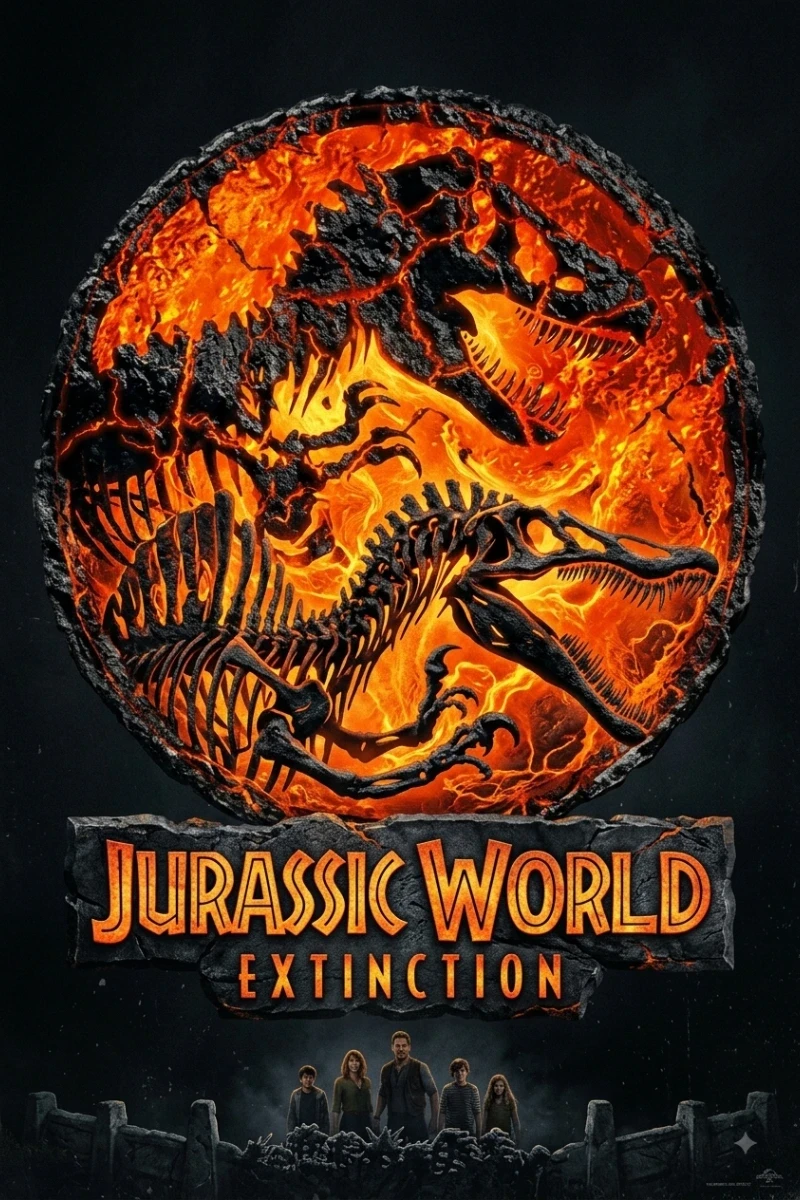
In a world where humanity's dominance is challenged by apex prehistoric predators, Jurassic World: Extinction follows the journey of Zach Mitchell and Lex Grady as they navigate the chaos that unfolds when a bio-engineered hybrid known as the Ultimasaurus breaks free. With the help of their family—Owen Grady, Claire Dearing, and Maisie Lockwood—they must unite to protect their sanctuary from this formidable threat. As they confront the hybrid's relentless power, Zach learns to face his past trauma with Lex by his side, forging a deep bond that transcends mere survival.Set against the backdrop of Isla Sorna, the film explores themes of family, resilience, and coexistence with nature. As the characters evolve from mere survivors to a cohesive unit, they discover that true strength lies not in controlling the dinosaurs but in learning to live alongside them. Ultimately, they must confront their fears and fight for a future where both humans and dinosaurs can coexist in harmony.




