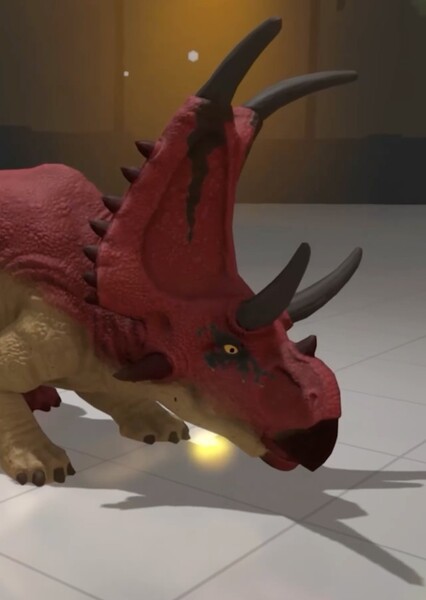
Stegosaurus (/ˌstɛɡəˈsɔːrəs/[1]), from Greek stegos (στέγος), which means roof, and sauros (σαῦρος), which means lizard, is a genus of herbivorous thyreophoran dinosaur. Fossils of this genus date to the Late Jurassic period, where they are found in Kimmeridgian to early Tithonian aged strata, between 155 and 150 million years ago, in the western United States and Portugal. Of the species that have been classified in the upper Morrison Formation of the western US, only three are universally recognized; S. stenops, S. ungulatus and S. sulcatus. The remains of over 80 individual animals of this genus have been found. Stegosaurus would have lived alongside dinosaurs such as Apatosaurus, Diplodocus, Brachiosaurus, Allosaurus, and Ceratosaurus; the latter two may have preyed on it. These were large, heavily built, herbivorous quadrupeds with rounded backs, short fore limbs, long hind limbs, and tails held high in the air. Due to their distinctive combination of broad, upright plates and tail tipped with spikes, Stegosaurus is one of the most recognizable kinds of dinosaurs. The function of this array of plates and spikes has been the subject of much speculation among scientists. Today, it is generally agreed that their spiked tails were most likely used for defense against predators, while their plates may have been used primarily for display, and secondarily for thermoregulatory functions. Stegosaurus had a relatively low brain-to-body mass ratio. It had a short neck and a small head, meaning it most likely ate low-lying bushes and shrubs. One species, Stegosaurus ungulatus, is the largest known of all the stegosaurians (bigger than related dinosaurs such as Kentrosaurus and Huayangosaurus). Stegosaurus remains were first identified during the "Bone Wars" by Othniel Charles Marsh at Dinosaur Ridge National Landmark. The first known skeletons were fragmentary and the bones were scattered, and it would be many years before the true appearance of these animals, including their posture and plate arrangement, became well understood. Despite its popularity in books and film, mounted skeletons of Stegosaurus did not become a staple of major natural history museums until the mid-20th century, and many museums have had to assemble composite displays from several different specimens due to a lack of complete skeletons. Stegosaurus is one of the better-known dinosaurs, and has been featured in film, postal stamps, and many other types of media.
Stegosaurus

Creatures Featured
for Creatures Featured in Jurassic Empire (2025)
Suggested by GodzillaLover04
A Rewrite of Jurassic World Rebirth. 5 years after the events of Jurassic World Dominion, Dinosaurs rule the Earth, and mankind is struggling to survive. However, a virus threatens them back into extinction, a virus known as the DX Virus. It shortens the lifespans of Dinosaurs and infects their brains. The Dinosaur Protection Group (DPG) and the Dinosaur Integration Network (DIN) are on a mission to find a cure, led by Zora Bennett. The mission is to find and extract the DNA of some of the most dangerous and uninfected Prehistoric animals, at least several species, on a globe trotting journey. Doing so can offer life-saving benefits for both the Dinosaurs and Mankind. As the mission becomes more risky, and chaos ensues once again, old and new faces will make a sinister discovery that's been hidden from the public for decades... But no matter what happens, the world will always be... A Jurassic Empire.