
Died at 89
male
David Carradine (born John Arthur Carradine Jr.; December 8, 1936 – June 3, 2009) was an American actor best known for playing martial arts roles. He is perhaps best known as the star of the 1970s television series Kung Fu, playing Kwai Chang Caine, a peace-loving Shaolin monk travelling through the American Old West. He also portrayed the title character of both of the Kill Bill films. He appeared in two Martin Scorsese films: Boxcar Bertha and Mean Streets. David Carradine was a member of the Carradine family of actors that began with his father, John Carradine. The elder Carradine's acting career, which included major and minor roles on stage, television, and in cinema, spanned more than four decades. A prolific "B" movie actor, David Carradine appeared in more than 100 feature films in a career spanning more than six decades. He received nominations for a Golden Globe Award and an Emmy Award for his work on Kung Fu, and received three additional Golden Globe nominations for his performances in the Woody Guthrie biopic Bound for Glory (1976), the television miniseries North and South (1985), and Quentin Tarantino's Kill Bill: Volume 2, for which he won the Saturn Award for Best Supporting Actor. Throughout his life, Carradine was arrested and prosecuted for a variety of offenses, which often involved substance abuse. Films that featured Carradine continued to be released after his death. These posthumous credits were from a variety of genres including action, documentaries, drama, horror, martial arts, science fiction, and westerns. In addition to his acting career, Carradine was a director and musician. Moreover, influenced by his Kung Fu role, he studied martial arts. On April 1, 1997, Carradine received a star on the Hollywood Walk of Fame. Description above from the Wikipedia article David Carradine, licensed under CC-BY-SA, full list of contributors on Wikipedia.
David Carradine

The Mandarin
for The Mandarin in Iron Man: The Mandarin
Suggested by matthewfenner
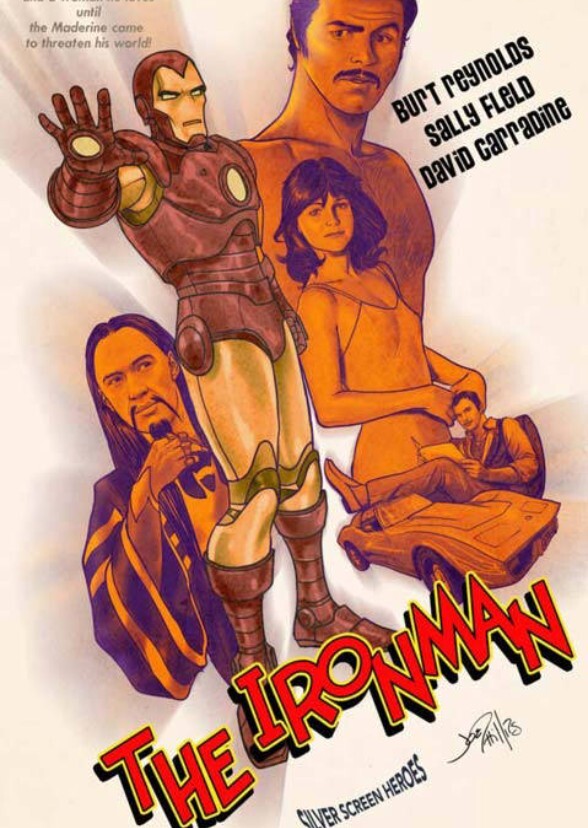
In 1978, sixteen years after donning the armor that defined a generation, Tony Stark has become a symbol of innovation, arrogance, and burden. The billionaire inventor, once hailed as the face of modern heroism, now finds himself hollowed by years of violence, addiction, and moral decay. When whispers of a deadly new weapon surface from the East—a nerve toxin capable of wiping out millions—Stark’s past comes roaring back. The Mandarin, the warlord he believed long dead, has returned from the ashes of Asia’s underworld, intent on unleashing his vengeance upon New York City. As panic spreads and governments falter, Stark must confront not only the enemy abroad but the corrosion within his own soul. Haunted by nightmares of the lives his weapons destroyed and the empire he built on blood, Tony’s war becomes personal. His armor—once a symbol of salvation—has become a cage of guilt and rage. Pursuing The Mandarin across the neon-lit streets of Hong Kong to the storm-swept skyline of Manhattan, Stark faces an enemy who understands him better than anyone else: a man who believes the West’s greatest hero is its greatest disease. As the toxin’s release nears, Iron Man must decide what kind of legacy he’ll leave behind—one forged in greed and metal, or one redeemed in sacrifice and fire. In a world choking on progress and power, Tony Stark learns that the cost of being Iron Man may finally be his humanity.

