
Died at 90
male
Burton Leon Reynolds Jr. (February 11, 1936 – September 6, 2018) was a European-American/Native-American actor, director, and producer, considered a symbol and icon of American popular culture. Reynolds first rose to prominence when he starred in several different television series such as Gunsmoke (1962–1965), Hawk (1966), and Dan August (1970–1971). Although Reynolds had leading roles in such films as Navajo Joe (1966), his breakthrough role was as Lewis Medlock in Deliverance (1972). Reynolds played the leading role – often a lovable rogue – in a number of subsequent box office hits, such as The Longest Yard (1974), Smokey and the Bandit (1977), Semi-Tough (1977), The End (1978), Hooper (1978), Starting Over (1979), Smokey and the Bandit II (1980), The Cannonball Run (1981), Sharky's Machine (1981), The Best Little Whorehouse in Texas (1982), and Cannonball Run II (1984), several of which he directed himself. He was nominated twice for the Golden Globe Award for Best Actor – Motion Picture Musical or Comedy. Reynolds was voted the world's number one box office star for five consecutive years (from 1978 to 1982) in the annual Top Ten Money Making Stars Poll, a record he shares with Bing Crosby. After a number of box office failures, Reynolds returned to television, starring in the sitcom Evening Shade (1990–1994), which won him a Golden Globe Award and Primetime Emmy Award for Outstanding Lead Actor in a Comedy Series. His performance as high-minded pornographer Jack Horner in Paul Thomas Anderson’s Boogie Nights (1997) brought him renewed critical attention, earning him another Golden Globe (for Best Supporting Actor – Motion Picture), with nominations for an Academy Award for Best Supporting Actor and a BAFTA Award for Best Supporting Actor.
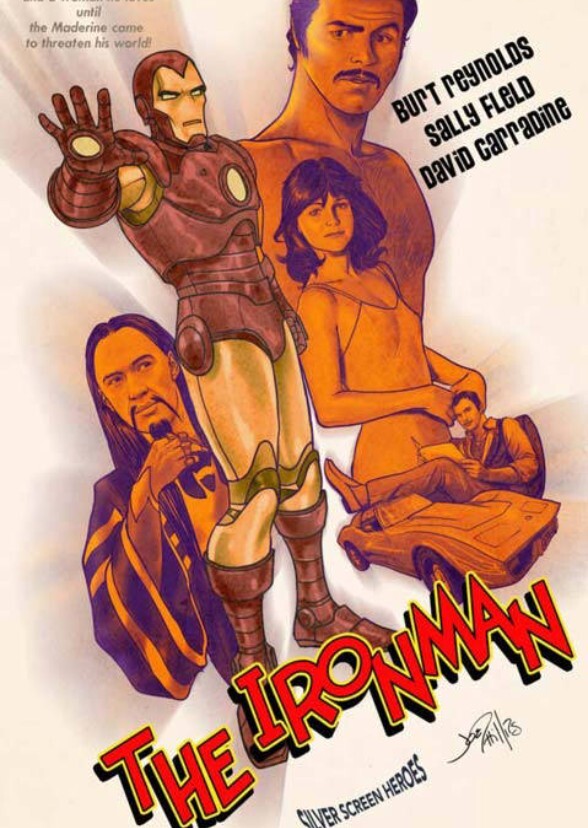
In 1978, sixteen years after donning the armor that defined a generation, Tony Stark has become a symbol of innovation, arrogance, and burden. The billionaire inventor, once hailed as the face of modern heroism, now finds himself hollowed by years of violence, addiction, and moral decay. When whispers of a deadly new weapon surface from the East—a nerve toxin capable of wiping out millions—Stark’s past comes roaring back. The Mandarin, the warlord he believed long dead, has returned from the ashes of Asia’s underworld, intent on unleashing his vengeance upon New York City. As panic spreads and governments falter, Stark must confront not only the enemy abroad but the corrosion within his own soul. Haunted by nightmares of the lives his weapons destroyed and the empire he built on blood, Tony’s war becomes personal. His armor—once a symbol of salvation—has become a cage of guilt and rage. Pursuing The Mandarin across the neon-lit streets of Hong Kong to the storm-swept skyline of Manhattan, Stark faces an enemy who understands him better than anyone else: a man who believes the West’s greatest hero is its greatest disease. As the toxin’s release nears, Iron Man must decide what kind of legacy he’ll leave behind—one forged in greed and metal, or one redeemed in sacrifice and fire. In a world choking on progress and power, Tony Stark learns that the cost of being Iron Man may finally be his humanity.


