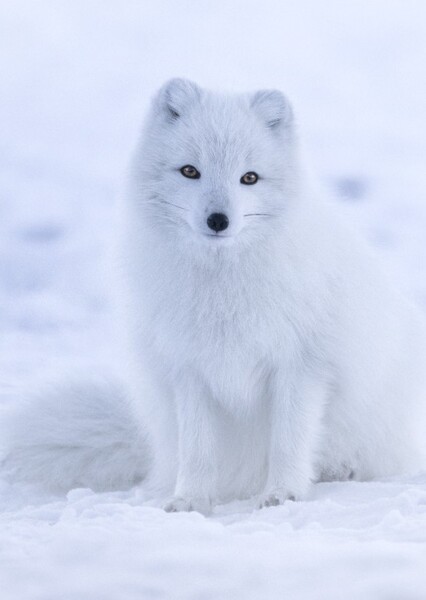
The coyote (Canis latrans) is a species of canine native to North America. It is smaller than its close relative, the wolf, and slightly smaller than the closely related eastern wolf and red wolf. It fills much of the same ecological niche as the golden jackal does in Eurasia. The coyote is larger and more predatory and was once referred to as the American jackal by a behavioral ecologist. Other historical names for the species include the prairie wolf and the brush wolf. The coyote is listed as least concern by the International Union for Conservation of Nature, due to its wide distribution and abundance throughout North America. Coyote populations are also abundant southwards through Mexico and into Central America. The species is versatile, able to adapt to and expand into environments modified by humans. It is enlarging its range by moving into urban areas in the eastern U.S. and Canada. The coyote was sighted in eastern Panama (across the Panama Canal from their home range) for the first time in 2013. The coyote has 19 recognized subspecies. The average male weighs 8 to 20 kg (18 to 44 lb) and the average female 7 to 18 kg (15 to 40 lb). Their fur color is predominantly light gray and red or fulvous interspersed with black and white, though it varies somewhat with geography. It is highly flexible in social organization, living either in a family unit or in loosely knit packs of unrelated individuals. Primarily carnivorous, its diet consists mainly of deer, rabbits, hares, rodents, birds, reptiles, amphibians, fish, and invertebrates, though it may also eat fruits and vegetables on occasion. Its characteristic vocalization is a howl made by solitary individuals. Humans are the coyote's greatest threat, followed by cougars and gray wolves. In spite of this, coyotes sometimes mate with gray, eastern, or red wolves, producing "coywolf" hybrids. In the northeastern regions of North America, the eastern coyote (a larger subspecies, though still smaller than wolves) is the result of various historical and recent matings with various types of wolves. Genetic studies show that most North American wolves contain some level of coyote DNA. The coyote is a prominent character in Native American folklore, mainly in Aridoamerica, usually depicted as a trickster that alternately assumes the form of an actual coyote or a man. As with other trickster figures, the coyote uses deception and humor to rebel against social conventions. The animal was especially respected in Mesoamerican cosmology as a symbol of military might. After the European colonization of the Americas, it was seen in Anglo-American culture as a cowardly and untrustworthy animal. Unlike wolves, which have undergone an improvement of their public image, attitudes towards the coyote remain largely negative.
Coyote

Megafauna Of North America
for Megafauna Of North America in Ice Age
Suggested by jacobtolentino
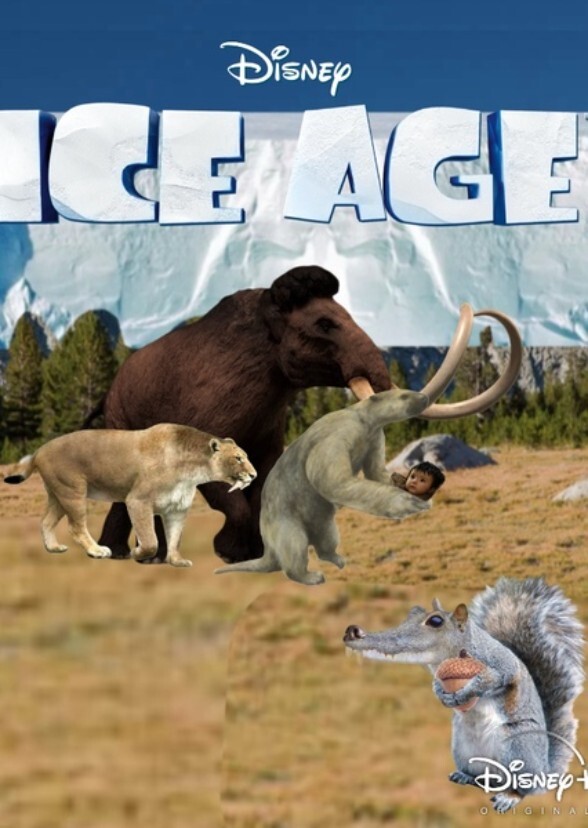
Ice Age is a film of 2022 Directed by Jon Favreau and Produced by Disney and 20th Century Studios, in this Movie it Takes a Place in North America on Landscapes of Pleistocene 2.6 million to 11,700 BC. A Bull woolly mammoth Manny (Kevin James) Shasta Ground sloth Sid (Jim Parsons) and Saber-tooth Cat Diego (Sam Worthington) are headed back to quest take our baby Named Roshan to Returns Him to his Tribe Along with thier Trusty Sidekicks Brent the Giant LongHorn Bison (Brian Tyree Henry) Chloe the Albino White Tailed Doe (Lily Collins) Laura the Mare Hagerman Horse (Auli'l Cravalho) and Cadice the Female Western Camel (Ashley Parks). The film is the live action CGI animated adaptation of the same name, released in 2002. Ice Age are only Steaming on Disney Plus, March 15th. 2022.