Died at 86
male
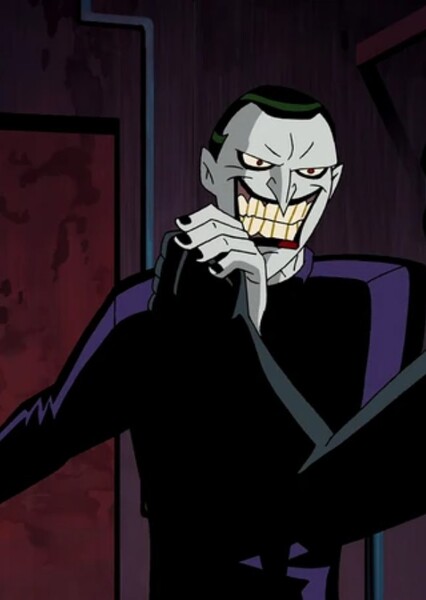
The Joker is a supervillain appearing in American comic books published by DC Comics. Created by Bill Finger, Bob Kane, and Jerry Robinson, the character first appeared in the debut issue of the comic book Batman on April 25, 1940. Credit for the Joker's creation is disputed; Kane and Robinson claimed responsibility for his design while acknowledging Finger's writing contribution. Although the Joker was planned to be killed off during his initial appearance, he was spared by editorial intervention, allowing the character to endure as the archenemy of the superhero Batman. In the DC Universe, the Joker is portrayed as a criminal mastermind and the antithesis of Batman in personality and appearance. He was introduced as a psychopath with a warped, sadistic sense of humor but became a comical prankster in the late 1950s in response to regulation by the Comics Code Authority, before returning to his darker roots during the early 1970s. The Joker has been part of defining Batman stories, including the murder of Jason Todd—the second Robin and Batman's ward—in "A Death in the Family" (1988) and the paralysis of Barbara Gordon—the first Batgirl—in The Killing Joke (1988). Unlike many comic book characters, the Joker does not have a definitive origin story, but various possible ones have been developed. The most common story involves him falling into a tank of chemical waste that bleaches his skin white, turns his hair green and lips red, and leaves him with a rictus grin; the resulting disfigurement drives him insane. The Joker possesses no superhuman abilities, instead using his expertise in chemical engineering to develop poisonous or lethal concoctions and thematic weaponry, including razor-tipped playing cards, deadly joy buzzers, and acid-spraying lapel flowers. The Joker sometimes works with other Gotham City supervillains, such as the Penguin and Two-Face, and groups like the Injustice Gang and Injustice League, but these partnerships often collapse due to the Joker's desire for unbridled chaos. A romantic interest and sidekick for the Joker, his former psychiatrist Harley Quinn, was introduced in the 1990s. Although his primary obsession is Batman, the Joker has also fought other heroes, including Superman and Wonder Woman. One of the most recognized characters in popular culture, the Joker has been listed among the greatest comic book villains and fictional characters ever created. His likeness has appeared on merchandise such as clothing and collectible items, and he has inspired real-world structures (such as theme park attractions) and been referenced in various media. The Joker has been adapted in live-action, animated, and video game incarnations.
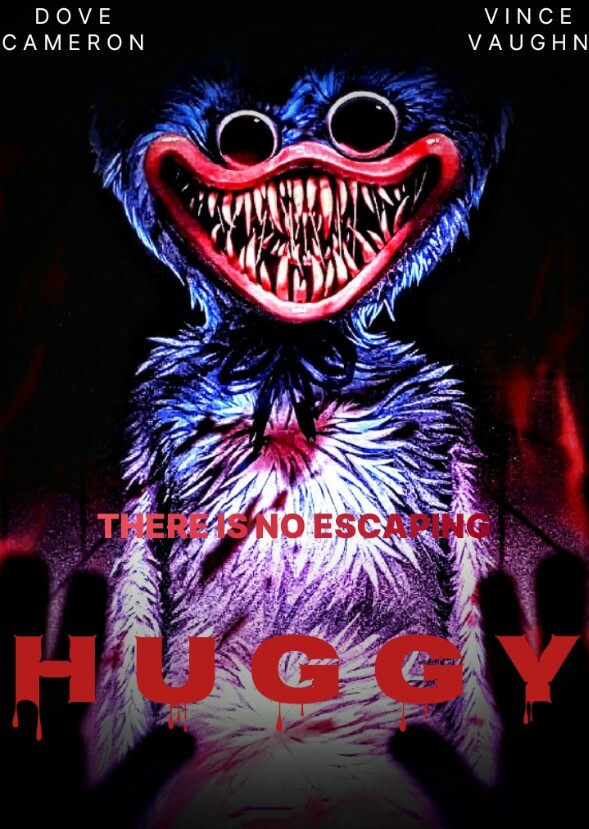
Huggy is a 2025 American psychological horror film directed by Ishana Night Shyamalan and produced by her father M. Night from a screenplay by him and David Fincher based on the Poppy Playtime character Huggy Wuggy and inspired by Mob Entertainment's YouTube video RESTRICTED_disappearance_06-18-1992.mp4. Distributed by Lionsgate and co-financed by Mob Entertainment, it is the first installment in the Huggy Wuggy trilogy and serves as an alternate story for the title character. Dove Cameron stars as Casey Wilson, the film's only main protagonist, an employee for the Playtime Company whose father Howard (Vince Vaughn) is a patient of the medical staff within the company's facility as she must take matters into her own hands when he is eventually forced out of their hands by Elliott Ludwig (Malcolm McDowell) and turned into the blue giant furry slender creature Huggy Wuggy. The supporting cast includes Rachel Weisz, Danny Glover, and Matthew Lillard. Huggy was released in theaters on October 24th, 2025; the film received generally positive reviews from critics, audiences, and fans, with praise for Shyamalan's direction and her father's screenplay, Huggy's characterization, score, VFX, atmosphere, and Cameron's performance. However, critics were divided on the violent approach to the source character and the decision to add an R-rating. It was also a box-office success, grossing $915 million worldwide against a break-even point of $120 million. A sequel is in development.


