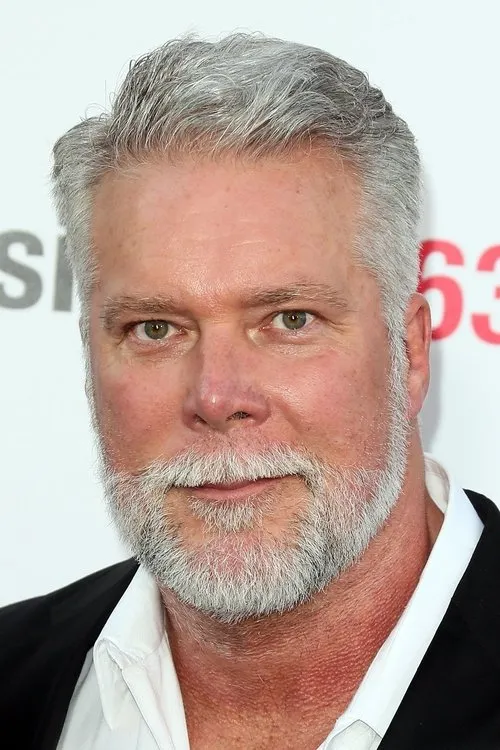
Age: 54
male
Paul Donald Wight II (born on February 8, 1972, in Aiken, South Carolina), also known famously by his WWE ring name Big Show, is an American professional wrestler and actor. He is signed to All Elite Wrestling (AEW) under his real name. He is best known for his tenure with World Championship Wrestling (WCW) from 1995 to 1999 as (the) Giant and his tenure with the World Wrestling Entertainment Federation (WWE) from 1999 to 2021 under the ring name (the) Big Show. Wight played college basketball at Wichita State University before transferring to other schools. He began his wrestling career in 1994. In 1995, he signed with WCW, where, due to his great height and large frame, he was known by the ring name The Giant and initially introduced as "the son of André the Giant". In early 1999, he left WCW to join the World Wrestling Federation (WWF). Between WWF/WWE and WCW, he has held 23 total championships - including being a seven-time world champion, having held the WCW World Heavyweight Championship twice, the WWF/WWE Championship twice, WWE's World Heavyweight Championship twice and WWE's ECW Championship once, (making him the only wrestler who has won all four titles),[10] and an 11-time world tag team champion, holding the WWF/World, WWE and WCW World Tag Team Championships multiple times with various partners. Having also won the Intercontinental, United States and Hardcore championships, he is the 24th Triple Crown and 12th Grand Slam winner in WWE history.[11][12] He also won the 60-man battle royal at World War 3 and the 30-man André the Giant Memorial Battle Royal at WrestleMania 31. He has headlined multiple pay-per-view events for WCW and WWF/WWE since 1995, including the 16th edition of WWE's premier annual event, WrestleMania. Outside of professional wrestling, Wight has appeared in feature films and television series such as “Jingle All the Way”, “The Waterboy”, “Star Trek: Enterprise”, the USA Network's comedy-dramas “Royal Pains” and “Psych and the USA Network action-drama series “Burn Notice”. He had lead roles in the WWE Studios comedy film “Knucklehead” and the Netflix sitcom “The Big Show Show”. Wight began his career in 1994. In 1995 he signed with WCW, where, due to his very large frame, he was known by the ring name The Giant (and was initially introduced as "the son of André the Giant"). In early 1999, he left WCW to join WWE. Between WWE and WCW, he is a seven-time world champion, having held the WCW World Heavyweight Championship twice, the WWE Championship twice, WWE's World Heavyweight Championship twice and the ECW World Heavyweight Championship once, making him the only wrestler who has won all four titles. He is also an 11-time world tag team champion, holding the World, WWE and WCW World Tag Team Championships multiple times with various partners. Having also won the Intercontinental, United States and Hardcore championships, he is the 24th Triple Crown and 12th Grand Slam winner in WWE history. He also won the 60-man battle royal at World War 3 and the 30-man André the Giant Memorial Battle Royal at WrestleMania 31. He has headlined multiple pay-per-view events for WCW and WWF/WWE since 1995, including the 2000 edition of WWE's premier annual event, WrestleMania. Outside of professional wrestling, Wight has appeared in feature films and television series such as Jingle All the Way, The Waterboy”, “Star Trek: Enterprise”, the USA Network comedy-drama shows “Royal Pains” and “Psych” and the USA Network action-drama show “Burn Notice”. He had lead roles in the WWE Studios comedy film “Knucklehead” and the Netflix sitcom “The Big Show Show”.

In Ancient Greece, after imprisoning the Titans beneath the ocean, the rulers of the Greek gods, Zeus and his wife Hera, have a son named Hercules on Mount Olympus. While the other gods are joyful, Zeus' jealous brother Hades plots to overthrow Zeus and rule Olympus. Turning to the Fates for help, Hades learns that in eighteen years, a planetary alignment will allow him to locate and free the Titans to conquer Olympus, but only if Hercules does not interfere. Hades sends his minions Pain and Panic to dispose of Hercules. The two succeed at kidnapping the infant and feeding him a formula that turns him mortal, but fail to remove his superhuman strength before Hercules is found and adopted by the farmers Amphitryon and Alcmene. Years later, the teenage Hercules becomes an outcast due to his strength, and wonders where he came from. After his foster parents reveal the necklace they found him with, Hercules decides to visit the temple of Zeus for answers. The temple's statue of Zeus comes to life and reveals all to Hercules, telling him that he can regain his godhood by becoming a true hero. Zeus sends Hercules and his forgotten infant friend Pegasus to find the satyr Philoctetes—"Phil" for short—who is known for training heroes. They meet Phil, who has retired due to numerous disappointments, but Hercules inspires him to follow his dream to train a true hero that will be recognized by the gods. Phil trains Hercules into a potential hero, and then they headed towards Thebes. On the way, they meet Megara—"Meg" for short—a sarcastic damsel whom Hercules saves from the centaur Nessus. After Hercules and the others leave, Meg is revealed to be Hades' minion, who sold her soul to him to save an unfaithful lover. Arriving in Thebes, Hercules is turned down by the downtrodden citizens until Meg appears, saying that two boys have become trapped in a gorge. Hercules saves them, unaware that they are Pain and Panic in disguise, and unwittingly releases the Hydra. Hercules defeats it and becomes a celebrated hero, but despite Hercules' growing fame and defeating every subsequent monster Hades unleashes, Zeus tells him he is not yet a "true" hero. Saddened and frustrated, Hercules spends a day out with Meg, who falls in love with him. Hades learns of this and on the eve of his takeover, he holds Meg hostage and offers her in exchange for Hercules surrendering his powers for a day. On the condition that Meg will be unharmed, he accepts, and is heartbroken when Hades reveals that Meg was working for him. Hades unleashes the Titans, who climb Olympus and capture the gods, while a Cyclops goes to Thebes to kill Hercules. Hercules defeats the cyclops; Meg then saves him from a falling pillar and is mortally injured. This breaks Hades' promise that Meg would not be harmed, and allows Hercules to regain his strength. Hercules and Pegasus fly to Olympus where they free the gods and vanquish the Titans, but Meg dies before he returns to her. With Meg's soul now Hades' property, Hercules breaks into the Underworld and offers to free Meg from the Styx in exchange for his own life. His willingness to sacrifice himself restores his godhood and immortality before the life-draining river can kill him; he rescues Meg and punches Hades into the Styx, where irate souls pull him under. After reviving Meg, she and Hercules are summoned to Olympus, where Zeus and Hera welcome their son home. However, Hercules chooses to remain on Earth with Meg in lieu of living on Olympus. Hercules and his friends return to Thebes, where they watch Zeus etch Hercules' image into the stars to commemorate his heroism.