Died at 75
male
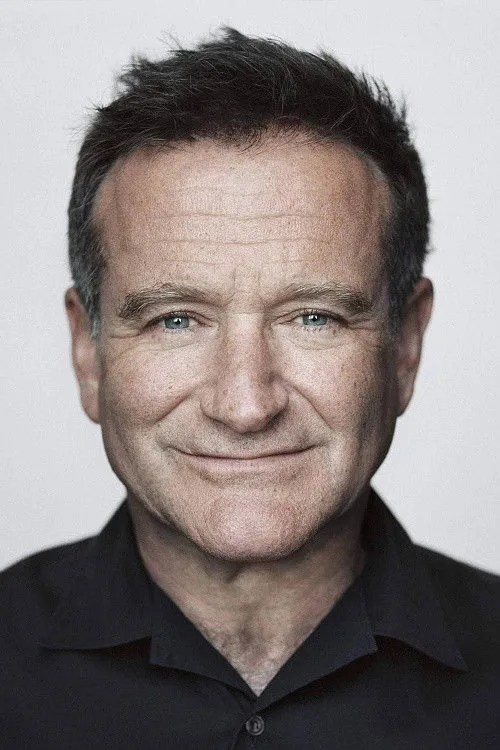
Robin McLaurin Williams (July 21, 1951 – August 11, 2014) was an American actor and comedian. Known for his improvisational skills and the wide variety of characters he created on the spur of the moment and portrayed on film, in dramas and comedies alike, he is regarded as one of the greatest comedians of all time. He received numerous accolades including an Academy Award, two Primetime Emmy Awards, six Golden Globe Awards, two Screen Actors Guild Awards, and five Grammy Awards. Williams began performing stand-up comedy in San Francisco and Los Angeles during the mid-1970s, and released several comedy albums including Reality ... What a Concept in 1980. He rose to fame playing the alien Mork in the ABC sitcom Mork & Mindy (1978–1982). He received his first leading film role in Popeye (1980). Williams went on to win the Academy Award for Best Supporting Actor for Good Will Hunting (1997). His other Oscar-nominated roles were for Good Morning, Vietnam (1987), Dead Poets Society (1989), and The Fisher King (1991). Williams starred in the critically acclaimed dramas The World According to Garp (1982), Moscow on the Hudson (1984), Dead Poets Society (1989), Awakenings (1990), Patch Adams (1998), Insomnia (2002), One Hour Photo (2002), and World's Greatest Dad (2009). He also starred in family films such as Hook (1991), Mrs. Doubtfire (1993), Jumanji (1995), Jack (1996), Flubber (1997), RV (2006), and the Night at the Museum trilogy (2006–2014). He lent his voice to the animated films Aladdin (1992), Robots (2005), Happy Feet (2006), and its 2011 sequel. Williams was found dead at his home in Paradise Cay, California, in August 2014, at the age of 63. At the time of his suicide, he had been diagnosed with Parkinson's disease. According to his widow, Williams had experienced depression, anxiety, and increasing paranoia. His autopsy found "diffuse Lewy body disease" and Lewy body dementia professionals said his symptoms were consistent with dementia with Lewy bodies.

In religious and fictional narratives, the destination of a character's soul after death—Heaven or Hell—is traditionally determined by their moral actions, faith, or specific in both real and fictional peoples of their narrative roles. Many traditional religious perspectives, such as some branches of Christianity, teach that a "Day of Judgment" exists where souls are assessed based on their earthly conduct. Those deemed "good" or "worthy" are granted eternal life in Heaven, while those who committed evil acts are sent to Hell, often described as a place of eternal suffering. The protagonists often reach a "fluffy cloud" Heaven or a peaceful paradise after a life of sacrifice, while the Infamous antagonists including both real and fictional villains are frequently depicted as "sealed" or imprisoned in a dark, fiery, or desolate realm to ensure they can no longer harm the living.