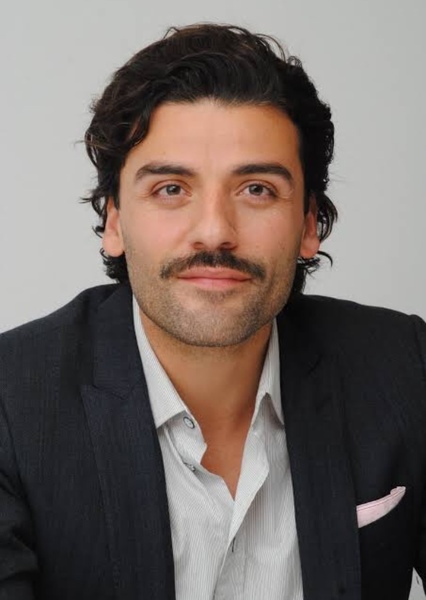
Age: 47
male
Óscar Isaac Hernández Estrada (born March 9, 1979) is an American actor. He was named the best actor of his generation by Vanity Fair in 2017 and one of the 25 greatest actors of the 21st century by The New York Times in 2020. His accolades include a Golden Globe Award and a nomination for a Primetime Emmy Award. In 2016, he featured on Time's list of the 100 most influential people in the world. Born in Guatemala, Isaac moved with his family to the United States as an infant. As a teenager, he joined a punk band, acted in plays and made his film debut in a minor role. A graduate of the Juilliard School, Isaac was a character actor in films for much of the 2000s. His first major role was that of Joseph in the biblical drama The Nativity Story (2006), and he won an AACTA Award for Best Actor in a Supporting Role for portraying political leader José Ramos-Horta in the Australian film Balibo (2009). After gaining recognition for playing supporting parts in Robin Hood (2010) and Drive (2011), Isaac had his breakthrough with the eponymous role of a singer in the musical drama Inside Llewyn Davis (2013), which earned him a Golden Globe nomination. Isaac's career progressed with leading roles in the crime drama A Most Violent Year (2014), the thriller Ex Machina (2015) and the superhero film X-Men: Apocalypse (2016). He became a global star with the role of Poe Dameron in the Star Wars sequel trilogy (2015–2019). Isaac starred in the historical drama Operation Finale (2018)—which marked his first venture into production—the science fiction films Annihilation (2018), Dune (2021), and Frankenstein (2025), the crime drama The Card Counter (2021), and the animated superhero film Spider-Man: Across the Spider-Verse (2023). On television, Isaac was the lead in three miniseries: Show Me a Hero (2015), in which his portrayal of Nick Wasicsko won him a Golden Globe Award, Scenes from a Marriage (2021), and the Marvel Cinematic Universe's Moon Knight (2022). His stage work includes title roles in Romeo and Juliet (2007), Hamlet (2017) and The Sign in Sidney Brustein's Window (2023). Description above from the Wikipedia article Oscar Isaac, licensed under CC-BY-SA, full list of contributors on Wikipedia.
Oscar Isaac

Jason Bard
for Jason Bard in HBO Max's The Batman (Update!)
Suggested by s105042

Batman Story Continues Outside from the Justice League, Jealous of his friend, Elliot began dressing like Bruce, attempting to court the same women in school, eventually getting to the point of calling himself Bruce Wayne in order to get the attention of women. When Bruce found out the latter, Thomas told that he believed that Bruce was ignoring the fact that he had everything he could ever want in life. This ignorance to Bruce Wayne's grief caused a rift between the friends, the obsession with Bruce gave way to the disguised hatred of him, resulting in him angrily bashing his forehead into a mirror, injuring himself, but bandaging his wound soon after along with the rest of his head. Seeing himself as exactly like Bruce, Thomas proceeded to develop an identity as "Hush" once he learned of Bruce's new role as Batman.[1] Years later, after failing to defeat Batman once, Hush resurfaced as part of a scheme to undermine everything his former friend had built in Gotham, including his allies, identity, and reputation, with the help of other criminals such as Cluemaster. As one of his initial acts in a more direct manner in this scheme, he injected Alfred with pure Fear Toxin directly into his brain, in order to send him to Arkham Asylum.[2] He later framed Batman for the destruction of Commissioner Jason Bard's office, while admitting his part in the plans around Gotham and claiming he was the mastermind behind it all.[3]
See polls and matchups connected to Oscar Isaac's casting for Jason Bard.