
Age: 40
male
Ryan Kyle Coogler (born May 23, 1986) is an American filmmaker. He has received an Academy Award, a BAFTA Award, four Black Reel Awards, a Grammy Award, a Golden Globe Award, and ten NAACP Image Awards. Coogler directed a few short films at the USC School of Cinematic Arts before his feature-length debut with Fruitvale Station (2013). He then transitioned to directing and writing franchise films, including the Rocky series spinoff, Creed (2015), as well as the Marvel films Black Panther (2018) and Black Panther: Wakanda Forever (2022). Coogler also produced the historical drama Judas and the Black Messiah (2021) and the supernatural horror film Sinners (2025), which he also wrote and directed. He received nominations for the Academy Award for Best Picture for both films, while for Sinners, he was also nominated for Best Director and won the Oscar for Best Original Screenplay. In 2013, he was included on Time's list of the 30 people under 30 who are changing the world. In 2018, Coogler was named the runner-up of Time's Person of the Year, and he was included in the annual Time 100 list of the most influential people in the world. In 2021, Coogler, his wife, Zinzi Coogler, and Sev Ohanian founded multimedia production company Proximity Media. Description above from the Wikipedia article Ryan Coogler, licensed under CC-BY-SA, full list of contributors on Wikipedia.
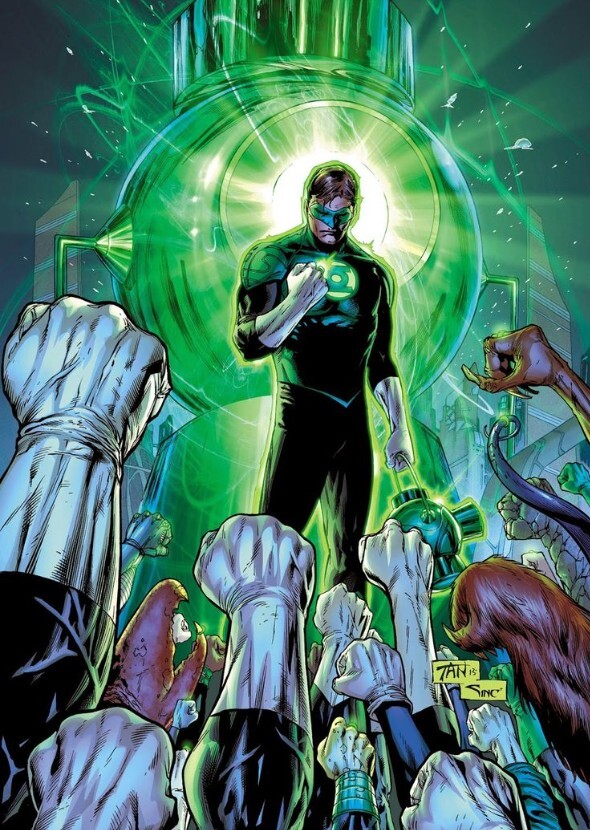
After the events of Batman: Injustice, Hal Jordan returns to Oa, the most technologically advanced planet in the universe and headquarters of the Green Lantern Corps. With Earth politically fractured and trust in heroes shaken, Hal recommits himself to protecting the universe as a Green Lantern. Oa is governed by the ancient and calculating Guardians of the Universe, who believe in order above all else. The Corps draws its power from the Central Power Battery, fueled by willpower itself. Hal, one of the greatest Lanterns, struggles with balancing loyalty to the Guardians and his belief that the Corps should do more than simply observe and contain threats. Tensions rise when weapons powered by stolen green energy begin appearing across distant sectors. The source traces back to black-market dealings connected to the brutal alien crime lord Kanjar Ro. But the true mastermind is revealed to be a former Lantern: Sinestro. Sinestro exposes a buried secret. Years ago, the Guardians exiled and erased records of a rogue Lantern who believed the Corps should impose its power to “liberate” oppressed worlds through force. That extremist ideology has resurfaced—through Sinestro himself. He argues that the Corps’ passive enforcement of balance allows suffering to continue across the universe. Sinestro challenges Hal not only physically, but philosophically. In a public confrontation before the Corps, he questions whether willpower without decisive action is meaningless. The conflict escalates into ritual combat under Oan law. Sinestro defeats Hal and seizes control of Oa’s authority systems, declaring that the Corps will no longer simply police the universe—they will rule it to ensure peace. Presumed broken and stripped of authority, Hal is rescued by Lantern outliers who never fully trusted the Guardians’ secrecy—warriors like Kilowog and Arisia. They reveal that the Guardians hid past interventions where entire civilizations were abandoned in the name of “cosmic balance.” Reignited by renewed conviction, Hal reconnects deeply with the emotional source of his power: true, selfless will—not obedience. He confronts Sinestro in a massive battle above Oa, green and yellow light clashing across space. In their final duel, Hal overpowers Sinestro but refuses to execute him, proving that willpower guided by compassion is stronger than fear-driven control. Sadly Sinestro dies after the battle, having a last look at Oa. The crisis forces the Guardians to reconsider their isolationist doctrine. Under Hal’s influence, the Green Lantern Corps chooses a new direction—remaining protectors of order, but engaging more directly with worlds in need rather than standing apart.


