Age: 56
female
Uma Karuna Thurman is an American actress, writer, producer and model. She has acted in a variety of films, from romantic comedies and dramas to science fiction and action films. Following her appearances on the December 1985 and May 1986 covers of British Vogue, Thurman's breakthrough role was Dangerous Liaisons (1988) in which she starred. She rose to international prominence with her role as Mia Wallace in Quentin Tarantino's 1994 film Pulp Fiction, for which she was nominated for the Academy Award, the BAFTA Award, and the Golden Globe Award for Best Supporting Actress. Often hailed as Tarantino's muse, she reunited with the director to play the main role of The Bride in Kill Bill: Volume 1 and 2 (2003, 2004), which brought her two additional Golden Globe Award nominations. Established as a Hollywood leading lady, her other notable films include Henry & June (1990), The Truth About Cats & Dogs (1996), Batman & Robin (1997), Gattaca (1997), Les Misérables (1998), Paycheck (2003), The Producers (2005), My Super Ex-Girlfriend (2006), Percy Jackson & the Olympians: The Lightning Thief (2010), Lars von Trier's Nymphomaniac (2013) and The House That Jack Built (2018). In 2011, Thurman was a member of the jury for the main competition at the 64th Cannes Film Festival, and in 2017, she was named president of the 70th edition's "Un Certain Regard" jury. Thurman made her Broadway debut in The Parisian Woman (2017–2018). For her performance in the made-for-HBO film Hysterical Blindness (2002), Thurman won the Golden Globe Award for Best Actress in a Television Film, and for her five-episode role in the NBC musical series Smash (2012), she received a Primetime Emmy Award nomination for Outstanding Guest Actress in a Drama Series. Thurman has starred in the miniseries The Slap (2015) and the series Imposters (2017–2018). Description above from the Wikipedia article Uma Thurman, licensed under CC-BY-SA, full list of contributors on Wikipedia.
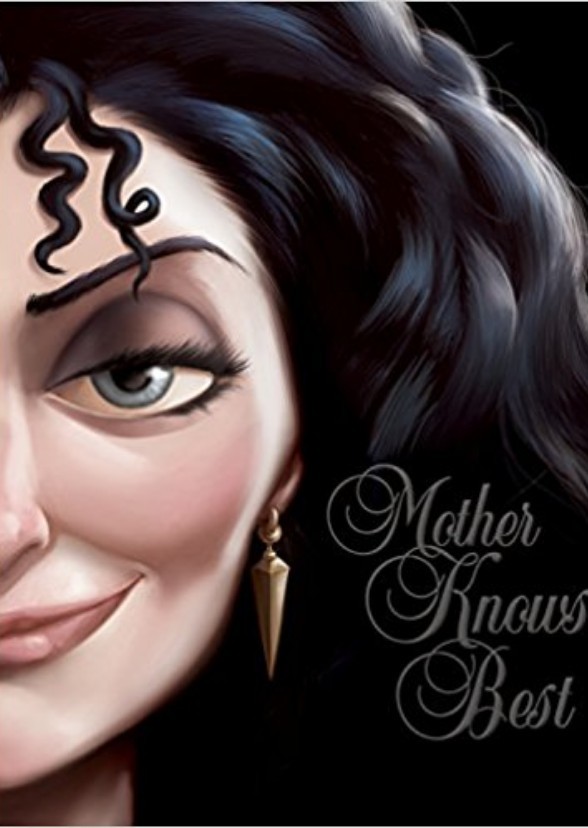
The tale of the legendary golden flower is widely known. The story has been told many times and in many ways. But always the flower is coveted by an old witch to keep herself young and beautiful. And always the flower is used to save a dying queen, who then gives birth to a princess with magical hair. Not willing to lose the flower, the old witch steals the princess and locks her away in a high tower, raising her as her own. But the princess always finds out who she truly is and manages to defeat the old witch. And yet this is only half the story. So what of the old witch, Mother Gothel? Where does she come from? And how does she come across the magical golden flower? Here is one account that recounts a version of the story that has remained untold for centuries . . . until now. It is a tale of mothers and daughters, of youth and dark magic. It is a tale of the old witch.