
The Ryukyu Islands (琉球列島, Ryūkyū-rettō), also known as the Nansei Islands (南西諸島, Nansei-shotō, lit. "Southwest Islands") or the Ryukyu Arc (琉球弧, Ryūkyū-ko), are a chain of Japanese islands that stretch southwest from Kyushu to Taiwan: the Ōsumi, Tokara, Amami, Okinawa, and Sakishima Islands (further divided into the Miyako and Yaeyama Islands), with Yonaguni the westernmost. The larger are mostly volcanic islands and the smaller mostly coral. The largest is Okinawa Island. The climate of the islands ranges from humid subtropical climate (Köppen climate classification Cfa) in the north to tropical rainforest climate (Köppen climate classification Af) in the south. Precipitation is very high and is affected by the rainy season and typhoons. Except the outlying Daitō Islands, the island chain has two major geologic boundaries, the Tokara Strait (between the Tokara and Amami Islands) and the Kerama Gap (between the Okinawa and Miyako Islands). The islands beyond the Tokara Strait are characterized by their coral reefs.[citation needed] The Ōsumi and Tokara Islands, the northernmost of the islands, fall under the cultural sphere of the Kyushu region of Japan; local inhabitants speak a variation of the Kagoshima dialect of Japanese. The Amami, Okinawa, Miyako, and Yaeyama Islands have a native population collectively called the Ryukyuan people, named for the former Ryukyu Kingdom that ruled them. The varied Ryukyuan languages are traditionally spoken on these islands, and the major islands have their own distinct languages. In modern times, the Japanese language is the primary language of the islands, with the Okinawan Japanese dialect prevalently spoken. The outlying Daitō Islands were uninhabited until the Meiji period, when their development was started mainly by people from the Izu Islands south of Tokyo, with the people there speaking the Hachijō language. The islands were held by the United States after the 1951 Treaty of San Francisco concluded the Pacific War. They were returned to Japan under the 1971 Okinawa reversion agreement, with China disputing the Senkaku Islands. Administratively, the islands are divided between two prefectures: the northern islands, collectively called the Satsunan Islands, are part of Kagoshima Prefecture (specifically Kagoshima District, Kumage Subprefecture/District, and Ōshima Subprefecture/District), while the southern part of the chain makes up Okinawa Prefecture. The divide is between the Amami and Okinawa Islands, with the Daitō Islands part of Okinawa Prefecture.
Ryukyu Islands

Filming Locations
for Filming Locations in Godzilla vs. Red Moon
Suggested by toonking1985
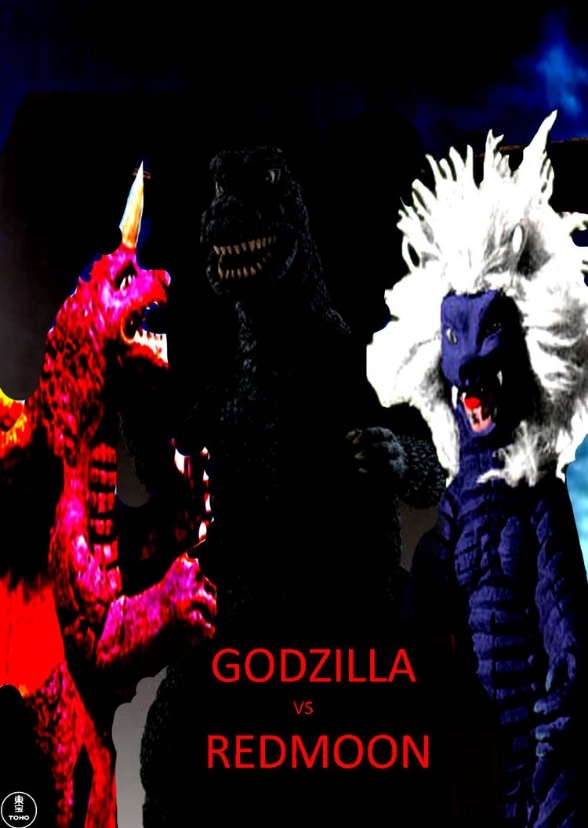
A strange new kaiju emerges from the moon's surface and quickly flies down to Earth. Upon reaching its destination, the creature is sighted and dubbed Red Moon. Almost simultaneously, another kaiju appears on the nearby Habu Island, located in a part of the Ryukku Island Chain within the Okinawa prefecture. This new monster is then dubbed Erabus. The Japanese Self Defense Force comes to the conclusion that the two monsters should be led to one another in the hopes that they will kill each other. The plan to lead the two to one another is a success; however, instead of fighting, the two monsters mate, and it's revealed that Erabus and Red Moon are female and male, respectively, of the same species. Erabus then gives birth to Halfun. With the situation only getting worse, the JSDF is scrambling to create a new strategy to deal with the kaiju. Things go from bad to worse when Halfun is kidnapped by an entrepreneur. Shortly after getting kidnapped, Halfun dies during the moving process. With their child dead, Red Moon and Erabus go berserk and start rampaging the once peaceful Okinawa. Having sensed the two from the beginning, Godzilla finally arrives and does battle with the two kaiju, emerging victorious and bringing peace back to Okinawa. At the behest of a child, the monster king spares Redmoon, who retreats back into space.


