Jaws is a 1975 American natural horror thriller film directed by Steven Spielberg, based on Peter Benchley's 1974 novel of the same name. In the film, a man-eating great white shark attacks beachgoers at a summer resort town, prompting police chief Martin Brody (Roy Scheider) to hunt it with the help of a marine biologist (Richard Dreyfuss) and a professional shark hunter (Robert Shaw). Murray Hamilton plays the mayor, and Lorraine Gary portrays Brody's wife. The screenplay is credited to Benchley, who wrote the first drafts, and actor-writer Carl Gottlieb, who rewrote the script during principal photography. Shot mostly on location on Martha's Vineyard in Massachusetts, Jaws was the first major motion picture to be shot on the ocean, and resultingly had a troubled production, going over budget and past schedule. As the art department's mechanical sharks often malfunctioned, Spielberg decided mostly to suggest the shark's presence, employing an ominous and minimalist theme created by composer John Williams to indicate its impending appearances. Spielberg and others have compared this suggestive approach to that of director Alfred Hitchcock. Universal Pictures gave the film what was then an exceptionally wide release for a major studio picture, on over 450 screens, accompanied by an extensive marketing campaign with a heavy emphasis on television spots and tie-in merchandise. Jaws was the prototypical summer blockbuster, regarded as a watershed moment in motion picture history, and it won several awards for its music and editing. It was the highest-grossing film until the release of Star Wars in 1977. Both films were pivotal in establishing the modern Hollywood business model, which pursues high box-office returns from action and adventure films with simple high-concept premises, released during the summer in thousands of theaters and advertised heavily. Jaws was followed by three sequels (without the involvement of Spielberg or Benchley) and many imitative thrillers. In 2001, it was selected by the Library of Congress for preservation in the United States National Film Registry as "culturally, historically, or aesthetically significant".
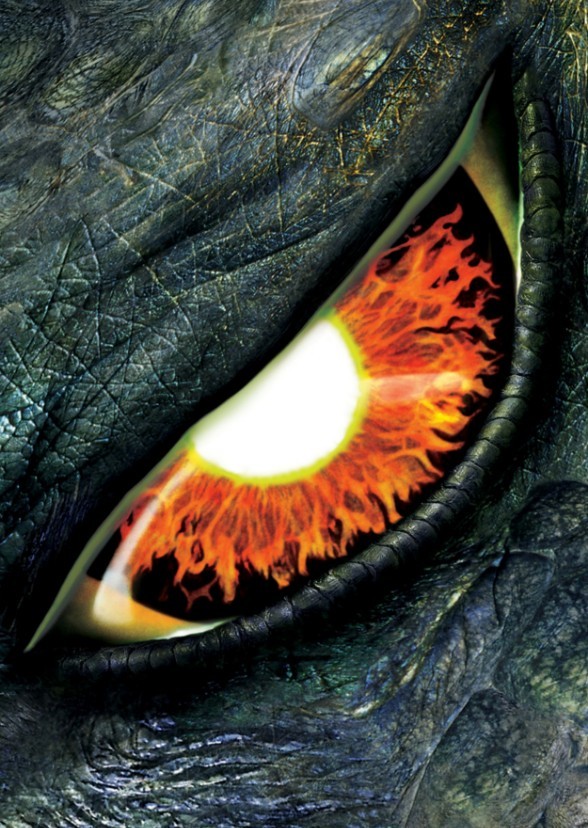
This is a better version of the 1998 Godzilla movie where Godzilla is bigger (about 400 feet tall) and better, he would be more like the traditional Godzilla in terms of design, origins, and powers, he would be a force of nature, and he would be more like a symbol/metaphor/allegory of nuclear disasters. and the movie would be more like the original 1954 film in terms of tone and I imagine it to have an R-Rating