
Age: 44
female
Hayley Elizabeth Atwell (born 5 April 1982) is a British and American actress. After appearing in various West End productions, Atwell gained popularity for her roles in period dramas, appearing in the films Brideshead Revisited (2008), The Duchess (2008) and the miniseries The Pillars of the Earth (2010); for the latter two, she was nominated for a British Independent Film Award and a Golden Globe Award respectively. She rose to prominence with her portrayal of Agent Peggy Carter in several Marvel Cinematic Universe (MCU) films, starting with Captain America: The First Avenger (2011), which inspired the creation of the spin-off ABC television series Agent Carter (2015–2016). Atwell also starred in the fantasy films Cinderella (2015), Christopher Robin (2018) and Peter Rabbit 2: The Runaway (2021) and had a leading role in the action film Mission: Impossible – Dead Reckoning Part One (2023). Atwell has received Laurence Olivier Award nominations for her work on stage for her leading performances in The Pride (2013) and Rosmersholm (2020). Description above from the Wikipedia article about Hayley Atwell, licensed under CC-BY-SA, full list of contributors on Wikipedia.
Hayley Atwell

Evelyn Cross
for Evelyn Cross in G.I. JOE: ORIGIN OF THE CODE
Suggested by nickienicks
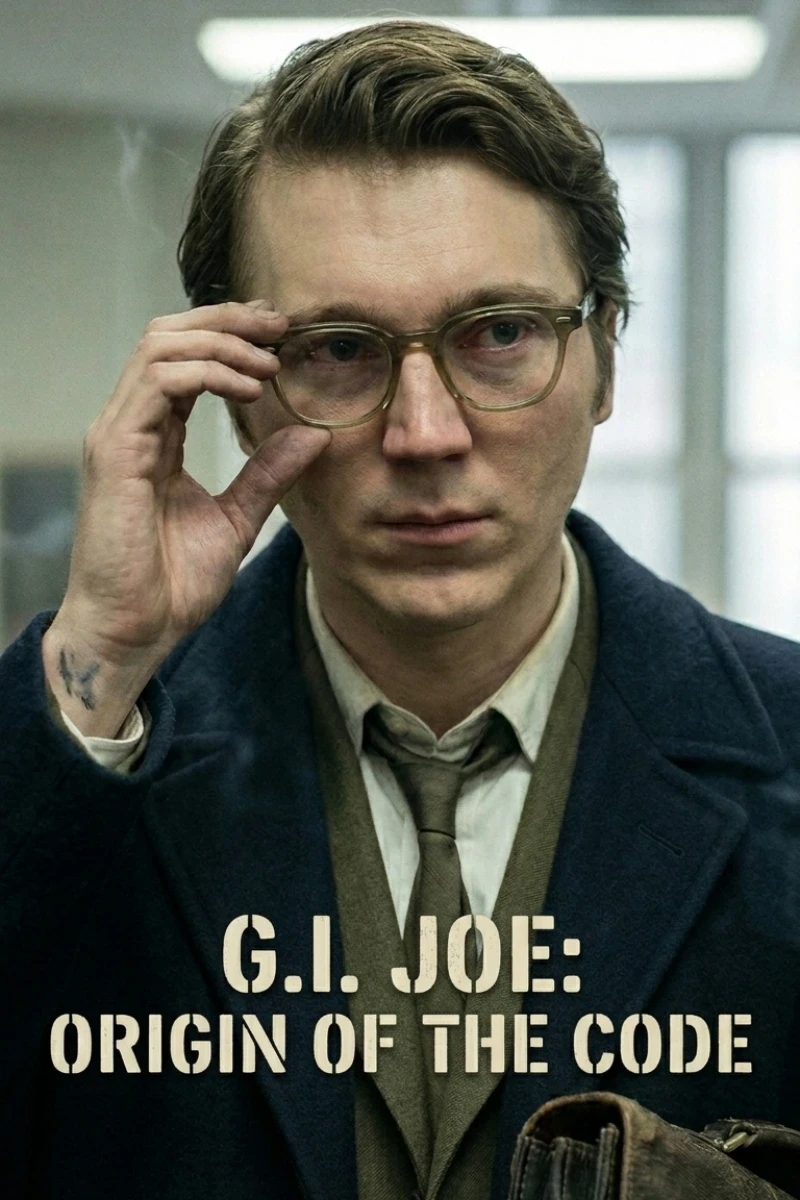
In 1963 Manhattan, licensing agent Stanley Weston creates a military action figure concept meant for toy shelves. But his prototype unintentionally mirrors real, classified U.S. research into adaptable, multi-role soldiers being developed for Cold War operations. When Weston presents the idea to Hasbro executive Donald Levine, it is quickly seen as both a commercial opportunity and a potential tool of cultural influence. Soon after, the concept draws attention from the CIA, where Agent Harlan Knox begins investigating whether Weston has unknowingly connected to a hidden military program. At the same time, Soviet intelligence interprets the idea as psychological warfare and responds by forming PROJECT COBRA, designed to counter Western influence through covert ideological manipulation. Weston is pulled into a growing shadow world where corporate marketing, espionage, and military experimentation overlap. He learns of a real experimental operative, JOE-1, a prototype multi-specialist soldier whose existence blurs the line between fiction and classified reality. After surviving an assassination attempt tied to escalating Cold War tensions, Weston realizes his invention is no longer a toy - it has become part of a global arms race in ideas. The U.S. quietly adopts his concept as both propaganda and operational cover, turning “G.I. Joe” into a public myth hiding real covert programs. Weston steps away, leaving behind a legacy that becomes legend.

