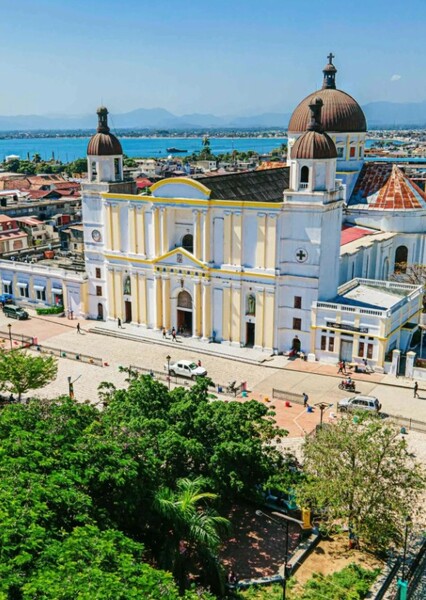
Cap-Haïtien is the beating heart of Haitian history. Often dubbed the "Paris of the Antilles," this northern port city beautifully fuses Taíno roots, Spanish colonial beginnings, African heritage, and French grandeur. It is the birthplace of the Haitian Revolution and the foundation of the first and oldest free, Black-led dominated country in both the Americas and the New World. For generations, Haiti’s long history had been written in tragedy and stolen dignity. From the suffocating grip of the United States occupation in 1915, through the bloody, paranoid decades of the Duvalier dictatorship from 1957 to 1986, to the catastrophic 2010 earthquake and the lawless terror of gang violence that peaked in 2021, the nation had been pushed to the absolute brink. Once labelled one of the poorest and most volatile countries in the world, Haiti had chosen a radical, uncompromising path toward a new era of peace and stability. To transform the republic into one of the safest nations in the Western Hemisphere, second only to El Salvador, the government knew that ordinary measures would fail. They needed an ultimate symbol of renewal monument to the rule of law that would strike absolute terror into the hearts of those who had dismantled society. To achieve this, Haiti bypassed Western contractors and enlisted the masterminds of modern mass-detention such as the engineers and counter-gang tacticians from San Salvador and Quito to Port-au-Prince. Together, they designed a hypothetical, ultra-restrictive supermax prison engineered to withstand both the human corruption of gang networks and the brutal tectonic instability of the Caribbean plate. They erected it far from the chaotic sprawl of Port-au-Prince and outside the northern hub of Cap-Haïtien. They named it the Sanctuaire de Justice du Pic Silencieux (SJPS). The global media quickly dubbed it the Alcatraz of the West Indies. From a distance, the Sanctuaire appeared as a monolithic block of reinforced, obsidian-coloured concrete seamlessly integrated into a sheer mountain peak. It was completely isolated. No winding mountain roads existed for gang convoys to launch rescue raids or ambushes. The only ground access was a single, heavily fortified funicular railway that scaled a 70-degree incline, alongside a secure helipad protected by automated anti-aircraft batteries. The prison’s inauguration coincided with a merciless, nation-wide gang crackdown. In less than a month, tactical units swept through the labyrinthine alleys of Cité Soleil, the markets of Cap-Haïtien, and the provincial urban centres. Thousands of warlords, teenage enforcers, and the corrupt politicians who financed them were dragged from their strongholds. When the first convoy of prisoners was loaded onto the funicular railway at the base of Pic Silencieux, a heavy silence fell over the crowd. The prisoners, stripped of their heavily tattooed bravado, looked up at the obsidian fortress disappearing into the clouds. They understood the fundamental truth of the new Haiti, those who stepped onto the mountain train would never leave. There were no communal yards, no visitation rights, and no access to the outside world. The cell phones and smuggled weapons that had allowed gang bosses to run operations from older Haitian prisons are confiscated by guards as the mountain was entirely blanketed by military-grade signal jammers. As the years advanced into this new era, the silence of Pic Silencieux became the foundation upon which Haiti rebuilt its society. The schools reopened in Port-au-Prince, the beaches of Cap-Haïtien welcomed international travellers once more and businesses flourished without the threat of extortion. High above it all, shrouded in the mountain mist, the obsidian fortress stood as a grim, unbreakable promise: the reign of terror was over for Haiti and its people, buried deep within the inescapable depths of The Void.
Cap-Haïtien

World Settings for Storylines and Gameplays
for World Settings for Storylines and Gameplays in Future Assassin's Creed Game Titles
Suggested by benpopplewell

Ubisoft has confirmed they intend to expand on the modern-day storyline and the global conflict between the Assassin and Templar Orders in future installments. The idea of borrowing gameplay mechanics from Grand Theft Auto, such as a free-roam criminal underworld, has been mentioned as a potential inspiration for how to translate the modern-day conflict into a more dynamic, city-based experience. The modern era involves the conflicts occurred through organizations like Abstergo to balance the historical and modern-day stories more effectively, which could lead to a more developing experience in the future. The request describes a game concept where the modern-day storyline becomes the primary gameplay, expanding on stealth and free-roam action. The user explicitly mentions Grand Theft Auto, implying a gameplay style that involves open-world city environments, driving, and conflict with law enforcement and gangs, in addition to Abstergo's private forces. With Ubisoft in talks in request specifically asks for this to be set in the 20th and 21st centuries, referencing periods like World War II, the Cold War, and modern warfare, which would be a significant departure from the series' usual historical settings. The new game concept could be explored through the Assassin's Creed franchise or spin-off prequels, allowing for a narrative that bridges past and present conflict across different eras and global locations.