
Age: 59
male
Denis Villeneuve (born October 3, 1967) is a Canadian filmmaker. He has received seven Canadian Screen Awards as well as nominations for three Academy Awards, five BAFTA Awards, and two Golden Globe Awards. Villeneuve's films have grossed more than $1.8 billion worldwide. Villeneuve began his career in his home country, directing four French-language dramas: August 32nd on Earth (1998); Maelström (2000); Polytechnique (2009), a dramatisation of the 1989 École Polytechnique massacre; and Incendies (2010). The last of these gained him international prominence and earned a nomination for the Academy Award for Best International Feature Film. He expanded to English-language films by directing the thrillers Prisoners (2013), Enemy (2013), and Sicario (2015). Villeneuve gained wider recognition for directing science fiction films. His work on Arrival (2016) earned him a nomination for the Academy Award for Best Director. This was followed by Blade Runner 2049 (2017), which was critically lauded but financially unsuccessful. His next projects were Dune (2021) and Dune: Part Two (2024), a two-part adaptation of Frank Herbert's novel of the same name. Both films were critically and commercially successful, with the former earning him Academy Award nominations for Best Adapted Screenplay and Best Picture.
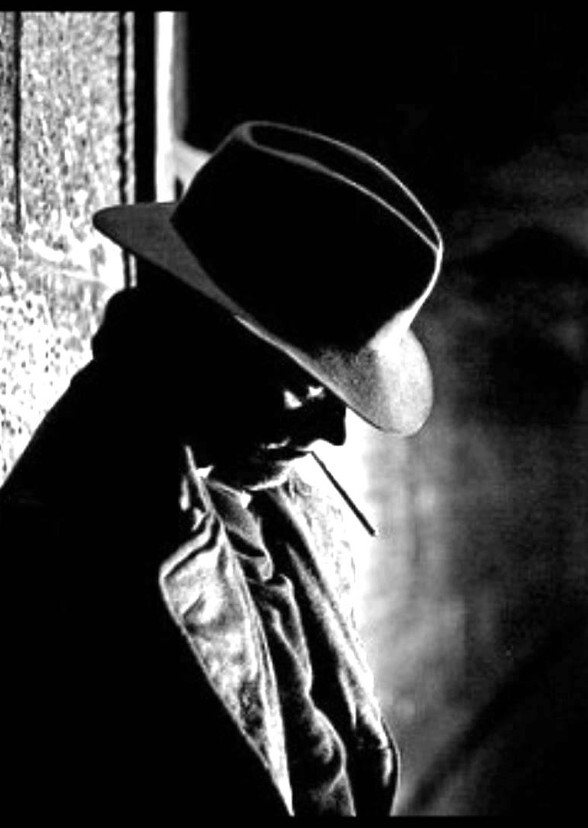
Set in a nameless metropolis drenched in rain and neon light, the story follows private investigator Julian Cross, a disillusioned former journalist turned gumshoe. Julian spends his days nursing cheap whiskey and solving minor cases for even cheaper pay. When an elegant and mysterious woman, Evelyn Blackwell, hires him to find her missing stepdaughter, Vivienne Stokes, Julian thinks it’s just another routine case. Vivienne was last seen leaving an exclusive gala at the sprawling Glasshouse Hotel, a modernist masterpiece filled with mirrored halls, labyrinthine corridors, and an eerie sense of surveillance. As Julian digs deeper, he uncovers disturbing secrets about the hotel’s wealthy patrons, their hidden vices, and Evelyn’s true motives. The deeper Julian delves, the more the case becomes personal: clues suggest a connection to his estranged father, a disgraced cop who disappeared years ago. Haunted by fragmented memories, Julian begins to unravel not only the mystery but his own sense of identity. Julian discovers that his father didn’t disappear but was killed by Simon Glass after uncovering his criminal empire. Julian’s investigation brings justice, but it’s hollow—Evelyn uses the chaos to assume control of Simon’s empire, becoming the very corruption she claimed to hate.


