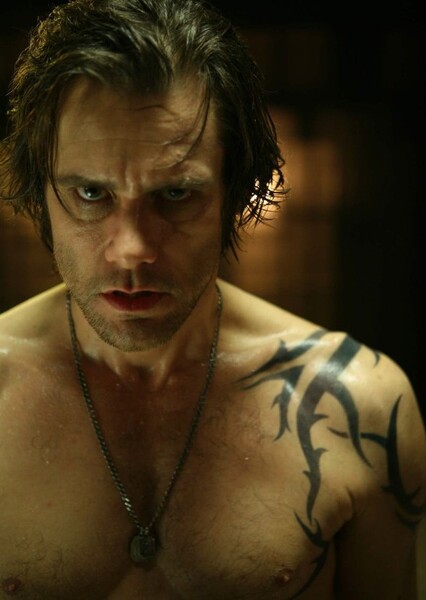
Age: 71
male
William James "Willem" Dafoe (born July 22, 1955) is an American actor. Known for his prolific career portraying diverse roles in both mainstream and arthouse films, he is the recipient of various accolades, including the Volpi Cup for Best Actor as well as nominations for four Academy Awards, a BAFTA Award, four Golden Globe Awards, four Critics' Choice Movie Awards, and five Screen Actors Guild Awards. He has frequently collaborated with filmmakers Paul Schrader, Abel Ferrara, Lars von Trier, Julian Schnabel, Wes Anderson, and Robert Eggers. Dafoe was a founding member of experimental theatre company The Wooster Group. He made his film debut with an uncredited role in Heaven's Gate (1980). Dafoe's early career includes credits for The Loveless (1982), Streets of Fire (1984), and To Live and Die in L.A. (1985). He earned his first Academy Award nomination for the war drama Platoon (1986), followed by nominations for his roles in Shadow of the Vampire (2000), The Florida Project (2017), and the Vincent van Gogh biopic At Eternity's Gate (2018). He also gained acclaim and wide recognition for his roles as Jesus Christ in The Last Temptation of Christ (1988) and as the supervillain Norman Osborn in the superhero film Spider-Man (2002), a role he reprised in its sequels Spider-Man 2 (2004) and Spider-Man 3 (2007), and the Marvel Cinematic Universe film Spider-Man: No Way Home (2021). His other film appearance include roles in Mississippi Burning (1988), Born on the Fourth of July (1989), Wild at Heart (1990), Light Sleeper (1992), Body of Evidence (1993), Clear and Present Danger (1994), The English Patient (1996), Affliction (1997), New Rose Hotel(1998), Existenz (1999), The Boondock Saints (1999), American Psycho (2000), Auto Focus (2002), Finding Nemo (2003), The Life Aquatic with Steve Zissou (2004), Inside Man (2006), Mr. Bean's Holiday (2007), Antichrist (2009), Fantastic Mr. Fox (2009), Nymphomaniac (2013), The Fault in Our Stars (2014), John Wick (2014), The Grand Budapest Hotel (2014), Aquaman (2018), The Lighthouse (2019), Nightmare Alley (2021), Poor Things (2023), and Beetlejuice Beetlejuice (2024).
Willem Dafoe

Springtrap
for Springtrap in Five Nights at Freddy's
Suggested by josephtuttle

Five Nights at Freddy's (often abbreviated to FNaF) is a media franchise based around an indie video game series created, designed, developed, and published by Scott Cawthon for Microsoft Windows, iOS, and Android. The series is centered on the story of a fictional restaurant named Freddy Fazbear's Pizza, a pastiche of restaurants like Chuck E. Cheese's and ShowBiz Pizza Place. The first three games involve the player working as a nighttime security guard, in which they must utilize several tools, most notably checking security cameras, to survive against animatronic characters, which become mobile and homicidal after-hours. The fourth game, which uses different gameplay mechanics from its predecessors, takes place in the house of a child who must defend against nightmarish versions of the animatronics by closing doors and fleeing on foot. The fifth game takes place in a maintenance facility owned by a sister company of Freddy Fazbear's Pizza. In this game, the player character is a technician instead of a night guard, who must do different tasks each night as told by an AI voice heard in the game. The sixth game takes the genre of a business simulation game, where the player acts as the owner of a pizzeria which they must decorate with payable items. The player must also work the night shift for their pizzeria, which plays similarly to previous games. The series has gained widespread popularity since its release. Two novel adaptations, Five Nights at Freddy's: The Silver Eyes and Five Nights at Freddy's: The Twisted Ones, were released on December 17, 2015 and June 27, 2017, respectively. A guidebook for the series, The Freddy Files, was released on August 29, 2017. A horror attraction based on the series was featured in the Adventuredome in Halloween of 2016. Additionally, the series appeared in the Guinness Book of Records: Gamer's Edition, breaking the record for the largest number of sequels released in a year.