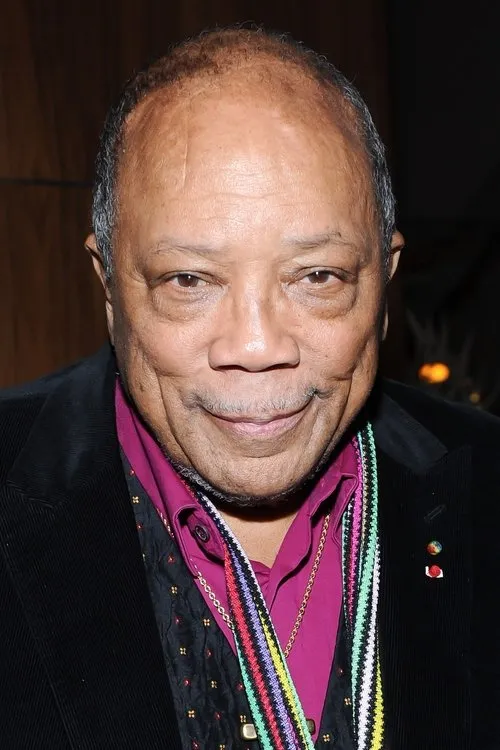
Died at 93
male
Quincy Delight Jones Jr. (March 14, 1933 – November 3, 2024) was an American record producer, musician, songwriter, composer, arranger, and film and television producer. His career spans 70 years in the entertainment industry with a record of 80 Grammy Award nominations, 28 Grammys, and a Grammy Legend Award in 1992. Jones came to prominence in the 1950s as a jazz arranger and conductor before working on pop music and film scores. He moved easily between musical genres, producing Lesley Gore's major pop hits of the early 1960s (including "It's My Party") and serving as an arranger and conductor for several collaborations between the jazz artists Frank Sinatra and Count Basie in the same time period. In 1968, Jones became the first African American to be nominated for an Academy Award for Best Original Song for "The Eyes of Love" from the film Banning. Jones was also nominated for an Academy Award for Best Original Score for his work on the 1967 film In Cold Blood, making him the first African American to be nominated twice in the same year. Jones produced three of popstar Michael Jackson's most successful albums: Off the Wall (1979), Thriller (1982), and Bad (1987). In 1985, Jones produced and conducted the charity song "We Are the World", which raised funds for victims of famine in Ethiopia. In 1971, Jones became the first African American to be the musical director and conductor of the Academy Awards. In 1995, he was the first African American to receive the academy's Jean Hersholt Humanitarian Award. He is tied with sound designer Willie D. Burton as the second most Oscar-nominated African American, with seven nominations each. In 2013, Jones was inducted into the Rock & Roll Hall of Fame as the winner, alongside Lou Adler, of the Ahmet Ertegun Award. He was named one of the most influential jazz musicians of the 20th century by Time.
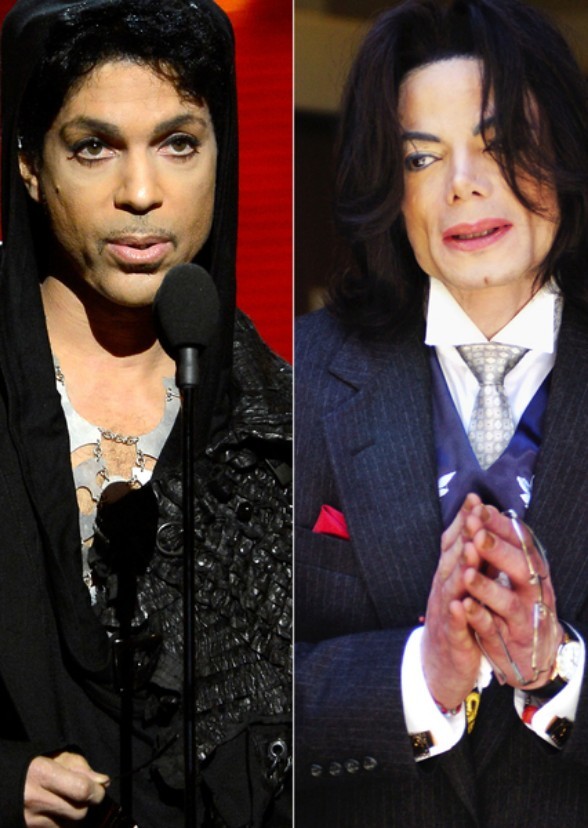
Michael Jackson and Prince first faced off when their albums 1999 (Prince) and Thriller (Jackson) rivaled each other on the charts in 1982. From that point on, the King of Pop and the Purple One openly sparred for total domination of the music industry, dueling both on- and off-stage in what many deemed a competition between Jackson’s mainstream, mass appeal and Prince’s artistry. Whether it came in the form of subliminal lines in their songs or heated ping-pong battles, the two frequently found themselves in opposition.


